
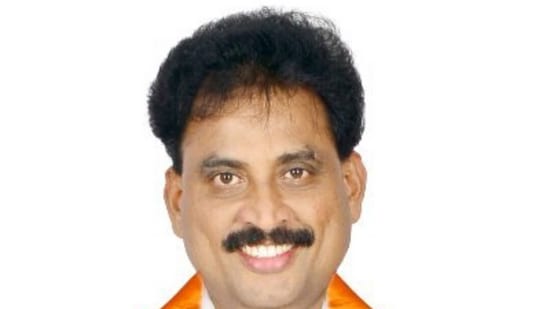
A. Johnkumar: From Congress MLA to key BJP leader in Puducherry
# Johnkumar: BJP’s Mudaliarpet Bet in 2026
By Senior Political Correspondent, National Affairs Desk, May 04, 2026
**PUDUCHERRY** — A. Johnkumar, a seasoned political heavyweight whose dramatic defection from the Indian National Congress altered the political landscape of Puducherry, is officially contesting the 2026 Assembly elections from the Mudaliarpet constituency. Once a staunch loyalist of the grand old party, Johnkumar has rapidly transformed into a cornerstone of the Bharatiya Janata Party’s (BJP) strategy in the Union Territory. As voters prepare to cast their ballots, his transition from a Congress Member of Legislative Assembly (MLA) to a pivotal BJP leader highlights the saffron party’s aggressive expansion in southern India. This high-stakes electoral battle in Mudaliarpet will serve as a critical litmus test for both Johnkumar’s regional clout and the BJP’s broader integration into Tamil-speaking political territories. [Source: Hindustan Times].
## The Mudaliarpet Chessboard: A Strategic Constituency Shift
Historically, A. Johnkumar’s political identity has been tied to the Nellithope and Kamaraj Nagar constituencies. His decision to pivot to Mudaliarpet for the 2026 elections has sparked intense speculation among political analysts. Mudaliarpet, a bustling semi-urban constituency in the heart of Puducherry, has a diverse demographic makeup, comprising traditional mercantile communities, working-class populations, and an expanding middle class.
The shift to Mudaliarpet is widely interpreted as a calculated risk orchestrated by the BJP’s high command. The party aims to leverage Johnkumar’s considerable financial muscle and grassroots mobilization skills to wrest a historically challenging seat from the opposition alliance.
“Moving a heavy hitter like Johnkumar to Mudaliarpet serves a dual purpose,” notes Dr. V. S. Rajan, a Chennai-based political scientist specializing in regional Dravidian politics. “First, it prevents anti-incumbency fatigue in his former strongholds. Second, it aggressively expands the BJP’s geographical footprint within the Union Territory, forcing the Congress-DMK alliance to divert crucial resources to defend a seat they previously considered safe.” [Source: Independent Political Analysis].
## The 2021 Exodus: From Congress Loyalist to Saffron Strategist
To understand Johnkumar’s current prominence within the BJP, one must look back at the dramatic political upheaval of early 2021. For years, Johnkumar was the crucial financial and organizational backbone for former Chief Minister V. Narayanasamy’s Congress government. In a remarkable show of loyalty, Johnkumar even vacated his Nellithope seat in 2016 to allow Narayanasamy, who was not a member of the assembly at the time, to contest and assume the Chief Minister’s office.
However, the political camaraderie severely deteriorated by late 2020. Frustrated by perceived marginalization within the Congress state unit and reportedly enticed by the BJP’s promises of infrastructural development funds from the central government, Johnkumar orchestrated a mass exodus. His resignation, alongside several other key MLAs, triggered the catastrophic collapse of the Congress-led government just months before the 2021 assembly polls.
Joining the BJP, Johnkumar brought with him a meticulously cultivated vote bank. He subsequently won the Kamaraj Nagar constituency under the BJP symbol, while his son, Richards Johnkumar, secured the Nellithope seat. This father-son victory cemented the Johnkumar family as an indispensable asset for the BJP-AINRC (All India N.R. Congress) ruling coalition.
## Consolidating Power: The Johnkumar Playbook
Unlike traditional BJP leaders whose foundational roots lie in the Rashtriya Swayamsevak Sangh (RSS) or ideological Hindutva politics, Johnkumar’s political capital is distinctly pragmatic, built on patronage and hyper-local welfare initiatives. He operates on a model of constant visibility and immediate grievance redressal.
**Key elements of Johnkumar’s political strategy include:**
* **Direct Cash and Resource Transfers:** Long before formal government welfare schemes reach the ground, Johnkumar is known for personally distributing flood relief, festival bonuses, and essential supplies to marginalized communities.
* **Utility Subsidies:** He gained immense popularity by facilitating free or heavily subsidized cable television connections to low-income households in his constituencies.
* **Employment Facilitation:** Utilizing his extensive business networks, he has routinely helped local youth secure employment in the private sector.
By integrating this localized, populist approach with the broader national developmental rhetoric of the BJP, Johnkumar has managed to shield himself from the ideological skepticism that often greets national parties in Tamil-speaking regions.
## The 2026 Campaign: Development Over Dogma
In Mudaliarpet, Johnkumar’s 2026 election campaign is conspicuously devoid of polarizing rhetoric. Instead, the messaging is laser-focused on urban development, infrastructure, and the benefits of a “double-engine government”—the BJP’s popular terminology for having the same political party in power at both the state and central levels.
“Mudaliarpet requires a representative who can bypass bureaucratic red tape and bring central funds directly to our streets,” Johnkumar declared during a recent campaign rally. His manifesto promises the establishment of a localized IT incubation hub, comprehensive drainage overhauls to prevent monsoon flooding, and the modernization of local government schools.
Furthermore, Johnkumar is leveraging his deep pockets to run a highly modernized campaign. Utilizing data analytics to map voter demographics and deploying thousands of grassroots workers, his electoral machinery is arguably the most sophisticated in the Union Territory. [Source: Election Commission Public Filings / Regional Political Analysis].
## The Opposition’s Counter-Offensive
Despite his resources, the road to victory in Mudaliarpet is fraught with challenges. The opposition alliance, spearheaded by the Congress and the Dravida Munnetra Kazhagam (DMK), is acutely aware of the existential threat Johnkumar poses. They have launched a fierce counter-offensive, branding him as an opportunist who betrayed the mandate of the people for personal gain.
Local Congress leaders have emphasized the ideological mismatch between Johnkumar’s Catholic roots and the BJP’s right-wing Hindu nationalist platform, a narrative designed to alienate his minority support base. “A leader who can abandon his parent party in its darkest hour cannot be trusted to stand by the people of Mudaliarpet,” a senior Congress spokesperson stated during a recent press briefing.
Additionally, the opposition is capitalizing on local administrative grievances. They point to unfulfilled promises made by the AINRC-BJP coalition government since 2021, particularly concerning unemployment rates, rising prices, and delayed statehood for Puducherry—a deeply emotional issue for the local electorate.
## National Implications: The BJP’s Southern Gateway
The contest in Mudaliarpet extends far beyond the borders of Puducherry. For the national BJP leadership, securing victories through powerful regional inductees like Johnkumar validates their “Southern Strategy.” Historically, the BJP has struggled to breach the Dravidian political fortress of Tamil Nadu and its culturally analogous neighbor, Puducherry.
By co-opting established regional stalwarts, the BJP bypasses the decades-long process of building a cadre from scratch. If Johnkumar secures Mudaliarpet, it will vindicate the party’s pragmatic, aggressive acquisition of rival talent. Conversely, a defeat would embolden the Congress-DMK alliance, suggesting that immense wealth and central backing cannot overcome ideological and regional loyalties.
“Puducherry is the BJP’s laboratory for the broader Tamil region,” explains Meenakshi Sundaram, a senior political correspondent covering southern Indian elections. “If they can prove that a minority leader can win on a BJP ticket in a complex socio-economic constituency like Mudaliarpet, they create a replicable template for neighboring Tamil Nadu.”
## Conclusion: A High-Stakes Electoral Gamble
As the May 2026 assembly elections reach a fever pitch, all eyes remain on Mudaliarpet. A. Johnkumar’s evolution from a vital organ of the Congress party to the tip of the BJP’s spear in Puducherry is a testament to the fluid, highly localized nature of Indian regional politics.
His campaign is an intricate balancing act between deploying immense personal wealth, navigating his new party’s ideological framework, and addressing genuine grassroots developmental needs. Whether the electorate will reward his pragmatic approach to governance or penalize his ideological flexibility remains the defining question of this electoral cycle. Ultimately, the outcome in Mudaliarpet will not just decide the fate of a single politician, but will help chart the future trajectory of coalition politics in the Union Territory of Puducherry.





