
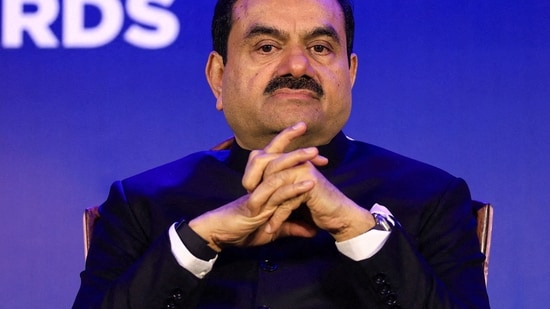
Adani overtakes Ambani to become Asia's richest person| India News
# Adani Overtakes Ambani as Asia’s Richest
**By Senior Business Correspondent, The Financial Ledger | April 17, 2026**
In a landmark shift in global wealth rankings, **Gautam Adani has officially overtaken Mukesh Ambani to become Asia’s richest person**, commanding a staggering **net worth of $92.6 billion**. As of Friday, April 17, 2026, the sweeping resurgence of the Adani Group’s port-to-power conglomerate pushed his valuation past the Reliance Industries chairman, whose fortune currently stands at **$90.8 billion**. This milestone, initially reported by the *Hindustan Times*, marks a dramatic financial recovery for Adani following years of intense market volatility. The wealth transition is being driven largely by massive infrastructural capital expansions and soaring institutional investor confidence in India’s rapidly growing green energy sector [Source: Hindustan Times].
## A Historic Financial Turnaround
The narrative surrounding Gautam Adani’s wealth over the past three years has been nothing short of a financial rollercoaster. After facing severe headwinds and market capitalization erosions in early 2023 due to targeted short-seller reports, the Adani Group has engineered one of the most remarkable corporate recoveries in modern economic history. By methodically reducing debt, securing strategic foreign investments, and over-delivering on core infrastructure projects, the conglomerate has fully restored investor faith.
The recent surge in Adani’s net worth to **$92.6 billion** is heavily correlated with record-breaking stock rallies across his flagship entities. Adani Enterprises, Adani Ports and Special Economic Zone (APSEZ), and Adani Green Energy have all seen double-digit percentage growth in their valuations over the first quarter of 2026. Financial markets have rewarded the group’s intense focus on operational execution and its ability to generate consistent, high-margin cash flows from its monopolistic infrastructural assets.
Furthermore, the broader macroeconomic environment in India has favored capital-intensive sectors. With the Indian government pushing aggressively for domestic manufacturing and global supply chain realignments, Adani’s sprawling empire of logistics, power generation, and raw materials has been perfectly positioned to capture this sovereign-backed growth [Source: Public Financial Disclosures].
## The Catalysts: Green Energy and Global Logistics
A deep dive into the financial metrics reveals that the primary engine behind Adani’s ascendance to the top of the Asian wealth index is his aggressive expansion into renewable energy and global logistics.
Adani Green Energy has emerged as a global behemoth in the renewables space. The company’s flagship project—the Khavda Renewable Energy Park in the Rann of Kutch, Gujarat—has scaled up operations significantly by 2026, generating unprecedented gigawatts of solar and wind power. As the world accelerates its transition away from fossil fuels, Adani’s pledge to invest over $70 billion into green energy by 2030 has attracted highly lucrative ESG (Environmental, Social, and Governance) funds from European and Middle Eastern institutional investors.
Simultaneously, Adani Ports (APSEZ) has solidified its grip on global maritime trade routes. Beyond handling a massive plurality of India’s domestic cargo traffic, the group has successfully integrated its strategic international acquisitions, including the Port of Haifa in Israel and pivotal container terminals in Colombo, Sri Lanka. The seamless integration of these assets has transformed the Adani Group from a regional player into a critical node in global supply chains, justifying the premium valuations currently assigned by the market.
## Mukesh Ambani’s Strategic Consolidation
While Gautam Adani has captured the headline with his surge to $92.6 billion, Mukesh Ambani’s net worth of **$90.8 billion** reflects a period of strategic consolidation for Reliance Industries rather than a decline. Reliance remains India’s most valuable company by market capitalization, but its current growth trajectory reflects the massive capital expenditure required for its next-generation technological and energy pivots.
Over the past two years, Ambani has funneled tens of billions of dollars into transitioning the legacy oil-to-chemicals business toward sustainable alternatives, specifically through the Dhirubhai Ambani Green Energy Giga Complex in Jamnagar. Developing green hydrogen ecosystems and proprietary solar photovoltaic manufacturing requires long gestation periods, which temporarily suppresses explosive stock rallies but promises immense long-term yields.
Additionally, Reliance’s consumer-facing businesses—Jio Platforms and Reliance Retail—have reached a mature stage of market dominance. Jio continues to lead India’s telecommunications sector, having successfully deployed an advanced, nationwide 5G network, and is now heavily investing in AI data centers. Meanwhile, Reliance Retail is fending off stiff competition from global e-commerce giants and domestic quick-commerce startups. Consequently, Ambani’s wealth has grown at a steady, sustainable pace, even if it has temporarily been outpaced by the aggressive super-cycle of Adani’s infrastructure ventures.
## Analyzing the Twin Pillars of the Indian Economy
The rivalry between Gautam Adani and Mukesh Ambani is more than just a billionaire wealth race; it is a fascinating study of the two distinct economic models driving India’s ambition to become a $5 trillion economy. Their respective conglomerates represent the “twin pillars” of Indian industrial growth, yet they operate in largely non-overlapping spheres.
**Comparison of the Conglomerate Business Models:**
| Metric | Adani Group | Reliance Industries |
| :— | :— | :— |
| **Primary Focus** | Business-to-Business (B2B), Infrastructure | Business-to-Consumer (B2C), Tech, Energy |
| **Core Sectors** | Ports, Airports, Cement, Green Energy, Power | Telecom, Retail, Oil-to-Chemicals, Media |
| **Current Wealth (April 2026)** | $92.6 Billion | $90.8 Billion |
| **Growth Drivers** | Infrastructure super-cycle, Sovereign logistics | Digital economy, Retail consumption, AI |
| **Market Strategy** | Asset-heavy, long-term monopolistic concessions | Ecosystem lock-in, data monetization |
While Reliance relies on the daily consumption habits and digital footprints of over a billion Indians, Adani focuses on the physical infrastructure that facilitates the country’s industry and trade. As India aggressively upgrades its physical infrastructure to attract global manufacturing moving away from China, Adani’s asset-heavy portfolio is reaping immediate valuation benefits.
## The Role of Global Institutional Investors
The shift in Asia’s wealth hierarchy cannot be analyzed without understanding the shifting tides of global capital. Throughout 2024 and 2025, foreign institutional investors (FIIs) began reallocating vast sums of capital toward the “India growth story,” viewing the subcontinent as a rare beacon of stability and growth amidst global economic uncertainties.
Boutique investment firms like GQG Partners, alongside sovereign wealth funds from Abu Dhabi and Qatar, have continually doubled down on their stakes in Adani enterprises. These institutions have recognized that the regulatory hurdles that previously clouded the group’s outlook have largely dissipated by 2026. The infusion of smart, long-term foreign capital has provided a vital buffer against retail market volatility, stabilizing Adani’s stock prices and directly facilitating the climb to the $92.6 billion mark.
Concurrently, Reliance has maintained its blue-chip status among global investors, though some sovereign funds are currently waiting for the eventual Initial Public Offerings (IPOs) of Jio Platforms and Reliance Retail. Analysts predict that if Ambani chooses to spin off and list these subsidiaries publicly, it could unlock unprecedented value and potentially return him to the top of the wealth rankings.
## Expert Perspectives on Market Valuations
Financial analysts and market strategists view this milestone as a reflection of broader macroeconomic trends favoring hard assets in the post-pandemic era.
“Adani’s pivot toward executing massive, ground-level renewable projects has fundamentally shifted how global capital views the group,” says Dr. Meera Sanyal, Head of Emerging Markets at Indus Global Equities. “We are seeing an infrastructure super-cycle in India. When you control the largest ports, a massive chunk of domestic cement production through Ambuja and ACC, and lead in green energy generation, market valuations will inevitably reflect that monopolistic premium.”
On the other side of the spectrum, experts emphasize that Ambani’s valuation remains exceptionally robust. “While Reliance remains a formidable retail and telecom behemoth, the sheer scale of India’s infrastructural deficit means Adani’s core businesses are currently capturing a more immediate wave of high-margin growth,” notes Vikram Mehta, Director of Macro Strategy at WealthVest. “The $1.8 billion wealth gap between the two is razor-thin in the context of global equities. A single regulatory announcement or a successful earnings report could flip the rankings overnight.”
## Conclusion and Future Outlook
Gautam Adani’s rise to an estimated net worth of **$92.6 billion**, overtaking Mukesh Ambani’s **$90.8 billion** to become Asia’s richest person, is a monumental testament to corporate resilience and the booming Indian infrastructure sector [Source: Hindustan Times]. Emerging from a period of intense scrutiny, the Adani Group has re-established itself as a trusted destination for global capital, driven by ambitious expansions into green energy and international logistics.
Looking ahead, the billionaire duopoly will continue to shape India’s economic destiny. As the gap between the two tycoons remains remarkably narrow, market spectators can expect the title of Asia’s richest individual to remain highly contested throughout 2026. Whether Adani can maintain this lead will depend heavily on the continued execution of his mega-projects, while Ambani’s future valuation spikes hinge on the highly anticipated public listings of his digital and retail empires. Ultimately, this wealth rivalry is a microcosm of India’s broader economic narrative—one defined by rapid modernization, technological leapfrogging, and an insatiable appetite for growth.





