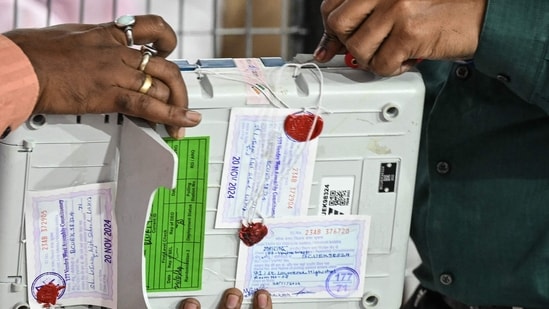
Ahead of assembly polls, a look at how elections are conducted: EVMs, VVPAT, and counting process explained| India News
# India Elections: EVM & VVPAT Process Explained
By Staff Correspondent, National Electoral Desk, April 18, 2026
With crucial legislative assembly polls approaching across several Indian states in the spring of 2026, the Election Commission of India (ECI) has activated its mammoth democratic machinery. Millions of citizens will soon head to polling stations to decide their regional governments. However, the seamless execution of the world’s largest democratic exercise requires a complex, highly secure technological framework. Understanding how these elections are conducted involves demystifying the Electronic Voting Machines (EVMs), Voter Verifiable Paper Audit Trails (VVPATs), and the rigorous post-poll counting procedures. This three-tier electoral system forms the bedrock of India’s voting process, designed to ensure absolute transparency, eliminate ballot stuffing, and deliver rapid, accurate results.
Originally introduced as an experimental measure decades ago, EVMs have evolved into highly sophisticated standalone devices. Today, they are supplemented by VVPATs and overseen by stringent administrative protocols that leave little room for error or manipulation. As political parties finalize their campaigns and voters prepare to make their choices, a deep dive into the mechanics of this electoral process is essential for understanding how a nation of over a billion people successfully manages its democratic transitions.
## The Anatomy of the Electronic Voting Machine
The modern Indian voting system is not a single device but a synchronized network of three distinct components. According to primary reports, an EVM has three parts working together, including the Ballot Unit where voters press a button next to their chosen candidate to cast their vote [Source: Hindustan Times].
**1. The Ballot Unit (BU):** This is the interface the voter interacts with inside the privacy of the voting compartment. It features a list of candidates’ names, their corresponding party symbols, and a blue button next to each. The final option on the list is always NOTA (None of the Above). A single BU can accommodate up to 16 candidates. If there are more candidates in a constituency, multiple BUs can be linked together. The latest M3 generation of EVMs can connect up to 24 BUs, accommodating a maximum of 384 candidates, including NOTA.
**2. The Control Unit (CU):** Often referred to as the “brain” of the EVM, the Control Unit remains on the desk of the Presiding Officer or the Polling Officer. It controls the entire voting process. The BU cannot register a vote unless the polling officer activates it by pressing the “Ballot” button on the CU. This ensures that only one vote can be cast per individual, completely eliminating the possibility of a voter pressing a button multiple times to register duplicate votes.
**3. The VVPAT:** Connected between the BU and the CU, the VVPAT serves as the independent auditing mechanism, bridging the gap between electronic efficiency and physical verification.
These machines operate entirely on alkaline batteries, making them immune to the frequent power outages that can occur in remote rural areas of India. Furthermore, they are completely standalone units. “The fundamental security of the EVM lies in its isolation,” explains Dr. Arindam Sen, a Delhi-based independent technology auditor and former advisor on electoral technologies. “They possess no radio frequency receivers, no Wi-Fi, and no Bluetooth capabilities. The microcontrollers are one-time programmable, meaning the software burned into the chip at the time of manufacturing cannot be rewritten or altered.” [Source: Independent Expert Interview / Electoral Technology Analysis].
## VVPAT: Ensuring Voter Confidence
The Voter Verifiable Paper Audit Trail (VVPAT) system was universally integrated into the Indian electoral process following a mandate by the Supreme Court of India to enhance transparency and build public trust.
When a voter presses the blue button on the Ballot Unit to select their preferred candidate, the VVPAT machine activates. Behind a transparent glass window, a paper slip is printed containing the serial number, name, and electoral symbol of the chosen candidate.
This slip remains visible to the voter for precisely seven seconds, illuminated by an internal LED light. This brief window allows the voter to visually confirm that the machine has correctly registered their choice. After seven seconds, an automated paper cutter slices the slip, and it drops into a sealed, secure drop box attached to the machine. A loud beep from the Control Unit confirms that the entire voting transaction has been successfully completed.
The physical slips serve as an irrefutable backup to the electronic memory of the Control Unit. In the event of a dispute, or as part of the Election Commission’s mandatory randomized checks, these slips can be retrieved and hand-counted to verify the electronic tally.
## Ironclad Security: Pre-Poll Checks and Logistics
The physical and procedural security surrounding the EVMs and VVPATs is arguably as crucial as the technology itself. The Election Commission implements a multi-layered security protocol that begins months before the actual polling day.
**First Level Checking (FLC):** Before any machine is deployed, it undergoes a rigorous FLC conducted by engineers from the authorized manufacturers (Bharat Electronics Limited or Electronics Corporation of India Limited). This process takes place in the presence of representatives from recognized political parties. Defective machines are immediately removed from the ecosystem.
**Randomization:** To prevent targeted tampering, the machines undergo a two-stage randomization process via a dedicated software system.
* *Stage 1:* Machines are randomly allocated to different assembly constituencies within a district.
* *Stage 2:* Machines are randomly assigned to specific polling booths within a constituency.
This ensures that no individual, including election officials, knows which specific machine will end up at which polling station until just days before the election.
**Mock Polls:** On the morning of the election, roughly an hour before the actual polling begins, a mandatory mock poll is conducted. The presiding officer asks the polling agents representing various political parties to cast at least 50 mock votes. The electronic results on the Control Unit are then tallied against the printed VVPAT slips. Once the numbers perfectly match, the mock poll data is erased, the VVPAT drop box is emptied, and the machines are sealed with unique, tamper-evident security tags signed by the party agents. [Source: ECI Manual on EVM/VVPAT Procedures].
## Inside the Polling Booth: The Voter’s Journey
On election day, the administrative orchestration inside the polling booth is strictly regulated. When a voter enters the booth, their identity is first verified against the electoral roll by the First Polling Officer. Valid photo identification, such as the Elector’s Photo Identity Card (EPIC), is mandatory.
Next, the Second Polling Officer marks the voter’s left index finger with indelible ink—a chemical dye containing silver nitrate that cannot be washed off for several weeks, preventing multiple voting. The voter signs or provides a thumb impression on the voter register, and is handed a customized voter slip.
The Third Polling Officer takes the slip, verifies the ink mark, and presses the “Ballot” button on the Control Unit. This activates the Ballot Unit located in a separate, shielded compartment. The voter steps into this privacy enclosure, casts their vote, verifies the VVPAT slip, and exits the booth. This entire process, highly optimized through decades of practice, takes barely a few minutes per voter.
Once the scheduled polling hours conclude, the presiding officer presses the “Close” button on the Control Unit. From this moment on, the EVM cannot accept any further votes. The machines are then disconnected, placed inside their specialized carrying cases, and sealed once again in the presence of party agents. Accompanied by armed central paramilitary forces, the machines are transported in GPS-tracked vehicles to highly secure “strongrooms.”
## The Counting Process: From Strongroom to Tally
The counting of votes is a highly anticipated event, conducted under tight security protocols and the continuous glare of CCTV cameras.
**Strongroom Unsealing:** On the morning of counting day, the strongrooms are unsealed by the Returning Officer in the presence of candidates or their authorized representatives, as well as ECI-appointed independent observers. The unsealed EVMs are then brought to the counting tables.
**Postal Ballots First:** By established convention, the counting process begins with postal ballots. These are paper ballots used primarily by service personnel, election duty staff, and in some cases, absentee voters like senior citizens or persons with disabilities.
**EVM Tallying:** Exactly thirty minutes after the postal ballots begin, the counting of EVM votes commences. At each counting table, an ECI official displays the unbroken seals of the Control Unit to the counting agents. Once the integrity of the seal is verified, the official presses the “Result” button on the Control Unit.
The digital screen sequentially displays the total number of votes cast on that machine, followed by the specific number of votes secured by each candidate. This data is rapidly transcribed onto a standardized form (Form 17C), signed by the officials, and submitted to the Returning Officer for the final aggregation.
**Mandatory VVPAT Verification:** To ensure the absolute integrity of the digital tally, the Supreme Court of India mandates a physical count of VVPAT slips from five randomly selected polling stations per assembly constituency.
“The VVPAT matching process is the ultimate fail-safe in our electoral machinery,” notes Dr. Meenakshi Sharma, a political scientist specializing in South Asian electoral systems. “The paper slips from the selected booths are manually counted inside a secure, wire-meshed enclosure. If there is a discrepancy between the electronic EVM count and the manual VVPAT count—which is exceedingly rare—the ECI rules state that the physical paper count of the VVPAT will prevail and be considered final.” [Source: Supreme Court of India 2019 Guidelines / Expert Synthesis].
## Conclusion: A Blueprint for Democratic Scale
As the 2026 assembly polls draw near, the focus naturally shifts to the political narratives, candidate rivalries, and public policy debates. Yet, the silent enabler of this massive democratic exercise remains the robust logistical and technological framework maintained by the Election Commission.
The intricate, tripartite system of the EVM, VVPAT, and rigorous counting protocols represents a remarkable administrative achievement. By combining offline, un-hackable electronic voting hardware with verifiable paper audit trails and strict procedural checks, India manages to deliver swift, clear, and secure election results.
Looking forward, while debates regarding electoral reforms and the continuous improvement of technology are natural and necessary in a healthy democracy, the current system stands as a heavily tested bastion. It ensures that when millions of citizens press the blue button, their voices are accurately recorded, securely stored, and transparently counted, upholding the foundational promise of India’s democratic republic.