Amid the din, a dare to reserve PM's post for women: TMC MP Kalyan Banerjee calls for 50% of current 543 seats| India News
# TMC Dares BJP: Reserve PM Post for Women
By Special Correspondent, National Desk, April 18, 2026
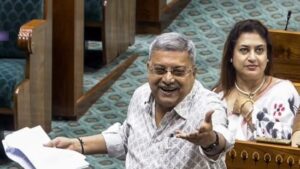
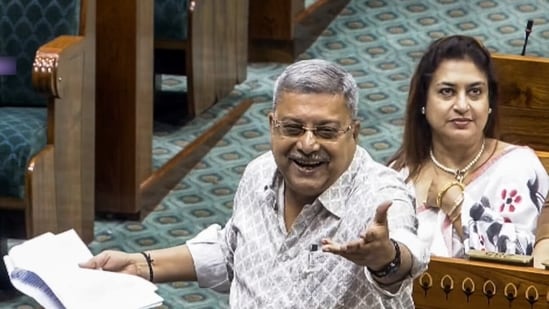
Trinamool Congress (TMC) Member of Parliament Kalyan Banerjee sparked a massive political uproar on Saturday by daring the ruling Bharatiya Janata Party (BJP) to reserve the Prime Minister’s post exclusively for women. Speaking amidst a highly charged parliamentary session, the outspoken lawmaker from West Bengal categorically rejected the central government’s timeline for the women’s reservation quota, labeling the impending constituency delimitation exercise a “political gimmick.” Demanding immediate action, Banerjee called for a 50% reservation for women within the existing 543 Lok Sabha seats, accusing the BJP of lacking the genuine political will to empower women. [Source: Hindustan Times].
## The ‘Political Gimmick’ of Delimitation
The crux of Banerjee’s explosive parliamentary intervention centers on the implementation timeline of the *Nari Shakti Vandan Adhiniyam* (Women’s Reservation Bill). Passed with overwhelming bipartisan support in late 2023, the historic legislation mandates a 33% quota for women in the Lok Sabha and state legislative assemblies. However, the BJP-led government linked its implementation to the completion of the next national decadal census and the subsequent delimitation exercise—a process slated to redraw electoral boundaries and potentially increase the total number of parliamentary seats based on population metrics.
For opposition parties, particularly regional powerhouses like the TMC, this linkage is a deliberate delay tactic. “Delimitation is a political gimmick. You don’t have the intention to give quota to women,” Banerjee thundered across the floor of the House, reflecting a growing frustration within the opposition ranks over the stalled empowerment measure [Source: Hindustan Times].
The TMC’s stance is that waiting for a complex, politically fraught, and administratively arduous delimitation process—which may not be finalized until 2028 or 2029—effectively denies female politicians their rightful representation in the immediate electoral cycles, including the pivotal state elections of 2026 and the subsequent general elections.
## A Radical Demand: 50% Quota and the PM Post
Banerjee’s demands significantly escalate the debate surrounding gender parity in Indian politics. Moving beyond the legislated 33%, the TMC MP called for a 50% reservation across the existing framework of the Lok Sabha. Out of the current 543 seats, this would translate to roughly 272 seats reserved exclusively for women candidates.
However, it was his audacious dare to the treasury benches to “reserve the Prime Minister’s post for a woman” that caused the maximum din in the parliament. While clearly a rhetorical challenge designed to expose what the TMC views as the BJP’s patriarchal hypocrisy, the statement carries profound political weight.
“Kalyan Banerjee’s comments are textbook political brinkmanship,” explains Dr. Neerja Rao, a New Delhi-based political scientist and author on gender in Indian politics. “By daring the BJP to reserve the highest executive office, the TMC is attempting to wrest the narrative of women’s empowerment away from the central government. It is a calculated move to portray the BJP’s 33% delayed quota as a half-measure, while positioning the TMC—led by India’s only current female Chief Minister, Mamata Banerjee—as the true vanguard of gender equality.” [Additional: Expert Analysis/Electoral Strategy].
While the Indian Constitution does not permit the reservation of the Prime Ministerial office, the dare acts as a powerful messaging tool. It implicitly highlights TMC supremo Mamata Banerjee’s national ambitions and her party’s track record of fielding a high percentage of female candidates in previous elections.
## The Bengal Context: A High-Stakes Electoral Battle
Banerjee’s parliamentary aggression cannot be viewed in isolation from the ground realities of West Bengal politics. As of April 2026, the TMC and the BJP are locked in a fierce, high-stakes battle for control of the state legislative assembly.
Women voters have historically been the bulwark of Mamata Banerjee’s electoral success. Pioneering welfare schemes such as *Kanyashree* (for girls’ education) and *Lakshmir Bhandar* (direct cash transfers to women) have created a loyal constituency of female voters that the BJP has desperately tried to court.
By attacking the central government’s delay on the national women’s quota, the TMC is actively fortifying its regional base. The narrative being pushed in the towns and villages of Bengal is that while the central government offers empty promises tied to a distant census, the state government delivers tangible financial empowerment and immediate political representation.
The BJP, conversely, has utilized the passage of the Women’s Reservation Bill as a primary talking point in its Bengal campaign, framing Prime Minister Narendra Modi as the leader who finally broke decades of legislative gridlock. Kalyan Banerjee’s speech is a direct missile aimed at dismantling this specific BJP campaign pillar. [Additional: Regional Political Context].
## North-South-East Divide: The Demographic Penalty
Beyond the immediate theater of gender politics, Kalyan Banerjee’s fierce opposition to delimitation taps into a deep, existential anxiety shared by Eastern and Southern Indian states.
The freeze on altering the number of Lok Sabha seats has been in place since the 42nd Constitutional Amendment in 1976, enacted to ensure that states which successfully implemented family planning and population control measures were not penalized with a reduction in their parliamentary representation. This freeze was extended in 2001 until the first census published after the year 2026.
If delimitation proceeds based purely on current population data, states in the Hindi heartland—such as Uttar Pradesh, Bihar, and Madhya Pradesh, which have experienced higher population growth rates—will see a massive influx of new Lok Sabha seats. Conversely, states like West Bengal, Tamil Nadu, Kerala, and Andhra Pradesh face a severe dilution of their political influence at the national level.
**Key Delimitation Concerns Raised by Regional Parties:**
* **Disproportionate Power:** A demographic shift of legislative power to Northern states, fundamentally altering India’s federal balance.
* **The “Penalty for Success”:** States that stabilized their populations, effectively adhering to national demographic goals, will lose their proportional voice in parliament.
* **Dilution of Regional Autonomy:** An enlarged parliament dominated by Northern states could centralize decision-making, threatening linguistic and cultural regional autonomy.
“When a TMC MP calls delimitation a ‘political gimmick,’ it is not just about the women’s quota,” notes Prof. S. Venkatraman, a constitutional scholar. “It is an expression of absolute terror at the prospect of Bengal losing its relative bargaining power in New Delhi. Linking the universally popular idea of women’s reservation to the highly controversial issue of delimitation was a strategic masterstroke by the government, making it incredibly difficult for the opposition to critique one without seeming to oppose the other.” [Additional: Constitutional and Demographic Analysis].
## From Rhetoric to Reality: Women in Indian Politics
While the parliamentary theater provides excellent soundbites, the on-ground reality of female political representation in India remains an uphill battle. Although India has had a female Prime Minister, a female President, and several powerful female Chief Ministers, structural representation within party machineries and legislative bodies lags behind global standards.
The TMC, however, holds a relatively stronger deck of cards in this specific debate. During the 2019 Lok Sabha elections, Mamata Banerjee allocated 41% of her party’s tickets to women, a stark contrast to the national average where major parties struggled to breach the 15% mark. Even without a formal legislative quota, the TMC has demonstrated a localized capacity to ensure higher female participation.
By demanding an immediate 50% reservation within the current 543 seats, Kalyan Banerjee is challenging other national parties to match the TMC’s voluntary actions with legislative mandates. The underlying accusation is that national parties use the delayed timeline of the reservation bill as an excuse to avoid overhauling their male-dominated internal hierarchies.
Critics of the TMC, however, point out that despite issuing a high number of tickets to women, the party’s top decision-making bodies—the core committees and inner circles—remain predominantly male, save for the towering presence of the Chief Minister herself. The BJP has frequently countered the TMC’s narrative by citing its expansive grassroots empowerment initiatives through rural self-help groups and micro-financing networks that have economically integrated millions of rural women into the mainstream.
## Conclusion and Future Outlook
Kalyan Banerjee’s fiery intervention in the Lok Sabha has successfully thrown a wrench into the government’s carefully curated narrative surrounding the impending delimitation and women’s reservation. By uncoupling the demand for gender parity from the contentious population-based constituency redrawing, the TMC has formulated a potent political weapon ahead of the critical state elections.
As April 2026 unfolds, the debate is no longer just about whether women should have a 33% quota. It has evolved into a fundamental clash over timelines, federalism, and the very structure of the Indian democratic framework.
Looking ahead, the central government faces a daunting challenge. They must navigate the fierce opposition of Southern and Eastern states regarding delimitation while simultaneously proving to female voters that the promise of the *Nari Shakti Vandan Adhiniyam* will translate into actual seats in the near future.
Whether the dare to “reserve the PM’s post for a woman” remains a mere headline-grabbing rhetorical flourish or catalyzes a genuine, accelerated push for women’s representation within the existing 543 seats remains to be seen. What is undeniable, however, is that as the shadow of the post-2026 delimitation looms larger, the intersection of demographic politics and gender parity will be the defining battleground of Indian democracy for the remainder of the decade.