
Arbitration, mediation as integral to modern justice system as litigation: Justice Nagarathna| India News
# ADR Now As Integral As Litigation: SC Judge
**By Senior Legal Correspondent, New Delhi | April 11, 2026**
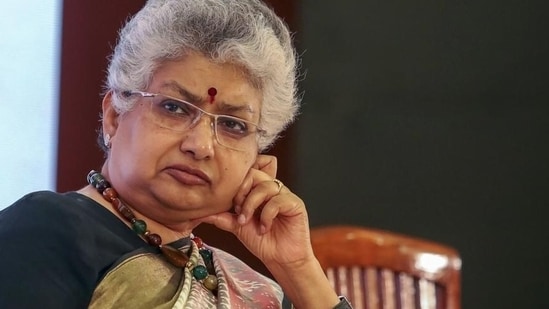
Supreme Court Justice B.V. Nagarathna declared on Saturday that arbitration and mediation are no longer secondary or “alternative” options, but are as integral to the modern justice delivery system as traditional litigation. Speaking at a high-level national symposium on dispute resolution in New Delhi on April 11, 2026, the senior judge emphasized that seamlessly integrating Alternative Dispute Resolution (ADR) mechanisms is fundamentally vital for addressing India’s soaring judicial backlog. She strongly urged the legal fraternity to embrace conciliation-first approaches to ensure timely, cost-effective, and amicable justice for citizens and corporations alike, noting that the modern legal landscape must evolve beyond adversarial courtroom battles. [Source: Hindustan Times].
## Redefining the Modern Justice Ecosystem
For decades, the Indian judicial system has operated primarily on an adversarial model. Litigants file suits, endure years of cross-examinations and procedural delays, and await a binding judgment that invariably leaves one party dissatisfied. However, Justice Nagarathna’s recent remarks underscore a systemic paradigm shift.
“The nomenclature of ‘Alternative’ Dispute Resolution is becoming obsolete. Arbitration and mediation are not mere alternatives; they are primary pillars of a robust, modern justice system,” Justice Nagarathna articulated during her keynote address. She noted that true justice is not strictly about courtroom victories, but about the efficient and equitable resolution of grievances.
Legal scholars have long argued that an over-reliance on traditional litigation creates bottlenecks that stifle economic growth and prolong personal distress. By elevating ADR to the same institutional stature as litigation, the judiciary is sending a clear message: courts should be the avenue of last resort, reserved for complex constitutional questions or severe criminal offenses, rather than commercial disputes or family disagreements that can be resolved amicably.
## Tackling the Massive Judicial Backlog
The urgency behind Justice Nagarathna’s statements is deeply rooted in empirical data. As of early 2026, the National Judicial Data Grid (NJDG) estimates that over **50 million cases** remain pending across various tiers of the Indian judiciary. From the subordinate courts to the apex court, judges are grappling with an insurmountable volume of dockets. [Source: National Judicial Data Grid / Public Legal Records].
Traditional litigation is notoriously time-consuming. A standard civil dispute regarding property or breach of contract can take anywhere from seven to fifteen years to reach a final resolution, exhausting the financial and emotional resources of the litigants.
Mediation and arbitration directly alleviate this pressure. By diverting civil, commercial, and matrimonial disputes to specialized ADR professionals, the courts can free up judicial bandwidth.
* **Arbitration** provides a streamlined, private, and binding resolution process managed by subject-matter experts rather than generalist judges.
* **Mediation** offers a collaborative environment where a neutral third party facilitates a mutually acceptable settlement, preserving relationships and avoiding the bitterness of a public trial.
“If we are to uphold the constitutional promise of swift justice, we cannot rely solely on the brick-and-mortar courtrooms,” noted Vikram Desai, a Senior Advocate specializing in corporate arbitration. “Justice Nagarathna’s validation of ADR as an ‘integral’ component is a much-needed push to mainstream these practices.”
## The Compounding Impact of the Mediation Act
Justice Nagarathna’s remarks come at a time when India is witnessing the tangible effects of the Mediation Act, passed in late 2023. Over the last three years, this legislative milestone has transformed the dispute resolution landscape by institutionalizing mediation and giving mediated settlement agreements the same weight as court judgments.
Key outcomes observed up to 2026 include:
1. **Pre-Litigation Mediation:** A noticeable drop in frivolous civil filings due to mandates encouraging pre-litigation mediation.
2. **Institutional Recognition:** The establishment of the Mediation Council of India has standardized the training and certification of mediators, ensuring high-quality facilitative justice.
3. **Enforceability:** Agreements reached through mediation are now easily enforceable, removing the previous hesitation corporate entities had regarding the finality of mediated settlements.
Dr. Meera Sanyal, Director of the Institute for Public Policy and Law, highlighted the social impact of these changes. “What we are seeing in 2026 is the democratization of justice. Mediation empowers individuals to control the outcome of their disputes. Justice Nagarathna’s endorsement solidifies the state’s commitment to this empowering, non-adversarial process.”
## Propelling India as a Global Arbitration Hub
Beyond domestic civil disputes, the integration of arbitration is vital for India’s economic ambitions. For years, multinational corporations operating in India preferred to seat their arbitrations in Singapore (SIAC) or London (LCIA) due to perceived inefficiencies and frequent judicial interference in Indian arbitral awards.
However, statements from the highest echelons of the Supreme Court, like those made by Justice Nagarathna, reassure global investors of a pro-arbitration judicial climate. By legally treating arbitration as a parallel, respected pillar of justice, Indian courts are demonstrating judicial restraint—refusing to overturn arbitral awards unless there is a blatant violation of public policy.
The growth of institutions like the New Delhi International Arbitration Centre (NDIAC) and the Mumbai Centre for International Arbitration (MCIA) illustrates this shift. With specialized arbitrators and state-of-the-art facilities, India is actively positioning itself as an attractive, cost-effective seat for international commercial arbitration in 2026. This ease of doing business directly correlates with increased foreign direct investment (FDI), as investors require predictable and efficient enforcement of contracts. [Source: Ministry of Law and Justice, Industry Reports].
## Technology and Online Dispute Resolution (ODR)
The modernization of the justice system, as envisioned by Justice Nagarathna, relies heavily on technology. The post-pandemic era ushered in a permanent acceptance of virtual hearings, which has naturally evolved into a robust Online Dispute Resolution (ODR) ecosystem.
ODR platforms are currently managing thousands of low-value, high-volume disputes—such as e-commerce consumer complaints, small credit defaults, and minor tenancy issues. By utilizing secure video conferencing, digital document verification, and even AI-assisted settlement algorithms, ODR provides an asynchronous and highly accessible form of justice.
A rural citizen in a remote district no longer needs to travel hundreds of kilometers to a district court for a minor commercial dispute. Through ODR-enabled mediation, disputes can be resolved via a smartphone.
“Technology has removed the geographical barriers to justice,” explained Rohan Iyer, CEO of a prominent Indian legal-tech startup. “When a Supreme Court Justice states that these methods are equal to litigation, it grants immense legitimacy to ODR platforms. It signals to the common man that a digital settlement is just as valid and respected as an order passed in a physical courtroom.”
## Overcoming Cultural Barriers in the Legal Fraternity
Despite the systemic push for ADR, challenges remain. The primary hurdle is a deep-seated cultural mindset within the legal fraternity. Historically, the legal profession in India has been inherently combative, with financial incentives often aligned with prolonged litigation rather than rapid settlement.
Justice Nagarathna’s address was subtly directed at legal practitioners, urging a shift from a “litigation-first” mentality to a “resolution-first” approach. Lawyers must transition into roles as settlement counsels and deal-makers rather than strictly adversaries.
Moreover, educating litigants is paramount. Many individuals still hold the misconception that justice is only served when a judge hands down a punitive sentence or a coercive order against the opposing party. Convincing clients that a compromised, mediated settlement is actually a victory—because it saves time, money, and mental peace—requires skilled advocacy and widespread legal literacy campaigns.
To aid this transition, leading law schools across India have drastically revised their curricula by 2026, placing an equal, if not greater, emphasis on negotiation, mediation psychology, and arbitration drafting as they do on traditional moot court arguments.
## Conclusion: A Collaborative Justice Delivery System
Justice B.V. Nagarathna’s declaration that arbitration and mediation are integral to the modern justice system marks a definitive turning point in Indian jurisprudence. As she approaches her highly anticipated, albeit brief, tenure as India’s first female Chief Justice in 2027, her focus on structural efficiency and compassionate justice delivery sets a progressive tone for the future of the judiciary.
**Key Takeaways:**
* **Equal Footing:** ADR is no longer a peripheral legal tool; it holds the same institutional importance as traditional litigation.
* **Backlog Reduction:** Large-scale adoption of mediation and arbitration is the only mathematically viable solution to clearing India’s 50-million case backlog.
* **Economic Catalyst:** A robust arbitration ecosystem enhances the ease of doing business and attracts foreign investment by ensuring reliable contract enforcement.
* **Technological Integration:** Online Dispute Resolution (ODR) is democratizing access to justice, making dispute resolution accessible to the masses.
Ultimately, the future of the modern justice system relies on a multi-door courthouse model. By ensuring that disputes are funneled into the most appropriate, efficient, and specialized channels—be it a mediator’s table, an arbitral tribunal, or a judge’s bench—the Indian legal system can finally fulfill its mandate of delivering swift and accessible justice to all.





