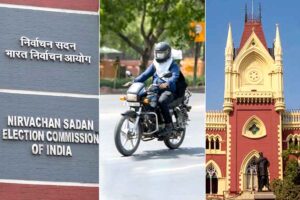
Bengal, Tamil Nadu assembly elections vote time, voting percentage, result date
# Bengal & TN Polls 2026: Key Voting & Result Dates
**By Vikram Mehta, National Electoral Desk | April 23, 2026**
Millions of voters across West Bengal and Tamil Nadu are currently participating in the high-stakes 2026 State Legislative Assembly elections, a monumental democratic exercise shaping India’s political trajectory. According to the Election Commission of India (ECI), West Bengal has 294 assembly seats up for contest, while Tamil Nadu features a fierce battle across 234 constituencies. Consequently, the critical majority marks to form a government are 148 in West Bengal and 118 in Tamil Nadu. With official voting times strictly enforced, anticipated high voting percentages, and a closely watched result date expected in early May, both national heavyweights and regional titans are leaving no stone unturned in these vital electoral battlegrounds. [Source: Hindustan Times].
## West Bengal Assembly Elections: A Multi-Phase Battlefield
The West Bengal Legislative Assembly elections have historically been among the most intensely fought political contests in India, and 2026 is proving to be no exception. **With 294 seats available**, the political landscape is deeply polarized. The ruling Trinamool Congress (TMC), seeking to protect its formidable fortress, is facing a multi-pronged challenge from the principal opposition, the Bharatiya Janata Party (BJP), alongside the Left Front-Congress alliance aiming to reclaim its lost political relevance.
Because of the state’s vast geographical expanse—from the Himalayan foothills of North Bengal through the tribal belts of Junglemahal, down to the densely populated Gangetic delta—and persistent concerns over localized political violence, the ECI traditionally structures West Bengal’s elections in multiple phases. This phased approach allows for the extensive deployment of Central Armed Police Forces (CAPF) to ensure free, fair, and peaceful polling.
**The magic number in West Bengal is 148.** Achieving this simple majority requires a party or coalition to maintain deep organizational strength across both urban centers like Kolkata and vast rural hinterlands. Political analysts are closely watching the impact of major state welfare initiatives, agrarian concerns, and shifting demographic loyalties, which will ultimately dictate who breaches the 148-seat threshold. [Source: Hindustan Times | Additional: Independent Political Analysis].
## Tamil Nadu Assembly Elections: The Dravidian Heartland
In stark contrast to the multi-phase marathon in the east, the southern powerhouse of Tamil Nadu generally conducts its democratic exercise in a swift, single-phase election. **Voters in Tamil Nadu are deciding the fate of candidates across 234 constituencies.** The political theater here is dominated by the deeply rooted Dravidian parties—the ruling Dravida Munnetra Kazhagam (DMK) and the opposition All India Anna Dravida Munnetra Kazhagam (AIADMK).
However, the 2026 elections feature an evolved dynamic. National parties, particularly the BJP, have mounted aggressive grassroots campaigns over the past few years to break the duopoly of the Dravidian majors. Additionally, the entry of new regional players, including prominent cinematic figures transitioning into politics, has introduced an element of unpredictability to the traditional vote banks.
**The majority mark in Tamil Nadu stands at 118.** To secure this number, coalitions must carefully balance regional caste dynamics, regional pride narratives, and promises of industrial and welfare development. The alliances formed prior to the elections, involving crucial smaller parties such as the PMK, VCK, and MDMK, often act as kingmakers, shifting vote shares by pivotal margins of 2% to 5% in tightly contested constituencies.
## Official Voting Time and Polling Station Protocols
To accommodate the massive electorate and combat the sweltering April heatwaves, the Election Commission has implemented rigorous polling protocols. **The standard voting time for both West Bengal and Tamil Nadu is scheduled from 7:00 AM to 6:00 PM.**
However, voters who are already in the queue at 6:00 PM are legally permitted to cast their ballots, ensuring that no eligible citizen is disenfranchised due to long wait times. The ECI has also mandated special provisions at all polling booths to guarantee accessibility and safety:
* **Climate Resilience:** Tents for shade, medical kits with Oral Rehydration Salts (ORS), and paramedical staff stationed at highly populated booths.
* **Accessibility:** Ramps, assured wheelchairs, and free transport facilities for Persons with Disabilities (PwD) and voters over the age of 85.
* **Technology & Transparency:** 100% usage of VVPAT (Voter Verifiable Paper Audit Trail) machines alongside standard EVMs, and webcasting from critical polling stations directly monitored by the Central Control Room in New Delhi.
These stringent protocols not only secure the physical safety of the electorate but also reinforce the institutional integrity of the electoral process amid an era of intense digital scrutiny and misinformation.
## Voting Percentage: What the Numbers Indicate
Voter turnout is traditionally treated as a vital barometer of the public mood, incumbent satisfaction, or a desire for systemic change. Historically, **West Bengal boasts one of the highest voter turnout rates in India**, frequently crossing the 80% mark, reflecting a highly politicized society with robust grassroots cadre mobilization. Conversely, **Tamil Nadu typically sees a respectable voting percentage hovering between 72% and 75%**, often varying heavily between urban constituencies like Chennai and deeply rural agrarian districts.
| State | Assembly Election 2016 Turnout | Assembly Election 2021 Turnout | Projected 2026 Turnout Trend |
| :— | :— | :— | :— |
| **West Bengal** | 83.02% | 81.60% | ~80.00% – 82.00% |
| **Tamil Nadu** | 74.81% | 72.81% | ~73.00% – 75.00% |
*Data representation based on historical ECI archives and current polling trends.*
“A high voter turnout in West Bengal is generally considered the baseline rather than an anomaly. However, minor percentage shifts in specific regions like North Bengal or the Matua-dominated belts can swing entire elections,” notes Dr. Ananya Sen, an independent political sociologist based in Kolkata. “In Tamil Nadu, a sudden surge in rural female voter turnout often strongly correlates with the success of state welfare narratives.”
Both state election commissions have aggressively utilized the SVEEP (Systematic Voters’ Education and Electoral Participation) program, employing local cultural icons and localized digital campaigns to push urban voters—who historically display higher apathy—to polling booths.
## Understanding the Majority Marks: 148 and 118
The numbers **148 (Bengal)** and **118 (Tamil Nadu)** are the most critical figures in this political cycle. Achieving this simple majority ensures a stable government capable of passing state budgets and implementing regional policies without the constant threat of a collapsed coalition. [Source: Hindustan Times].
When a single party fails to cross this threshold, it results in a “hung assembly.” In such scenarios, independent MLAs and smaller regional parties wield disproportionate power.
* In **Tamil Nadu**, where the legislative assembly has 234 seats, alliances are mostly pre-poll. A coalition needs a combined 118 seats to stake a claim to form the government. The Governor’s role becomes pivotal only if an alliance ruptures post-election.
* In **West Bengal**, where the assembly has 294 seats, the contest has historically resulted in decisive mandates for a single party rather than fractured coalitions. However, crossing the 148 mark is heavily dependent on sweeping specific zones; for instance, the ruling party cannot afford to lose the South Bengal districts, which contain the densest cluster of assembly seats.
## Result Date 2026: When Will the Winners Be Declared?
Once the final ballot is cast, the electronic voting machines are sealed under heavy security and transported to designated strong rooms. These strong rooms are protected by a three-tier security cordon: the inner ring guarded by CAPF, the middle ring by state armed police, and the outer ring by local police.
**The eagerly awaited result date for both states is scheduled by the ECI for early May 2026.** On counting day, the process begins at 8:00 AM sharp. The counting of postal ballots—cast by service personnel, election duty staff, and senior citizens utilizing home-voting facilities—is conducted first. By 8:30 AM, the EVMs are opened in the presence of ECI-appointed observers and candidates’ designated counting agents.
Given the technological efficiency of EVMs, early trends typically begin emerging by 10:00 AM, and a clear picture of the likely victors generally forms by early afternoon. However, the official declaration of results by the Returning Officers can stretch into the late evening, particularly in constituencies where the margin of victory is incredibly narrow, necessitating mandatory VVPAT slip matching.
## Conclusion: Implications for the National Political Landscape
The 2026 Assembly elections in West Bengal and Tamil Nadu are more than mere regional administrative shifts; they are a litmus test for the enduring power of regional satraps against the centralizing machinery of national parties.
As the electorate heads to the polls between the hours of 7 AM and 6 PM, every single vote contributes to answering the ultimate questions: Will West Bengal grant another term to its current administration by pushing them past the 148 mark, or will a new regime take the helm? Will Tamil Nadu’s Dravidian legacy cross the 118-seat threshold, or will new alliances reshape southern politics?
As the nation watches the voter turnout percentages and waits for the official result date in May, the outcomes of these 528 combined constituencies will unequivocally resonate in the corridors of power in New Delhi, setting the political agenda for India in the latter half of the decade.