
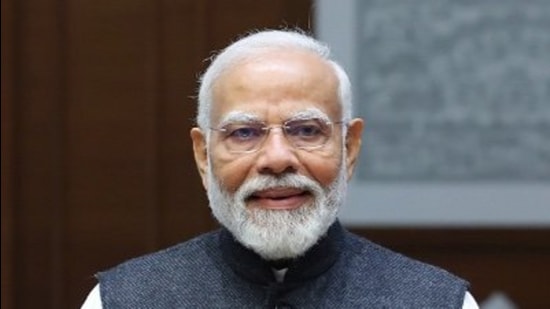
BJP issues whip as Modi seeks support across party lines for women quota rollout| India News
# BJP Issues Whip on Women’s Quota
By Political Correspondent, The National Insight | April 12, 2026
The Bharatiya Janata Party (BJP) has issued a mandatory three-line whip to all its parliamentarians ahead of a highly anticipated special sitting of Parliament, as Prime Minister Narendra Modi seeks cross-party consensus for the immediate rollout of the Women’s Reservation Bill. Scheduled for mid-April in New Delhi, this sudden legislative maneuvering aims to formalize the structural groundwork for the 33% female quota in the Lok Sabha and state assemblies. However, the unexpected scheduling has sparked fierce opposition. Congress President Mallikarjun Kharge vehemently questioned the timing of the special session, accusing the ruling dispensation of undermining democratic norms by convening the parliamentary gathering without taking the opposition into confidence.
## The Sudden Parliamentary Push
The issuance of a three-line whip—the strictest directive a political party can issue to its lawmakers, mandating their presence and vote on the party line—signals the government’s intent to fast-track the implementation of the *Nari Shakti Vandan Adhiniyam*. Originally passed in September 2023, the monumental legislation promised to reserve one-third of all seats in the lower house of Parliament and state legislative assemblies for women.
Despite the initial historic passage, the actual implementation was legally tethered to the completion of the next decennial Census and a subsequent delimitation exercise (the redrawing of electoral boundaries). As India navigates the complex political landscape of 2026—the very year the decades-old freeze on delimitation is slated to end—the Modi government is actively attempting to clear the procedural roadblocks.
Prime Minister Modi has reportedly initiated back-channel discussions, reaching out to leaders of regional parties and the principal opposition, urging a bipartisan approach to finalize the rollout framework. However, the abrupt nature of the special sitting has left many political stakeholders scrambling.
[Source: Hindustan Times | Additional: Parliamentary Procedural Archives]
## Opposition Backlash: Kharge Questions the Timing
The crux of the current political friction lies not in the content of the quota, but in the methodology and timing of its execution. Congress chief Mallikarjun Kharge led the charge against the government’s unilateral decision-making process.
Addressing the media, Kharge articulated the apprehension shared by the broader INDIA opposition bloc. “We have always been the fundamental architects and supporters of women’s reservation. However, convening a special sitting of Parliament without a customary all-party meeting or taking the opposition into confidence is a subversion of parliamentary democracy,” Kharge stated. He questioned the urgency of the timing, hinting that the government’s sudden prioritization of the rollout might be a strategic distraction or a calculated electoral gambit ahead of crucial upcoming state elections.
The opposition’s anxiety is compounded by the opacity surrounding the special session’s exact agenda. While the government claims the focus is purely on the structural mechanisms needed to identify and rotate reserved constituencies, opposition parties suspect the session might also introduce contentious modifications to the Delimitation Commission’s mandate.
## The 2026 Delimitation Dilemma
To understand the gravity of this special session, one must look at the constitutional significance of the year 2026. In 2001, through the 84th Amendment to the Constitution, the Vajpayee-led government froze the delimitation of Lok Sabha constituencies until the first Census published after the year 2026.
Because the Women’s Reservation Bill explicitly tied its rollout to this post-2026 delimitation exercise, the current legislative push is inherently linked to an explosive political debate: the North-South demographic divide.
Southern Indian states, which have successfully implemented population control measures over the past four decades, have long feared that a population-based delimitation exercise would drastically reduce their political representation in the Lok Sabha. Conversely, more populous Northern states would see a surge in their parliamentary seat share. By pushing for the women’s quota rollout now, the central government is simultaneously forced to address the Pandora’s Box of constituency redrawing.
**Key Constitutional Linkages:**
* **Article 82:** Mandates the readjustment of Lok Sabha seats post-Census.
* **84th Amendment Act (2001):** Froze seat adjustments until after 2026 to incentivize population control.
* **106th Amendment Act (2023):** The Women’s Reservation Bill, contingent on the unfreezing of the above.
[Source: Historical Constitutional Amendments | Additional: Demographics and Electoral Policy Analysis]
## Expert Analysis: The Electoral Calculus
Political analysts view the BJP’s aggressive timeline as a masterstroke in narrative-building, albeit fraught with administrative perils. By championing the active rollout of the women’s quota, the ruling party positions itself as the unequivocal guarantor of female political empowerment—a demographic that has increasingly voted for the BJP in recent general elections.
“The issuance of the whip is a classic show of strength,” notes Dr. Meera Sanyal, a senior constitutional scholar at the Centre for Policy Research. “Prime Minister Modi wants to force the opposition’s hand. If the opposition parties stall the special session over procedural grievances or delimitation fears, the BJP will undoubtedly frame them as anti-women. It is an incredibly tight political tightrope for the Congress and regional parties from the South.”
Furthermore, veteran political strategist Amit Chaturvedi highlights the logistical nightmare ahead. “Deciding which 33% of the seats will be reserved for women in the very first election cycle is going to be intensely contested. Sitting MPs across all party lines are quietly anxious about their constituencies being locked under the gender quota. The whip ensures internal party dissent within the BJP is completely neutralized before the debate even begins.”
## Navigating the North-South Divide
As Modi seeks support across party lines, his primary challenge lies with regional powerhouses like the DMK in Tamil Nadu, the TDP in Andhra Pradesh, and the TMC in West Bengal. These parties are deeply concerned that the census-delimitation-quota pipeline will erode their states’ influence in the federal structure.
To secure consensus, the central government may have to propose a unique formula that decouples the implementation of the 33% women’s quota from an immediate, sweeping change to the total number of seats each state holds in the Lok Sabha.
### Projected Impact of 33% Reservation (Current Lok Sabha Strength)
| Metric | Current Status (Approx) | Post-Rollout Reality (Minimum) |
| :— | :— | :— |
| Total Lok Sabha Seats | 543 | 543 (Pending Delimitation changes) |
| Women MPs | ~78 to 82 (14-15%) | 181 (33.3%) |
| Reserved SC/ST Seats | 131 | 33% of these 131 seats reserved for SC/ST Women |
*Note: Data reflects minimum constitutional guarantees upon implementation.*
This table illustrates the seismic shift the Indian parliament is about to undergo. The sudden influx of over a hundred new female legislators will fundamentally alter the socio-political fabric of the country’s highest lawmaking body, forcing traditional patriarchal party structures to adapt rapidly to a new cadre of female leadership.
## Administrative and Procedural Roadblocks
Beyond the high-voltage political rhetoric, the Election Commission of India (ECI) faces a monumental task. The rotation policy—whereby the reserved seats will rotate in subsequent election cycles to ensure all constituencies eventually have female representation—requires a robust, transparent, and mathematically sound algorithm.
If the government intends to implement the quota ahead of the next major cycle of state assembly elections, the Delimitation Commission must act with unprecedented speed. The Commission must conduct public hearings across all states, gather grievance petitions, and finalize the geographic boundaries of reserved constituencies. Kharge’s frustration stems partly from the reality that such a massive bureaucratic exercise requires years, not months, and attempting to rush it could lead to severe gerrymandering accusations.
[Source: Hindustan Times | Additional: Election Commission Directives]
## What to Expect in the Special Session
As the special sitting approaches, the corridors of power in New Delhi are abuzz with speculation. The BJP’s three-line whip guarantees absolute attendance from the treasury benches, signaling readiness to push through enabling bills or constitutional amendments if necessary.
The opposition, under the umbrella of the INDIA bloc, is currently huddling to formulate a unified floor strategy. While they cannot afford to vote against the implementation of women’s reservation, they are highly likely to move multiple amendments demanding a delay in delimitation or a cast-iron guarantee protecting the current proportional representation of Southern states. Furthermore, demands for a “quota within a quota” for women belonging to Other Backward Classes (OBCs)—a persistent sticking point during the 2023 debates—are expected to be resurrected forcefully by leaders from the Samajwadi Party and Rashtriya Janata Dal.
## Conclusion and Future Outlook
The Modi government’s aggressive push to finalize the rollout of the Women’s Reservation Bill represents a watershed moment in India’s democratic journey. By issuing a whip and calling a special parliamentary session in the pivotal year of 2026, the BJP is accelerating a legislative promise that has languished for decades.
However, Mallikarjun Kharge’s sharp criticism underscores a critical vulnerability in the government’s approach: the bypassing of consensus-building. The intertwining of the gender quota with the highly volatile delimitation exercise ensures that the upcoming parliamentary session will be explosive.
Ultimately, the successful rollout of the 33% reservation will hinge not just on parliamentary arithmetic, but on the Prime Minister’s ability to assuage the genuine demographic anxieties of regional leaders. If managed correctly, it will be hailed as the greatest leap for gender parity in global democratic history. If mishandled, it risks fracturing the delicate federal consensus that binds the diverse electoral map of India. All eyes now remain firmly fixed on the Parliament house as the nation braces for a historic, albeit stormy, legislative showdown.





