
BJP's manifesto pledges UCC in Bengal, plugging infiltration, ₹3,000 aid to women, youth| India News
# BJP Bengal Manifesto: UCC, Border Security, Aid
By Siddharth Rao, National Political Desk, April 10, 2026
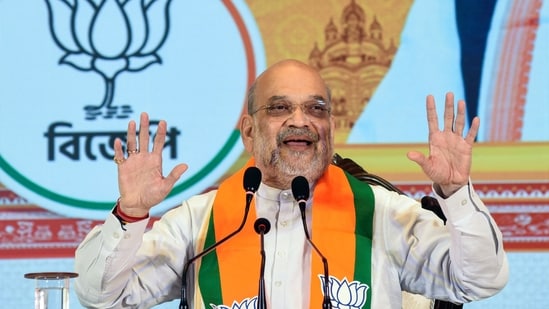
On Friday, the Bharatiya Janata Party (BJP) officially unveiled its election manifesto for the highly anticipated 2026 West Bengal Assembly elections, outlining a strategic blueprint designed to unseat the incumbent Trinamool Congress (TMC). Released in Kolkata by the party’s central and state leadership, the comprehensive document centers on three primary pillars: the implementation of a Uniform Civil Code (UCC) within the state, aggressive administrative measures to plug illegal cross-border infiltration, and substantial welfare guarantees, notably a monthly financial aid of ₹3,000 for women and unemployed youth. As West Bengal braces for a fiercely contested electoral battle, this manifesto highlights the BJP’s calculated strategy of blending its core ideological commitments with competitive regional welfare economics. [Source: Hindustan Times | Additional: Electoral Commission timelines and regional political context].
## The Ideological Cornerstone: Pledging the Uniform Civil Code
A standout feature of the BJP’s 2026 manifesto for West Bengal is the firm commitment to implement a Uniform Civil Code (UCC). The UCC proposes to replace personal laws based on the scriptures and customs of various religious communities with a common set of laws governing every citizen in matters such as marriage, divorce, inheritance, and adoption. Following the legislative precedent set by states like Uttarakhand in 2024, the BJP has increasingly made the state-level implementation of the UCC a central plank of its regional election campaigns.
In the context of West Bengal, a state with a complex demographic and historical background, the proposition of a UCC carries significant political weight. The BJP argues that a uniform code is essential for ensuring gender equality and secularism in civil matters, promising that it will dismantle discriminatory practices embedded in traditional personal laws. Party leaders at the manifesto launch emphasized that the UCC would provide equal rights to women across all communities, framing it as a progressive reform rather than an exclusionary tactic.
However, the proposal remains a subject of intense national and regional debate. Critics and opposition parties frequently contend that a UCC could infringe upon the constitutionally protected religious freedoms of minority communities. In West Bengal, where identity politics play a crucial role in voter mobilization, the pledge to enact the UCC sets the stage for a sharp ideological polarization ahead of the voting phases. [Source: Hindustan Times | Additional: Constitutional Law Debates and State Legislative Precedents].
## Securing the Frontiers: The Anti-Infiltration Stance
The second major pillar of the manifesto addresses a long-standing and highly emotive issue in the geopolitics of eastern India: illegal cross-border infiltration. West Bengal shares a porous 2,216-kilometer border with neighboring Bangladesh, characterized by riverine patches, dense forests, and densely populated border villages. This geographical reality has historically made border management a complex administrative and security challenge.
The BJP’s manifesto promises a zero-tolerance policy toward illegal immigration, vowing to “plug infiltration” through enhanced technological surveillance, better coordination with central border security forces, and strict state-level administrative crackdowns on the issuance of fraudulent identification documents. The party narrative links illegal infiltration to changing demographic patterns in border districts, framing it as a direct threat to both national security and the economic opportunities of the state’s bona fide citizens.
Dr. Ananya Sen, a Kolkata-based political analyst, notes the strategic nature of this inclusion: “The issue of border infiltration has been the bedrock of the BJP’s political ascent in West Bengal over the last decade. By reiterating this in the 2026 manifesto, the party aims to consolidate its traditional voter base in regions like North Bengal and the border districts, where anxieties over resource allocation and demographic shifts remain palpable.”
The political opposition, particularly the ruling TMC, has historically countered these claims by accusing the BJP of exaggerating infiltration numbers for electoral gain and attempting to marginalize legal citizens belonging to minority communities under the guise of border security. [Source: Hindustan Times | Additional: Ministry of Home Affairs Border Security Reports].
## Competitive Welfare Economics: ₹3,000 Aid to Women and Youth
While ideological and security issues form the core of the BJP’s traditional appeal, the 2026 manifesto marks a significant foray into competitive welfare economics. The promise of a direct monthly financial assistance of ₹3,000 to women and unemployed youth represents a direct challenge to the incumbent government’s popular welfare architectures.
Over the past few electoral cycles, direct benefit transfers (DBTs) have proven to be decisive factors in Indian state elections. In West Bengal, the TMC government’s flagship ‘Lakshmir Bhandar’ scheme—which provides monthly financial support to women heads of families—has been widely credited with securing a massive female voter base for the ruling party. The BJP’s pledge of ₹3,000 effectively attempts to outbid this existing framework, offering a substantially higher monetary figure to attract this crucial demographic.
Furthermore, the inclusion of unemployed youth in this financial aid bracket addresses the growing concerns regarding job creation and economic stagnation in the state. By promising targeted relief to young voters, the BJP is attempting to tap into anti-incumbency sentiments stemming from challenges in the state’s industrial and employment sectors.
**Key Financial Pledges Outlined:**
* **Women’s Empowerment Fund:** Guaranteed ₹3,000 monthly transfer to eligible women, aimed at fostering financial independence and countering existing state schemes.
* **Youth Stipend:** ₹3,000 monthly unemployment allowance for registered youth, intended to support job seekers while they transition into the workforce.
* **Skill Development Integration:** Linking the youth allowance to mandatory state-sponsored upskilling programs to boost long-term employability.
## The Fiscal Reality of Election Promises
While the electorate generally welcomes direct financial aid, economists and public policy experts frequently raise concerns regarding the fiscal viability of such expansive promises. West Bengal’s economic health has been a subject of ongoing debate, with the state carrying a significant public debt burden and facing challenges in revenue generation.
Funding a monthly payout of ₹3,000 to millions of women and youth would require a massive reallocation of the state budget. “Competitive populism in election manifestos across India is placing immense stress on state exchequers,” explains Raghuram Iyer, an independent fiscal policy researcher. “Implementing a ₹3,000 monthly scheme in a populous state like West Bengal would necessitate either a drastic cut in capital expenditure—which funds infrastructure and long-term development—or a significant increase in state borrowing, thereby exacerbating the debt-to-GDP ratio.”
The BJP manifesto briefly touches upon this by pledging to eradicate systemic corruption and streamline government expenditure, arguing that plugging financial leakages will free up the necessary capital to fund these welfare initiatives. However, the exact roadmap for balancing the budget alongside these heavy social sector commitments remains a critical point of scrutiny. [Source: Hindustan Times | Additional: RBI State Finances Report 2025-2026].
## Political Reactions and Electoral Implications
The release of the manifesto has immediately catalyzed political discourse across the state. The ruling Trinamool Congress has been swift in its dismissal of the document. TMC spokespersons have characterized the ₹3,000 financial pledge as an empty “jumla” (false promise), pointing to the fiscal impossibility of the scheme and accusing the BJP of attempting to buy votes after failing to build a robust organizational structure in the state.
On the issues of the UCC and infiltration, opposition leaders, including those from the Left Front and the Indian National Congress, have accused the BJP of relying on its traditional playbook of religious and cultural polarization. They argue that introducing the UCC debate into the state is an attempt to fracture the social fabric of West Bengal for electoral dividends.
Conversely, BJP leaders assert that the manifesto is a reflection of the people’s aspirations. They maintain that the incumbent government has failed to protect the state’s borders and has used welfare schemes merely as political tools rather than avenues for genuine economic empowerment. The manifesto, they claim, offers a “double-engine” growth model—synergizing state policies with the central government’s agenda to bring comprehensive development to Bengal.
## Conclusion: Key Takeaways and Future Outlook
The BJP’s 2026 West Bengal election manifesto is a meticulously crafted document that seeks to strike a balance between hardline ideological goals and pragmatic, populist welfare measures.
**Key Takeaways:**
1. **Ideological Stance:** The promise of a Uniform Civil Code ensures that national debates on personal laws and secularism will be front and center in the Bengal elections.
2. **Security Focus:** A renewed emphasis on border infiltration aims to mobilize voters concerned with demographic changes and national security.
3. **Welfare Bidding War:** The ₹3,000 pledge to women and youth highlights a shift toward aggressive direct benefit transfers, challenging the TMC’s established welfare dominance.
As the state moves closer to the polls, the ultimate test for the BJP will be convincing the electorate of its ability to deliver on these sweeping financial promises without destabilizing the state’s economy, while simultaneously navigating the complex social dynamics triggered by the UCC and border security debates. The 2026 West Bengal Assembly elections are shaping up to be not just a clash of political personalities, but a fundamental battle over the economic and ideological future of the state.





