
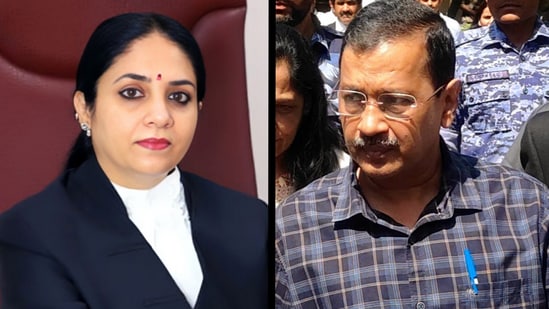
Delhi HC to appoint 3 senior lawyers as amicus for Kejriwal, Sisodia in excise policy case
# HC Names Amicus in Kejriwal Excise Case
**By Staff Reporter, National Legal Desk | May 5, 2026**
**NEW DELHI** — On Tuesday, the Delhi High Court announced it will appoint three senior advocates as *amicus curiae* to assist in the high-profile Delhi excise policy case involving Chief Minister Arvind Kejriwal and former Deputy Chief Minister Manish Sisodia. Justice Swarana Kanta Sharma stated that the court will commence hearing the Central Bureau of Investigation’s (CBI) arguments on merits following these appointments on Friday. This procedural development marks a critical juncture in the multi-year legal battle, aiming to streamline the voluminous evidence and complex legal arguments surrounding the alleged liquor licensing irregularities that have dominated national politics.
[Source: Hindustan Times | Additional: Delhi High Court Cause List, May 2026]
## The Strategic Role of the Amicus Curiae
In the realm of complex Indian jurisprudence, the appointment of an *amicus curiae*—literally translating to “friend of the court”—is a powerful mechanism utilized by judges to ensure objective, comprehensive legal assistance. However, the decision by Justice Swarana Kanta Sharma to appoint not one, but three senior advocates highlights the exceptional gravity and intricate nature of the Delhi excise policy litigation.
The case files, built collaboratively yet independently by the CBI and the Enforcement Directorate (ED), span tens of thousands of pages. They encompass digital forensics, hundreds of witness testimonies, and intricate financial trails allegedly linking government policy formulation to a network of private liquor barons, commonly referred to in court documents as the “South Group.”
By bringing in three neutral, highly experienced legal minds, the High Court aims to cut through the intensely partisan rhetoric that has historically delayed proceedings. The amicus team will be tasked with summarizing key evidentiary points, cross-referencing statutory overlaps between the Prevention of Corruption Act (PCA) and other criminal codes, and ensuring that the rights of the accused are balanced against the prosecution’s mandate.
“Appointing a three-member amicus panel is a clear signal that the High Court wants to accelerate the trial process without compromising on judicial thoroughness,” explains Dr. Vikramaditya Rao, a senior constitutional lawyer and former additional solicitor general. “When you have the Chief Minister and a former Deputy Chief Minister involved, every procedural step is heavily scrutinized. The court is effectively insulating its eventual findings by relying on independent experts to sift through the CBI’s merits.”
[Source: Hindustan Times | Additional: Expert Legal Commentary]
## CBI’s Push for Hearings on Merits
For the better part of three years, the legal discourse surrounding Arvind Kejriwal and Manish Sisodia has been overwhelmingly dominated by bail hearings, remand extensions, and jurisdictional challenges. The upcoming Friday hearing represents a fundamental pivot: the court will finally begin hearing the CBI’s arguments on the actual *merits* of the case.
Hearing arguments on merits means the court will begin examining the substantive evidence meant to prove the core allegations. The CBI contends that the Delhi Excise Policy 2021-22 was deliberately modified to grant undue operational and financial advantages to specific private entities in exchange for kickbacks amounting to ₹100 crore.
The investigative agency will attempt to demonstrate a clear *quid pro quo*. According to the CBI’s supplementary charge sheets, these funds were allegedly routed through a complex web of hawala operators and shell companies, ultimately finding their way into the political funding apparatus of the Aam Aadmi Party (AAP). Both Kejriwal and Sisodia have consistently and vehemently denied these charges, characterizing the entire investigation as a fabricated political witch-hunt orchestrated by the ruling dispensation at the Centre.
The High Court’s willingness to proceed with merits indicates that the preliminary stages of charge-framing are solidifying. The newly appointed *amicus curiae* will assist the judge in evaluating whether the CBI’s presented evidence meets the threshold required to sustain the charges under the Prevention of Corruption Act and criminal conspiracy under the Indian Penal Code.
## A Prolonged Legal Journey: Timeline of the Excise Policy Case
To understand the significance of Tuesday’s High Court directive, it is essential to contextualize the timeline of the Delhi excise policy case, which has fundamentally disrupted the administrative and political framework of the National Capital Territory.
**Key Milestones in the Delhi Excise Policy Case (2021-2026)**
| Date | Event / Milestone |
| :— | :— |
| **Nov 2021** | The Delhi Government implements the new Excise Policy 2021-22, privatizing retail liquor sales. |
| **Jul 2022** | Delhi Lieutenant Governor V.K. Saxena recommends a CBI probe into alleged procedural lapses and rule violations. |
| **Aug 2022** | The Delhi Government abruptly scraps the new policy and reverts to the old excise regime. |
| **Feb 2023** | Manish Sisodia, the then Deputy Chief Minister holding the excise portfolio, is arrested by the CBI. |
| **Mar 2024** | Chief Minister Arvind Kejriwal is arrested by the Enforcement Directorate (ED), and later formally charged by the CBI. |
| **2024 – 2025** | The case enters a protracted phase of Supreme Court and High Court bail litigations; systemic delays plague charge-framing. |
| **May 2026** | Delhi High Court intervenes, announcing the appointment of three senior lawyers as *amicus curiae* to begin hearing the CBI’s case on merits. |
[Source: Historical Public Records | Additional: Court Dockets 2021-2026]
## The Intersection of the PMLA and the PCA
A central complexity of the excise policy case that the *amicus* will need to navigate is the overlapping nature of the investigations by the CBI and the ED. While the current High Court order specifically addresses the CBI’s appeal regarding the substantive corruption charges under the Prevention of Corruption Act (PCA), the shadow of the Prevention of Money Laundering Act (PMLA) looms large.
Under Indian law, the ED cannot independently register a money laundering case; it requires a “predicate offense” (a foundational crime) investigated by agencies like the CBI or local police. In this instance, the CBI’s corruption case serves as the predicate offense for the ED’s money laundering investigation.
“If the CBI fails to substantiate its claims on the merits of the corruption charges, the foundational pillar of the ED’s money laundering case could effectively collapse,” notes Meenakshi Sinha, a criminal defense attorney specializing in white-collar crimes. “The amicus curiae will play a vital role in keeping the court focused strictly on the evidence of corruption, rather than allowing the prosecution to conflate the PCA violations with the broader, often more ambiguous PMLA allegations.”
This legal tightrope is precisely why Justice Sharma’s decision is being closely watched. The interpretation of digital records, WhatsApp chats, and testimonies from approvers (former co-accused who have turned state’s witness) requires meticulous, unbiased legal parsing.
## Political Ramifications for the Aam Aadmi Party
While the courtroom drama unfolds, the political fallout continues to affect the governance and strategic positioning of the Aam Aadmi Party. With both its top-tier leaders entangled in prolonged litigation, the party has had to navigate unprecedented administrative hurdles in Delhi.
The transition from procedural skirmishes to a trial on merits means that the details of the CBI’s investigation will be debated in open court, subjecting the AAP’s internal decision-making processes to intense public and media scrutiny. For the opposition in Delhi, these hearings will provide fresh ammunition to challenge the AAP’s foundational anti-corruption platform.
Conversely, the AAP leadership maintains that moving to the merits of the case will finally expose the lack of substantive evidence against Kejriwal and Sisodia. Party spokespersons have repeatedly highlighted that despite years of investigation and hundreds of raids, no direct monetary recovery linking the Chief Minister to the alleged kickbacks has been made.
## What to Expect in the Upcoming Friday Hearing
As the Delhi High Court reconvenes on Friday, the immediate focus will be the formal introduction and briefing of the three appointed *amicus curiae*. Justice Sharma is expected to lay out the specific terms of reference for the senior advocates, delineating how they should approach the CBI’s extensive documentation.
Legal observers anticipate that the CBI counsel will outline the primary pillars of their case, focusing on the formulation of the 12% profit margin for wholesalers, which they argue was an arbitrary inflation from the initial 5% expert committee recommendation, allegedly designed to create a pool of funds for kickbacks.
The defense counsels for Kejriwal and Sisodia will likely be given a framework for submitting their rebuttals. The presence of the amicus panel guarantees that these proceedings will be highly technical, prioritizing evidentiary legality over courtroom theatrics.
## Conclusion and Future Outlook
The Delhi High Court’s decision to appoint three senior lawyers as *amicus curiae* in the CBI’s excise policy appeal marks a definitive shift in one of India’s most consequential political-legal battles. By transitioning the focus from endless bail disputes to the substantive merits of the allegations, the judiciary is signaling a desire for closure and accountability.
**Key Takeaways:**
* **Judicial Efficiency:** The appointment of a three-member amicus panel is a rare move aimed at untangling a massive, complex web of evidence.
* **Focus on Evidence:** Beginning Friday, the court will critically evaluate the CBI’s proof regarding the alleged ₹100 crore kickback scheme.
* **High Stakes:** The outcome of these merits hearings will not only determine the legal fate of Arvind Kejriwal and Manish Sisodia but will also have profound implications for the political landscape of the National Capital and the credibility of central investigative agencies.
As May 2026 unfolds, all eyes remain firmly fixed on the Delhi High Court. The findings over the coming weeks will likely set enduring precedents for how economic offenses involving high-ranking public officials are prosecuted and adjudicated in India.





