
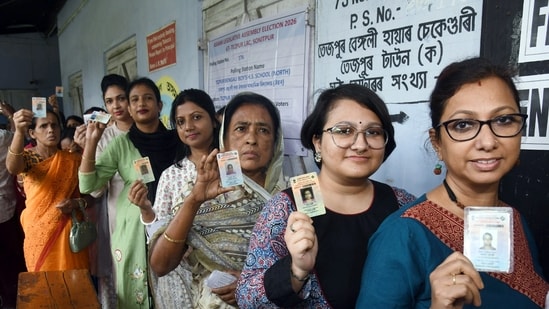
Elections 2026 LIVE: Re-polling ‘going peacefully’ in Assam's Karimganj North Sribhumi, says official| India News
# Modi Rallies in Bengal; TMC Slams UCC Push
By Political Election Desk, April 11, 2026
Prime Minister Narendra Modi is scheduled to address three major political rallies in poll-bound West Bengal on Saturday, April 11, 2026, intensifying the Bharatiya Janata Party’s (BJP) campaign to unseat the incumbent Trinamool Congress (TMC). As the high-stakes state assembly elections approach, the ruling TMC has sharply escalated its rhetoric, directly criticizing the BJP’s proposed implementation of the Uniform Civil Code (UCC) in the state. TMC leadership argues that imposing the UCC would fundamentally weaken and erase India’s rich cultural and religious diversity. This clash sets the stage for a deeply polarized electoral battle centered on identity, governance, and regional autonomy. [Source: Hindustan Times RSS | Additional: General Electoral Context]
## The Prime Minister’s Triple Rally Blitz
As the 2026 West Bengal Legislative Assembly elections enter a critical phase, the BJP has deployed its most prominent campaigner to galvanize grassroots support. Prime Minister Modi’s schedule includes three strategically located rallies designed to cover distinct demographic and geographic zones across the state. These rallies are expected to draw massive crowds and serve as a platform for the BJP to articulate its vision of *‘Vikas’* (development) and anti-corruption governance.
The BJP has been steadily building its presence in West Bengal over the past decade. Following the 2021 assembly elections, where the TMC secured a decisive victory with 213 seats and the BJP emerged as the primary opposition with 77 seats, the saffron party has continuously strategized to bridge the electoral gap. PM Modi’s speeches are anticipated to focus heavily on allegations of localized corruption, unfulfilled welfare promises, and the necessity of a “double-engine government”—a term the BJP uses to describe the benefits of having the same party in power at both the state and central levels.
However, beyond economic development, the cultural and ideological contours of the campaign have taken center stage, primarily driven by the BJP’s renewed push for a Uniform Civil Code.
## The Uniform Civil Code (UCC) Flashpoint
The Uniform Civil Code has been a long-standing ideological pillar for the BJP, alongside the abrogation of Article 370 and the construction of the Ram Mandir. The UCC proposes to replace personal laws based on the scriptures and customs of various religious communities with a common set of rules governing citizen matters such as marriage, divorce, inheritance, and adoption.
Proponents of the UCC argue that a common civil code is essential for national integration and gender justice. They maintain that the current system of disparate personal laws often discriminates against women and contradicts the constitutional mandate of equality before the law. BJP leaders campaigning in Bengal have frequently cited the successful legislative templates passed in other BJP-ruled states as models of progressive reform.
Conversely, the TMC has drawn a hard line against the implementation of the UCC in West Bengal. On Saturday, concurrent with PM Modi’s visit, TMC spokespersons released stringent criticisms of the policy. The ruling party claims that the BJP’s push for uniformity is a thinly veiled attempt to overwrite the distinct cultural, linguistic, and religious identities that define the Indian subcontinent.
“The BJP wants to erase India’s diversity. Their interpretation of uniformity is synonymous with majoritarian homogeneity,” a senior TMC official stated during a press briefing in Kolkata. The TMC argues that true secularism respects the diverse personal laws of various communities, and imposing a singular code violates the constitutional guarantees of religious freedom. [Source: Hindustan Times RSS]
## TMC’s Defensive Strategy and Sub-Nationalism
Under the leadership of Chief Minister Mamata Banerjee, the TMC is framing the 2026 election not just as a choice between political parties, but as an existential defense of Bengali culture and pluralism. The party has consistently utilized Bengali sub-nationalism to counter the BJP’s centralized political narrative.
By focusing heavily on the UCC, the TMC aims to consolidate its core voter base while appealing to civil society members and minority groups who may feel disenfranchised by the proposed legal changes. The TMC’s campaign machinery has been active across rural and urban Bengal, utilizing localized welfare schemes—such as *Lakshmir Bhandar* (a direct cash transfer scheme for women)—to highlight their commitment to state-specific development over national ideological projects.
The TMC is strategically juxtaposing the BJP’s UCC narrative with its own track record of social harmony and localized welfare. By labeling the BJP as an entity that does not understand the diverse cultural fabric of Bengal, the TMC hopes to evoke a sense of regional pride and protective sentiment among the electorate.
## Electoral Demographics and the Vote Bank Matrix
To understand why the UCC is such a potent electoral issue in West Bengal, one must examine the state’s demographic realities. West Bengal has a significant minority population, comprising roughly 27% to 30% of the electorate, depending on regional concentrations. This demographic block has historically been a crucial component of the TMC’s electoral success.
For the BJP, pushing the UCC serves a dual purpose. Analytically, political scientists observe that the UCC appeals to the BJP’s core Hindu voter base, who view the policy as a necessary step toward achieving true equality and ending what the party terms “minority appeasement.” By elevating the UCC in the electoral discourse, the BJP seeks to consolidate the majority vote in a state where voting patterns are increasingly polarized.
For the TMC, robust opposition to the UCC is practically mandatory to retain the trust of minority voters. Furthermore, the TMC is reaching out to the progressive, urban middle class in Kolkata and its surrounding areas, arguing that the UCC could eventually lead to the infringement of tribal rights and local customs.
### 2026 Campaign Core Themes by Major Parties
| Party / Alliance | Core 2026 Campaign Theme | Stance on Uniform Civil Code | Primary Voter Appeal Strategy |
|——————|————————–|——————————|——————————-|
| **Trinamool Congress (TMC)** | State welfare, Bengali identity, anti-centralization | **Strongly Opposed** | Protecting regional diversity, localized welfare distribution |
| **Bharatiya Janata Party (BJP)** | Anti-corruption, National integration, Double-engine growth | **Strongly Supportive** | Gender justice, national uniformity, ending political violence |
| **Left Front – Congress Alliance** | Alternative governance, Employment, Anti-incumbency | **Opposed** | Focus on economic distress, restoring democratic institutions |
## Expert Perspectives on the Political Climate
Political analysts monitoring the 2026 West Bengal elections note that the rhetoric surrounding the UCC is as much about political signaling as it is about legislative intent.
**Dr. Rajeev Sen, a political sociologist specializing in Eastern Indian politics, notes:**
> “The Uniform Civil Code represents a fascinating ideological battleground in West Bengal. For the BJP, it is a tool to project strong, decisive national leadership and promise a formalized legal equality. For the TMC, opposing the UCC is the ultimate litmus test for their commitment to secularism and regional diversity. Both parties are utilizing this single issue to trigger deep-seated emotional responses from their respective vote banks.” [Source: Independent Political Analysis]
Furthermore, constitutional scholars point out that implementing a UCC at the state level—as some states have attempted—presents complex legal challenges. **Aparna Mitra, a constitutional lawyer based in New Delhi, explains:**
> “While states have the concurrent power to legislate on matters like marriage and inheritance, any state-level UCC that contradicts existing central personal laws requires presidential assent. Therefore, the UCC debate in a state election is primarily a mechanism for electoral mobilization rather than immediate legal transformation.” [Source: Legal Framework Review]
## Beyond Bengal: National Implications
The outcome of the West Bengal elections, and the resonance of the UCC debate within it, will reverberate far beyond the state’s borders. As India navigates the complex post-2024 political landscape, regional parties are continuously evaluating the most effective strategies to counter the BJP’s dominant national narrative.
If the BJP manages to make significant electoral gains in Bengal using the UCC as a core campaign pillar, it will validate the party’s strategy of merging national ideological goals with state-level politics. It would likely accelerate the push for a nationwide implementation of the Uniform Civil Code in the Parliament.
Conversely, if the TMC successfully defends its turf by framing the UCC as an attack on India’s diversity, it will provide a strategic blueprint for other regional and opposition parties. States like Tamil Nadu, Kerala, and Punjab, where regional identity is fiercely guarded, will closely observe Mamata Banerjee’s ability to turn the defense of diversity into an electoral victory.
## Conclusion: A Defining Moment for Regional Politics
As PM Modi takes the stage across West Bengal this Saturday, the rhetoric will undoubtedly be fierce. The 2026 assembly elections have evolved into a fundamental debate over the nature of the Indian republic. Will the electorate favor the BJP’s vision of national uniformity and streamlined governance, or will they endorse the TMC’s protective stance on regional autonomy, pluralism, and diverse personal laws?
The competing narratives—the BJP’s promise of equality through a Uniform Civil Code versus the TMC’s assertion that such a code erases India’s foundational diversity—highlight a deeply polarized electorate. Ultimately, the voters of West Bengal will not just be choosing a state government; they will be casting a verdict on which vision of India they wish to inhabit.





