
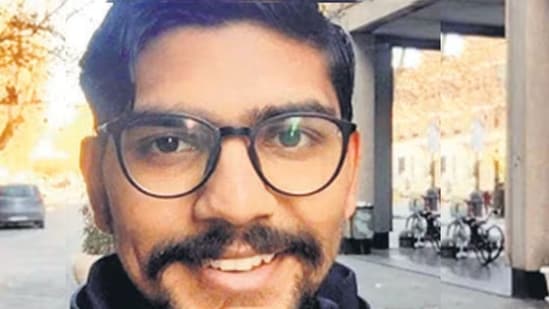
Family seeks DNA test of seafarer’s remains killed in Iranian strike, alleges contradictory claims by company| India News
Indian Seafarer Dixit Solanki Family Seeks DNA Clarity After Oman Drone Attack
The vast, unforgiving expanses of the ocean hold both promise and peril for seafarers navigating global trade routes. For the family of Dixit Solanki, a 32-year-old Indian national from Vadodara, Gujarat, the waters off the Oman coast tragically revealed their treacherous nature on March 4. Solanki was reportedly killed when an explosive-laden drone boat struck the oil tanker M/T Pacific Zircon, a Liberian-flagged vessel, amidst the escalating West Asia conflict. What began as a horrific maritime incident has since unfolded into a heart-wrenching quest for truth and closure, as Solanki’s family grapples with conflicting accounts and unidentifiable remains, demanding a DNA test to confirm their loved one’s identity.
A March Day Turns Tragic
On that fateful day, the M/T Pacific Zircon, operated by Eastern Pacific Shipping (EPS), was traversing a sensitive maritime corridor when it came under attack. Reports from the incident describe a drone boat, packed with explosives, making direct contact with the tanker. Such attacks have unfortunately become a grim reality in parts of the Arabian Sea and the Gulf region, linked to ongoing geopolitical tensions and a series of strikes targeting commercial shipping. While initial news dispatches confirmed the attack and damage to the vessel, the full human cost only gradually emerged.
Dixit Solanki was the sole fatality reported from the M/T Pacific Zircon incident. His role as a seafarer, a profession that often places individuals in harm’s way far from home, underscores the silent dangers many face to keep global supply chains moving. The immediate aftermath of the attack saw the company, Eastern Pacific Shipping, confirming the incident and the loss of a crew member. However, the path to informing Solanki’s family and repatriating his remains has been fraught with troubling inconsistencies, adding immense emotional distress to their already profound grief.
The Family’s Agonizing Wait and Conflicting Narratives
Back in Vadodara, the Solanki family received the devastating news, but the details remained shrouded in a fog of uncertainty. Initially, the family was informed that Dixit had fallen overboard, leading to hopes that he might still be found. This initial narrative, however, dramatically shifted. Several days later, the company reported that a body believed to be Dixit’s had been recovered on March 15 and was being repatriated to India.
This sudden change in explanation, from “fell overboard” to “body found,” immediately raised red flags for the grieving family. Their skepticism grew when the repatriated remains arrived without any personal identification documents, wallet, phone, or even the uniform Dixit was known to wear. The body, they alleged, was severely disfigured and unidentifiable through visual means alone. This lack of concrete evidence, combined with the earlier contradictory statements, ignited a desperate plea for official intervention and transparent procedures.
The Solanki family, supported by local community leaders and maritime welfare organizations, has since been vocal in their demands. Their primary objective is a DNA test to conclusively establish whether the repatriated remains are indeed those of Dixit Solanki. “How can we accept a body as our son’s when there is no proof, no identification, and the company’s story keeps changing?” a family member expressed, conveying their deep anguish and suspicion to Omni 360 News. “We need answers, not just a body.”
Official Involvement and the Quest for Justice
The Indian Ministry of External Affairs (MEA) has acknowledged the incident. On March 8, MEA spokesperson Randhir Jaiswal confirmed the drone attack and the tragic death of an Indian national, indicating diplomatic channels were engaged. However, the specific concerns regarding the identification of Dixit Solanki’s remains and the company’s alleged inconsistencies are still being addressed. The family hopes that the MEA will expedite their request for a DNA verification, providing them with the undeniable proof they seek for peace of mind.
The broader context of this tragedy highlights the growing risks faced by seafarers in conflict-ridden maritime zones. The West Asia conflict has transformed crucial shipping lanes into flashpoints, with drone and missile attacks on commercial vessels becoming an alarming reality. While the global community focuses on the geopolitical ramifications, individual families like the Solankis bear the direct, devastating consequences. Their story is a stark reminder of the human cost behind every news headline about maritime security.
For a 12th-grade student trying to understand this complex situation, it’s like a puzzle with missing pieces. Imagine someone you know goes on a trip. You hear there was an accident, and they might be hurt. Then, you hear they fell out of the car. Later, you’re told a body was found, but it looks very different, and there’s no way to easily tell if it’s them. The people who were with them keep changing their story. All you want is a clear answer, a proper way to be sure it’s your friend, so you can grieve properly. That’s exactly what Dixit Solanki’s family is going through. They need solid proof, like a DNA test, to confirm the identity and understand exactly what happened, especially when the information from the company has been so confusing.
Key Takeaways
* Tragic Loss: Dixit Solanki, an Indian seafarer, was killed in an explosive drone boat attack off the Oman coast on March 4.
* Conflicting Accounts: The operating company, Eastern Pacific Shipping, reportedly provided inconsistent information to the family regarding Solanki’s death and the discovery of his remains.
* Demand for DNA: Solanki’s family urgently seeks a DNA test to confirm the identity of the repatriated body, citing its unidentifiable state and lack of personal effects.
* Broader Implications: The incident underscores the severe dangers faced by seafarers in conflict-affected West Asian waters and the critical need for transparency and support for victims’ families.
The Solanki family’s struggle for definitive answers is a poignant echo of countless others who seek truth in the aftermath of tragedy. As the global shipping industry continues to navigate dangerous waters, the case of Dixit Solanki stands as a powerful reminder that every vessel carries not just cargo, but the hopes and lives of dedicated individuals. Their plea for a DNA test is not merely about identification; it is about dignity, justice, and the fundamental right to closure for a family devastated by an incident far from home. Omni 360 News will continue to follow this developing story, advocating for transparency and support for the Solanki family.





