
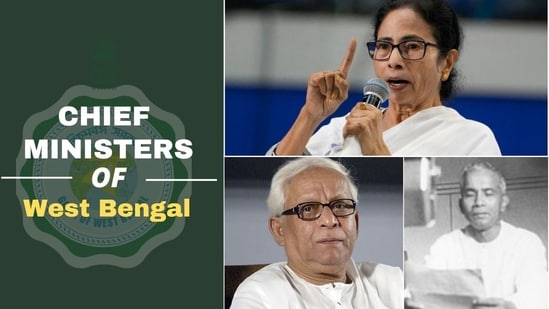
From Prafulla Chandra Ghosh to Mamata Banerjee: Full list of West Bengal chief ministers over the years
# West Bengal CMs: Complete Political History
**By Special Correspondent, The India Gazette** | **April 30, 2026**
On April 30, 2026, as West Bengal gears up for a highly anticipated electoral cycle, the state’s political lineage is drawing renewed national attention. A retrospective analysis of West Bengal’s chief ministers—from the inaugural leadership of Prafulla Chandra Ghosh to the contemporary dominance of Mamata Banerjee—reveals a complex and evolving democratic tapestry. These towering leaders have fundamentally shaped the state’s socioeconomic fabric over the last eight decades, steering it through post-partition crises, radical land reforms, and waves of populist welfare. Understanding this historical progression offers vital context for India’s broader democratic journey and explains how regional heavyweights in Kolkata continue to influence national political currents today. [Source: Hindustan Times].
## The Formative Years: Independence to Consolidation (1947–1967)
The genesis of West Bengal’s political history began in the tumultuous aftermath of India’s partition. **Prafulla Chandra Ghosh**, the state’s first Chief Minister, took the oath of office in August 1947. A devoted Gandhian, Ghosh’s tenure was remarkably brief, lasting only until January 1948, as he struggled to manage the overwhelming influx of refugees and internal factionalism within the Indian National Congress.
He was succeeded by **Dr. Bidhan Chandra Roy**, widely revered as the “Maker of Modern West Bengal.” Serving from 1948 until his death in 1962, Dr. Roy’s visionary leadership established the industrial and infrastructural backbone of the state. He founded satellite townships like Salt Lake, Kalyani, and Durgapur, the latter becoming a central hub for India’s steel industry. Dr. Roy successfully navigated the massive demographic shifts caused by the partition, stabilizing the state’s economy while commanding immense respect across party lines. [Source: Hindustan Times | Additional: Historical Archives of the Government of West Bengal].
Following Dr. Roy’s demise, **Prafulla Chandra Sen** assumed leadership. Earning the moniker “Iron Man of Bengal,” Sen focused heavily on rural development and food security. However, his tenure was marred by severe food shortages and rising anti-establishment sentiment, which ultimately led to the Congress party’s electoral defeat in the state in 1967.
## Decades of Disruption and the Naxalite Rise (1967–1977)
The period between 1967 and 1977 was characterized by extreme political volatility, marked by shifting alliances, frequent imposition of President’s Rule, and violent uprisings. The monopoly of the Congress party was broken by the United Front coalition, led by **Ajoy Kumar Mukherjee** of the Bangla Congress. Mukherjee served three separate, fragmented terms during this chaotic decade.
This era witnessed the birth of the Naxalite movement—an armed radical communist insurgency originating in the village of Naxalbari. The state’s political machinery struggled to contain the ideological violence that spilled into the streets of Kolkata and rural Bengal.
In 1972, **Siddhartha Shankar Ray** of the Congress party returned to power with a clear mandate. Ray, an accomplished barrister, is historically remembered for his iron-fisted approach to crushing the Naxalite insurgency. His tenure coincided with the national Emergency declared by Prime Minister Indira Gandhi in 1975. While Ray successfully restored law and order to the streets of Kolkata, his draconian measures alienated the rural poor and urban intelligentsia, laying the groundwork for a historic political shift.
## The Red Bastion: Three Decades of Left Rule (1977–2011)
The year 1977 marked a watershed moment in global democratic history. The Communist Party of India (Marxist)-led Left Front swept to power, initiating the world’s longest-serving democratically elected communist government. At the helm was **Jyoti Basu**, who served as Chief Minister for an unprecedented 23 years until 2000.
Basu’s administration fundamentally reengineered the socioeconomic hierarchy of West Bengal. The Left Front’s flagship initiative, *Operation Barga*, successfully registered and secured the rights of millions of sharecroppers, dismantling the traditional landlord system. This agrarian reform, coupled with the empowerment of local *Panchayati Raj* (village councils), cemented the Left’s rural vote bank for three decades. However, Basu’s tenure also saw a drastic decline in the state’s industrial sector. Militant trade unionism, frequent strikes (*bandhs*), and capital flight stripped West Bengal of its status as India’s premier industrial hub. [Source: Hindustan Times | Additional: Election Commission of India Historical Data].
In 2000, Basu voluntarily stepped down due to declining health, handing the reins to his deputy, **Buddhadeb Bhattacharjee**. Recognizing the urgent need for economic revitalization, Bhattacharjee championed rapid industrialization, famously courting domestic and foreign capital with the slogan “Do it now.” His efforts successfully attracted IT giants to Kolkata and the Tata Motors Nano plant to Singur.
Yet, this ambitious industrial push proved to be a fatal miscalculation. The forceful acquisition of multi-cropped agricultural land in Singur and Nandigram sparked massive, violent peasant protests. The very rural demographic that had sustained the Left Front turned against it, providing an opening for a formidable new opposition leader.
## The Trinamool Era: Welfare and Populism (2011–Present)
Riding the wave of the anti-land acquisition movements, **Mamata Banerjee** and her All India Trinamool Congress (TMC) achieved the impossible in 2011: dismantling the 34-year-old Left Front regime. Coining the emotive slogan *”Ma, Mati, Manush”* (Mother, Earth, People), Banerjee positioned herself as the true protector of the agrarian poor.
Banerjee’s 15-year tenure has been defined by expansive, direct-benefit welfare schemes. Initiatives like *Kanyashree* (financial aid for girls’ education), *Swasthya Sathi* (universal health insurance), and *Lakshmir Bhandar* (basic income for female heads of households) have created a dedicated, deeply loyal voter base, particularly among women and marginalized communities.
“Mamata Banerjee effectively replaced the ideological, cadre-driven machinery of the Left with a deeply personalized, welfare-delivery model,” notes Dr. Anirban Chatterjee, a political sociologist based in Kolkata. “While her critics point to a lack of large-scale industrialization and instances of political violence, her direct cash-transfer schemes have practically insulated her from anti-incumbency, as proven in the sweeping victories of 2016 and 2021.” [Source: Independent Expert Commentary, 2026].
As the state heads toward the pivotal 2026 assembly elections, Banerjee faces new challenges, including a highly organized Bharatiya Janata Party (BJP) opposition aiming to polarize the electorate, and internal demands for next-generation leadership within the TMC.
## Complete List of West Bengal Chief Ministers
A chronological look at the leaders who have held the highest executive office in the state reveals the shifts from Congress dominance to Communist strongholds, culminating in the current regional dominance:
| Name | Term in Office | Political Party |
| :— | :— | :— |
| **Prafulla Chandra Ghosh** | Aug 1947 – Jan 1948 | Indian National Congress |
| **Bidhan Chandra Roy** | Jan 1948 – Jul 1962 | Indian National Congress |
| **Prafulla Chandra Sen** | Jul 1962 – Feb 1967 | Indian National Congress |
| **Ajoy Kumar Mukherjee** | Mar 1967 – Nov 1967 | Bangla Congress (United Front) |
| **Prafulla Chandra Ghosh** | Nov 1967 – Feb 1968 | Independent (backed by Congress) |
| **Ajoy Kumar Mukherjee** | Feb 1969 – Mar 1970 | Bangla Congress (United Front) |
| **Ajoy Kumar Mukherjee** | Apr 1971 – Jun 1971 | Bangla Congress |
| **Siddhartha Shankar Ray** | Mar 1972 – Apr 1977 | Indian National Congress |
| **Jyoti Basu** | Jun 1977 – Nov 2000 | Communist Party of India (Marxist) |
| **Buddhadeb Bhattacharjee** | Nov 2000 – May 2011 | Communist Party of India (Marxist) |
| **Mamata Banerjee** | May 2011 – Present | All India Trinamool Congress |
*(Note: The state has also been under President’s Rule on four separate occasions during periods of political breakdown).*
## Economic Implications of Changing Regimes
The shifting of the Chief Ministerial seat in West Bengal is not merely a tale of political musical chairs; it is the story of fluctuating economic philosophies. Dr. Roy’s era was defined by a top-down, state-led industrial master plan. The succeeding decades under the Left Front shifted the focus entirely to agrarian restructuring. While the Left succeeded in rural equity, it fundamentally altered the state’s work culture, resulting in capital flight from which the state is still attempting to recover.
Today, under Mamata Banerjee, the economic model is distinctly populist. The state budget is heavily geared toward micro-economic stimulation through direct cash transfers. While this has undoubtedly lifted millions out of extreme poverty and spurred local rural consumption, economists warn about the state’s mounting fiscal deficit and the urgent need for robust, private sector job creation to sustain this welfare model in the long run.
## Conclusion and Future Outlook
From the foundational years under Prafulla Chandra Ghosh and Bidhan Chandra Roy, through the turbulent and transformative era of the Left Front, to the welfare-driven governance of Mamata Banerjee, West Bengal’s chief ministers have continually shaped both regional identities and national politics. [Source: Hindustan Times].
As of April 2026, West Bengal stands at another historical crossroads. The legacy of these leaders highlights a state that fiercely guards its political autonomy and ideological distinctiveness. Whether the electorate chooses to extend Mamata Banerjee’s unprecedented run or pivot toward a new political paradigm, the next chapter in West Bengal’s history will inevitably be built upon the complex, deeply entrenched legacies of the chief ministers who came before.





