Gopinath Bordoloi to Himanta Biswa Sarma: Full list of Assam chief ministers since 1937| India News
# Assam CM History: Bordoloi to Himanta Sarma
**By Senior Correspondent, National Politics Desk**
**April 19, 2026**
As the north-eastern state of Assam gears up for its highly anticipated Assembly Elections in the coming days, the region stands at a critical political crossroads. To truly understand the current electoral battleground, one must look back at the state’s 89-year political evolution. From the provincial premiers of British India to the modern chief ministers of the republic, Assam’s highest political office has weathered the storms of partition, linguistic reorganization, armed insurgency, and shifting ideological tides. The journey from the foundational leadership of Gopinath Bordoloi in 1937 to the incumbent administration of Himanta Biswa Sarma offers a fascinating window into the soul of India’s gateway to the Northeast. [Source: Hindustan Times].
## The Pre-Independence Era and State Architects (1937–1950)
The political lineage of Assam’s chief executive begins before India’s independence, operating under the Government of India Act 1935. At this time, the head of the provincial government was designated as the “Premier.” Sir Syed Muhammad Saadulla of the All-India Muslim League served as the first Premier of Assam, taking office in April 1937. His tenure, though fragmented, was defined by the complex demographics and the settlement policies of the British era.
However, the defining figure of this foundational era was **Lokpriya Gopinath Bordoloi** of the Indian National Congress. First becoming Premier in 1938, Bordoloi’s crowning achievement came during the turbulent days of 1946. Under the British Cabinet Mission Plan, Assam was controversially grouped with Bengal in “Group C,” which would have likely resulted in Assam becoming part of East Pakistan upon partition. Bordoloi, with the backing of Mahatma Gandhi, fiercely resisted this grouping, effectively securing Assam’s place within the Indian Union.
When the Indian Constitution came into effect on January 26, 1950, the title of Premier was changed to Chief Minister. Bordoloi served as the first Chief Minister of an independent Assam until his untimely death later that year, leaving behind a legacy of unity and integration. [Additional Source: Archives of the Assam Legislative Assembly].
## The Congress Bastion: Stability and Statehood (1950–1978)
Following Bordoloi’s demise, the Indian National Congress established a dominant political hegemony over Assam that lasted for nearly three decades. **Bishnuram Medhi** (1950-1957) took the reins, focusing on agrarian reforms and navigating the early challenges of integrating tribal belts. He was succeeded by **Bimala Prasad Chaliha** (1957-1970), whose lengthy tenure was marked by both significant infrastructure development and intense linguistic friction.
During Chaliha’s time, the state witnessed the Official Language movement of 1960, which sought to make Assamese the sole official language, sparking tensions in the Bengali-majority Barak Valley. Furthermore, Chaliha navigated the state through the 1962 Sino-Indian war, when Chinese forces advanced dangerously close to the Assamese border.
**Sarat Chandra Sinha** (1972-1978) took over during another period of massive geographic restructuring. It was under his watch that Assam’s capital was shifted from Shillong to Dispur, following the creation of Meghalaya as a separate state. Sinha was widely respected for his austerity, value-based politics, and efforts to empower the marginalized, though his term marked the twilight of the uncontested Congress era.
## The Assam Agitation and Regional Uprising (1979–2001)
The late 1970s and 1980s plunged Assam into profound political instability, characterized by brief chief ministerial tenures and the imposition of President’s Rule. The trigger was the historic Assam Agitation (1979-1985)—a massive popular movement led by students demanding the detection and deportation of illegal immigrants from Bangladesh.
During this volatile period, Assam saw its first non-Congress government led by **Golap Borbora** of the Janata Party in 1978. Shortly after, the state made history by electing **Syeda Anwara Taimur** in 1980, who remains Assam’s first and only female Chief Minister, as well as its only Muslim Chief Minister in post-independence India. Her tenure, though lasting less than a year, was a remarkable political milestone.
The Congress briefly stabilized under **Hiteswar Saikia** (1983-1985), but the 1983 elections were deeply marred by violence, most notably the Nellie massacre. Peace was eventually brokered with the signing of the Assam Accord in 1985.
This accord birthed a new regional political force: the Asom Gana Parishad (AGP). Sweeping the subsequent elections, student leader **Prafulla Kumar Mahanta** became the Chief Minister at the age of 33, the youngest in the state’s history. The AGP and Congress would trade power through the 1990s, an era severely complicated by the rise of armed insurgencies, particularly the United Liberation Front of Asom (ULFA).
“The period from 1985 to 2001 was the crucible of modern Assamese identity politics. The transition of student leaders from the streets to the secretariat fundamentally altered the DNA of the state’s governance,” observes Dr. Manash Pratim Deka, a political analyst at the Institute of Northeast Policy Studies.
## The Tarun Gogoi Era: Recovery and Peace (2001–2016)
When **Tarun Gogoi** led the Congress back to power in 2001, he inherited a state plagued by insurgency, secret killings, and an empty treasury. Over the next 15 years—the longest uninterrupted tenure by an Assam Chief Minister up to that point—Gogoi authored a remarkable turnaround story.
His administration focused heavily on restoring law and order, successfully bringing several militant outfits to the negotiating table. Economically, his tenure saw a revival of the tea industry, improved infrastructure, and the stabilization of state finances. Gogoi’s three terms were characterized by a relatively peaceful political climate, transforming Assam from a conflict-ridden state into an emerging economic hub in the Northeast.
## The Saffron Surge: BJP’s Ascent to Power (2016–2026)
The political landscape underwent a seismic shift in 2016. Capitalizing on anti-incumbency, forging astute alliances with regional parties like the AGP and UPPL, and heavily promoting a narrative of indigenous rights coupled with nationalistic development, the Bharatiya Janata Party (BJP) formed its first government in Assam.
**Sarbananda Sonowal**, a former student leader who transitioned to the BJP, served as Chief Minister from 2016 to 2021. His tenure focused on implementing central welfare schemes and navigating the complex implementation of the National Register of Citizens (NRC).
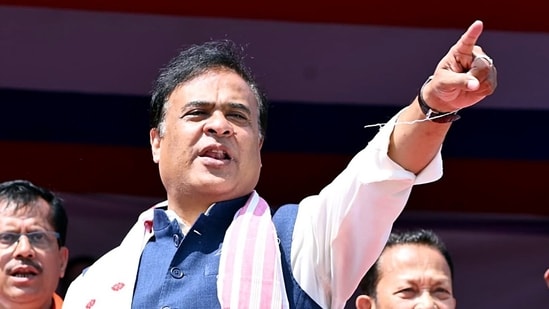
Following a decisive victory in the 2021 Assembly elections, the BJP leadership baton was passed to **Himanta Biswa Sarma**. A former key lieutenant of Tarun Gogoi before his switch to the BJP in 2015, Sarma is widely regarded as the principal architect of the BJP’s dominance in the entire Northeast. As Chief Minister, Sarma’s term has been characterized by aggressive infrastructure pushes, a crackdown on child marriage, the implementation of sweeping welfare programs like *Orunodoi*, and a distinct, assertive brand of Hindutva politics.
As the state approaches the 2026 polls, Sarma’s performance, welfare delivery, and ideological messaging will face the ultimate democratic test against a regrouping opposition. [Source: Hindustan Times | Additional: Election Commission of India records].
## Full List of Assam Chief Ministers (1937–2026)
For a clear historical perspective, here is the complete roster of leaders who have held the highest executive office in Assam:
| Name | Term in Office | Political Party |
| :— | :— | :— |
| **Sir Muhammad Saadulla** | 1937–1938, 1939–1941, 1942–1946 | All-India Muslim League |
| **Gopinath Bordoloi** | 1938–1939, 1946–1950 | Indian National Congress |
| **Bishnuram Medhi** | 1950–1957 | Indian National Congress |
| **Bimala Prasad Chaliha** | 1957–1970 | Indian National Congress |
| **Mahendra Mohan Choudhry** | 1970–1972 | Indian National Congress |
| **Sarat Chandra Sinha** | 1972–1978 | Indian National Congress |
| **Golap Borbora** | 1978–1979 | Janata Party |
| **Jogendra Nath Hazarika** | 1979 | Janata Party |
| **Syeda Anwara Taimur** | 1980–1981 | Indian National Congress |
| **Kesab Chandra Gogoi** | 1982 | Indian National Congress |
| **Hiteswar Saikia** | 1983–1985, 1991–1996 | Indian National Congress |
| **Prafulla Kumar Mahanta** | 1985–1990, 1996–2001 | Asom Gana Parishad |
| **Bhumidhar Barman** | 1996 (Brief acting term) | Indian National Congress |
| **Tarun Gogoi** | 2001–2016 | Indian National Congress |
| **Sarbananda Sonowal** | 2016–2021 | Bharatiya Janata Party |
| **Himanta Biswa Sarma** | 2021–Present | Bharatiya Janata Party |
*(Note: The state was under President’s Rule on several occasions: 1979–1980, 1981–1982, 1982–1983, and 1990–1991, reflecting periods of severe administrative and political crisis).*
## Conclusion: What History Means for 2026
The political timeline of Assam is not merely a succession of leaders; it is a mirror reflecting the evolving identity of the Northeast. From Gopinath Bordoloi’s fight to keep Assam in India, to the Congress’s long-standing welfare models, the AGP’s sub-nationalism, and the BJP’s modern blend of regional identity and hyper-nationalism, each Chief Minister has left an indelible mark on the state’s socio-economic fabric.
As voters prepare to cast their ballots in the upcoming 2026 Assembly Elections, the legacy of these past leaders looms large. The electorate will weigh the BJP’s “double-engine” development claims under Himanta Biswa Sarma against the pressing localized issues of unemployment, indigenous rights, and inflation raised by the opposition. Ultimately, the next chapter in this 89-year-old ledger will be written by the people of Assam in the days to come.