
Insta ads and their instant gratification| India News
# Insta Ads: Selling Branding Over Engineering
By Senior Retail Correspondent, E-Commerce Daily, April 24, 2026
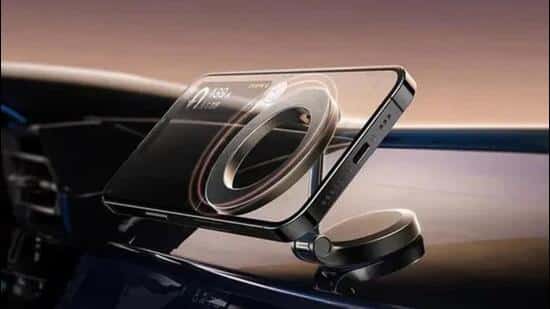
In April 2026, the intersection of algorithmic social media and direct-to-consumer (D2C) retail has engineered a controversial marketplace where marketing aesthetics routinely overshadow foundational product quality. Driven by the dopamine loop of instant gratification, consumers are increasingly questioning the functional value of heavily advertised Instagram products, exemplified by trending items like the Auriglo phone holder. As traditional engineering takes a backseat to slick visual branding, modern retail economics are fundamentally shifting. This phenomenon highlights a broader transformation in the digital economy where impulse clicks dictate market success, leaving buyers and industry analysts alike scrutinizing the true cost of algorithmic consumerism. [Source: Hindustan Times].
## The Auriglo Case Study: A Microcosm of Modern Retail
The recent viral success of the Auriglo phone holder serves as a perfect bellwether for the current state of social commerce. If you have scrolled through Instagram or TikTok over the past month, you have likely been targeted by their meticulously crafted campaigns. The ads feature cinematic lighting, lo-fi background beats, and attractive creators demonstrating the phone holder in hyper-aesthetic workspaces and luxury car interiors.
However, as consumers receive the actual product, a stark disconnect has emerged between the promised premium experience and the physical reality. Retail analysts note that while the Auriglo brand presents itself as an innovative tech-accessory pioneer, the product itself relies on standard, off-the-shelf white-label engineering. The mechanism is basic; the materials are standard injection-molded plastics with a thin aluminum veneer.
“What we are seeing with products like the Auriglo is a masterclass in perceived value,” explains Marcus Lin, a supply chain analyst based in Shenzhen. “The engineering innovation is effectively zero. The product likely costs less than $3 to manufacture at scale. Yet, through hyper-targeted Instagram advertising and premium visual branding, they successfully retail it for $45. The innovation is entirely in the marketing funnel, not the hardware.” [Source: Hindustan Times | Additional: Global E-Commerce Trends Report 2026].
## The Psychology of Instant Gratification
To understand why consumers continue to purchase products that prioritize branding over engineering, one must look at the psychological mechanics of social media platforms. In 2026, the path from product discovery to purchase has been frictionlessly compressed into mere seconds.
Platforms like Instagram have integrated one-click checkout systems, utilizing biometric authentication to remove any cognitive barriers to spending. When an advertisement for a sleek desk gadget interrupts a user’s feed, it does not just sell a utility; it sells an idealized version of the user’s life.
Dr. Elena Rostova, a behavioral economist specializing in digital commerce, points out that the purchase itself is often the product. “The transaction provides an immediate dopamine spike. The consumer is buying the feeling of being organized, aesthetic, or technologically forward. By the time the inadequately engineered phone holder arrives in the mail a week later, the dopamine hit has already faded. The physical product is almost an afterthought to the instant gratification of the digital purchase.”
This psychological loop creates an environment where D2C brands do not need to build products that last a decade. They only need to build products that look flawless on a six-inch smartphone screen for the three seconds it takes to convince a user to click ‘Buy Now’.
## The Ad-Arbitrage Business Model
The deprioritization of engineering is not necessarily born out of malice; it is a mathematical necessity of the modern digital advertising ecosystem. In the D2C world of 2026, the primary cost of doing business is no longer research and development (R&D) or manufacturing—it is customer acquisition cost (CAC).
As algorithms become more sophisticated and the digital ad space becomes more crowded, the cost to acquire a customer via Meta (Instagram) ads has skyrocketed. A typical micro-brand might spend up to 60% of its gross revenue purely on digital advertising.
**The Economics of a $50 Viral Product:**
* **Digital Advertising (CAC):** $25.00
* **Shipping & Fulfillment:** $8.00
* **Payment Processing Fees:** $2.00
* **Manufacturing (COGS):** $4.00
* **Profit Margin:** $11.00
When $25 goes directly to social media platforms just to get a buyer’s attention, the brand cannot afford to spend $15 on high-quality materials and rigorous engineering. The math simply does not support it. Consequently, modern retail has morphed into an ad-arbitrage business model. Brands are essentially buying traffic from Instagram and hoping to convert it at a margin high enough to cover the cheap, mass-produced goods they are drop-shipping. [Source: Independent E-commerce Data Analysis 2026].
## White-Labeling and the Death of R&D
Historically, consumer product companies built their reputations on proprietary technology and robust research and development. Today, the barrier to entry for creating a hardware “brand” is historically low. The rise of sophisticated B2B sourcing platforms allows marketers to browse thousands of pre-designed, unbranded products—from phone holders to wireless earbuds to portable blenders.
A modern D2C entrepreneur does not need an engineering degree or a drafting table. They simply select a generic product, order a customized colorway, stamp a minimalist logo on it, and direct their capital toward creating high-end 3D renders and influencer campaigns.
This white-labeling phenomenon creates an illusion of vast consumer choice. A buyer searching for a phone holder might encounter twenty different brands on Instagram, each boasting revolutionary features. In reality, all twenty brands might be sourcing the exact same baseline product from the same three factories, with the only differentiator being the typography on the packaging and the aesthetic of the Instagram ad. The emphasis on branding over engineering is not just a trend; it is the fundamental architecture of the 2026 D2C marketplace.
## Consumer Backlash: The Rise of ‘De-Influencing’
However, the tide of consumer sentiment is beginning to turn. As buyers accumulate drawers full of mediocre, plasticky gadgets that looked spectacular in an Instagram Reel but broke after a month of use, fatigue is setting in.
This frustration has birthed the “de-influencing” movement, a trend that gained massive traction through late 2025 and into 2026. Content creators are now gaining massive followings by reverse-engineering viral ads, buying heavily promoted products like the Auriglo phone holder, and critically disassembling them on camera to expose their cheap internal components.
“Consumers are becoming algorithmically literate,” notes digital culture critic Sarah Jenkins. “They are starting to recognize the visual tropes of a cheap drop-shipped product masquerading as premium tech. We are seeing a significant rise in return rates for impulse-buy D2C brands, some hitting as high as 35%, which completely destroys their ad-arbitrage profit margins.” [Source: Hindustan Times | Additional: Consumer Retail Metrics 2026].
## Environmental and Regulatory Implications
Beyond consumer disappointment, the environmental cost of this instant-gratification economy is drawing fierce regulatory scrutiny. The production, global shipping, and inevitable disposal of low-quality, over-marketed goods contribute significantly to e-waste and carbon emissions.
In response, global advertising watchdogs and consumer protection agencies are stepping in. The Federal Trade Commission (FTC) in the United States and the Advertising Standards Council of India (ASCI) have both introduced stricter guidelines regarding “implied quality” in digital advertising. By early 2026, regulations have begun demanding that brands provide substantive proof of their engineering claims, cracking down on terms like “military-grade” or “aerospace aluminum” when used to describe basic, low-grade consumer plastics.
Furthermore, environmental advocacy groups are lobbying for extended producer responsibility (EPR) laws to apply to micro-brands. If a company uses targeted ads to push millions of low-lifespan gadgets into the market, advocates argue they must be financially responsible for the recycling and waste management of those products.
## The Future: A Return to Product-Led Growth?
The controversy surrounding Instagram ads and the value of products like Auriglo represents a critical inflection point for modern retail. The current model—where 80% of a company’s effort goes into digital marketing and 20% into the actual product—is proving increasingly unsustainable as customer acquisition costs rise and consumer trust plummets.
Moving forward, industry experts predict a necessary market correction. The brands that will survive the latter half of the 2020s will be those that pivot away from relying solely on instant gratification and impulse buys. Sustainable D2C businesses will need to return to “product-led growth”—where the engineering and quality of the item are so undeniably good that they generate organic word-of-mouth, naturally lowering reliance on expensive social media advertising.
## Conclusion
The saga of the Auriglo phone holder and its viral peers is a defining story of our current digital era. It forces a hard look at what we value as consumers: the genuine utility of a well-engineered tool, or the fleeting dopamine hit of a beautifully branded purchase. As long as the algorithms of instant gratification dictate our digital habitats, the temptation for brands to prioritize aesthetic over substance will remain. However, as buyers become more discerning and regulators more watchful, the era of masking cheap engineering behind a premium Instagram filter may finally be running out of battery. Consumers must now navigate the scroll with heightened vigilance, remembering that in the modern digital bazaar, what looks golden on screen is often just polished plastic in hand.





