
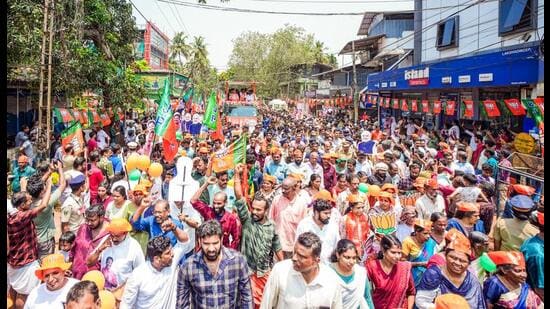
Keeping up with UP: Can mere lip service ensure support of women voters| India News
Women at the Helm India’s Electoral Tapestry and Leadership
India’s political landscape, rich with diverse narratives, often presents fascinating studies in leadership. Amidst the clamour of electoral campaigns and promises, one notable historical thread emerges in several key states: the presence of women chief ministers. While discussions frequently revolve around securing women’s votes, a deeper look reveals that in specific regions—Assam, Tamil Nadu, and West Bengal—women have not just been voters but formidable leaders at the very apex of state governance. This stands in intriguing contrast to a state like Kerala, known for its high social indicators, which has yet to see a woman occupy the chief ministerial chair. Omni 360 News delves into this unique political phenomenon, examining the legacies and the broader implications for contemporary Indian politics.
The journey of women in executive leadership across these states offers a compelling narrative, extending beyond mere tokenism to significant political tenures that shaped regional destinies.
Assam’s Trailblazer Syeda Anwara Taimur
In the northeastern state of Assam, the history books record Syeda Anwara Taimur as a pioneer. Serving as Chief Minister from December 1980 to June 1981, she was not only the first, but remains the only woman to have held this prestigious post in the state. Her tenure, though brief, unfolded during a turbulent period marked by the intense Assam Agitation, a powerful movement against illegal immigrants. Taimur’s leadership, as chronicled by regional media archives such as The Assam Tribune and The Sentinel, navigated significant political instability and social unrest. Her ascent to power, representing the Indian National Congress, demonstrated an early instance of a woman breaking traditional political barriers in a challenging environment, laying a foundation for future discussions on women’s roles in regional governance. Her political career, spanning several decades, included terms in the Rajya Sabha and as a state minister, underscoring her enduring commitment to public service amidst a male-dominated political arena.
Tamil Nadu’s Enduring ‘Amma’ Legacy J. Jayalalithaa
Few leaders have commanded the fervent loyalty and political influence seen in Tamil Nadu under J. Jayalalithaa. Affectionately known as ‘Amma’ (Mother) by her millions of supporters, her political journey was nothing short of epic. Jayalalithaa served multiple terms as Chief Minister, from 1991 to 1996, a brief period in 2001, 2002 to 2006, 2011 to 2014, and finally from 2015 until her passing in 2016. As the charismatic leader of the All India Anna Dravida Munnetra Kazhagam (AIADMK), she transformed Tamil Nadu politics.
Her administration was marked by a strong populist agenda, implementing a range of welfare schemes that directly benefited the common people, especially women. Initiatives like the Amma Canteens, offering subsidized food, and the Cradle Baby Scheme, aimed at preventing female infanticide, became hallmarks of her tenure. Local news outlets like Dinamalar and Malai Malar frequently highlighted her direct connect with the populace and her ability to articulate the needs of the underprivileged. Despite facing significant legal challenges and intense political rivalries, Jayalalithaa’s iron will and strategic acumen allowed her to consistently return to power, cementing her status as one of India’s most powerful female politicians. Her legacy continues to shape the state’s political discourse and public welfare policies, proving that a woman at the helm could be both an astute administrator and a beloved figure.
West Bengal’s ‘Didi’ Era Mamata Banerjee
In West Bengal, Mamata Banerjee, universally known as ‘Didi’ (Elder Sister), stands as a towering figure of contemporary Indian politics. She became the first and remains the only woman Chief Minister of the state, taking office in 2011 and successfully securing re-election multiple times since. Banerjee’s rise is a testament to grassroots activism and relentless political struggle. She famously spearheaded the movement that ended the 34-year rule of the Left Front government, a historic achievement in Indian electoral history.
As leader of the Trinamool Congress (TMC), her governance has focused on various social welfare schemes, particularly empowering women and girls through initiatives like Kanyashree Prakalpa, which provides financial assistance to delay marriage and encourage education for adolescent girls. Regional Bengali dailies such as Anandabazar Patrika and Bartaman consistently cover her direct approach to public grievances and her energetic campaigning style. Mamata Banerjee’s leadership underscores the power of a woman to challenge entrenched political establishments, build a formidable regional party, and sustain power through a combination of populist policies and a strong personal connection with the electorate.
Kerala The Uncharted Territory
In stark contrast to Assam, Tamil Nadu, and West Bengal, the southern state of Kerala, despite its progressive social indicators—high literacy rates, low infant mortality, and significant female empowerment in many spheres—has never had a woman Chief Minister. This anomaly often sparks debate among political analysts and social scientists. While Kerala has seen prominent women leaders in various ministerial portfolios and legislative roles, the top executive position has remained exclusively occupied by men. Factors contributing to this could range from the dominance of patriarchal structures within traditional political parties to the nature of coalition politics in the state, which often involves complex power-sharing arrangements. The absence serves as a reminder that even in seemingly advanced societies, the path to the highest political office for women can be fraught with unique challenges.
Beyond Lip Service The Realities of Women’s Representation
The historical presence of women chief ministers in these key states raises important questions about the broader narrative of women’s political participation in India. With ongoing electoral cycles often seeing political parties making fervent appeals to women voters, the real metric for success extends beyond mere promises. As the discourse around women’s reservations in legislative bodies gains momentum, the legacies of Taimur, Jayalalithaa, and Banerjee offer tangible examples of women not just participating, but leading with profound impact.
These leaders demonstrate that women are not a monolithic vote bank but discerning citizens whose concerns span governance, development, and social justice. Their tenures prove that women can navigate complex political landscapes, build strong parties, and implement policies that resonate with a diverse electorate. For parties seeking genuine support from women voters, the lesson is clear: true engagement requires more than electoral lip service; it demands substantive representation and a sincere commitment to addressing issues that empower women, both as citizens and as leaders.
Key Takeaways
* Assam, Tamil Nadu, and West Bengal have historically seen women serve as Chief Ministers, demonstrating significant female leadership in state governance.
* Syeda Anwara Taimur (Assam) was a trailblazer, leading during a period of intense agitation.
* J. Jayalalithaa (Tamil Nadu) built a powerful political legacy through populist welfare schemes and strong leadership.
* Mamata Banerjee (West Bengal) emerged through grassroots efforts to end a long-standing regime and has maintained strong leadership.
* Kerala, despite its high social indicators, remains an exception, having never had a woman Chief Minister.
* These examples highlight the potential for women to lead effectively and serve as a reminder that genuine political empowerment goes beyond symbolic gestures, advocating for substantive representation and addressing women’s issues.
The stories of these women leaders underscore a crucial aspect of India’s democratic journey: the evolving, yet still challenging, path for women to assume and succeed in the highest echelons of political power. As elections continue to shape the nation’s future, the legacy of these women at the helm provides a potent reference point for how genuine leadership can resonate deeply with the electorate.





