
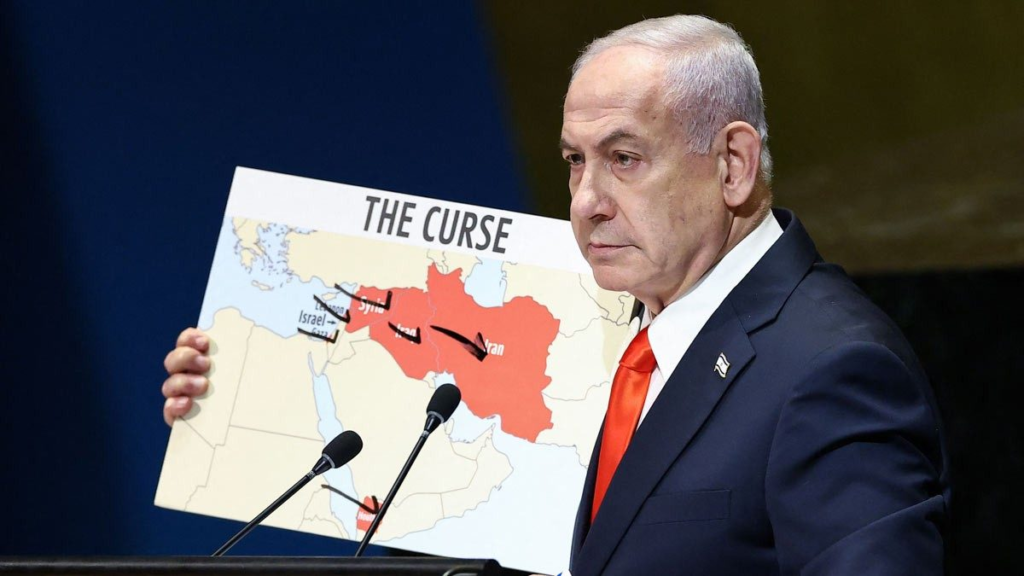
Netanyahu’s ‘Hexagon’ Vision
Jerusalem — In a move that has sent ripples through the global diplomatic landscape, Israeli Prime Minister Benjamin Netanyahu has unveiled a bold new vision for a regional security framework. Dubbed the “Hexagon Alliance,” this proposed coalition aims to reshape how West Asia handles security, and there is one country Netanyahu wants at the very center: India.
What exactly is the ‘Hexagon’ Alliance?
Think of it as a strategic “power circle.” Netanyahu’s vision involves creating a robust network of six key regional and global interests a hexagon to counter radical extremism in the Middle East. While the full list of members is being finalized, Netanyahu explicitly named India, Greece, and Cyprus as core pillars, alongside select Arab and African nations.
“We are creating a system of alliances to stand against radical axes,” Netanyahu stated during a recent cabinet meeting. “India is a global power, and our bond is a powerful alliance between two leaders who share a vision for stability and progress.”
Why India?
From a marketing and strategic perspective, India is the “anchor tenant” of this new brand. For Israel, India represents more than just a buyer of defense tech; it is a stable, democratic heavyweight with massive influence in both the East and the West.
By bringing India into the Hexagon, Netanyahu is looking to:
- Institutionalize Security: Move beyond simple “buyer-seller” deals to a formal system of intelligence sharing and defense coordination.
- Counter Multiple Threats: The alliance is designed to act as a buffer against what Netanyahu calls “radical axes” in the region.
- Boost Economic Corridors: This alignment perfectly complements projects like the India-Middle East-Europe Economic Corridor (IMEC), turning trade routes into “security routes.”
The “Personal Touch” Diplomacy
What makes this news so viral is the visible “bromance” between PM Modi and PM Netanyahu. Ahead of Modi’s high-stakes visit to Jerusalem this week, Netanyahu has been vocal on social media, calling Modi a “dear personal friend.” This human connection is the engine driving these massive geopolitical shifts.
Global Reactions: A Mixed Bag
While the proposal has been hailed as a masterstroke in Jerusalem and Athens, it has caused a stir elsewhere. Pakistan’s Senate recently passed a resolution expressing concern over the alliance, highlighting just how much this new “Hexagon” could shift the balance of power.
What’s Next?
As PM Modi touches down in Israel, the world will be watching to see if India officially signs onto this “Hexagon” branding. For now, it’s clear that the map of West Asia is being redrawn, and India’s pen is the one holding the ink.





