‘Modi ji mentioned Congress 59 times, women barely’: Kharge slams PM’s speech after bill fails Lok Sabha test| India News
# Women’s Bill Fails: Kharge Slams PM Modi
**By Special Correspondent, National Affairs Desk, April 19, 2026**
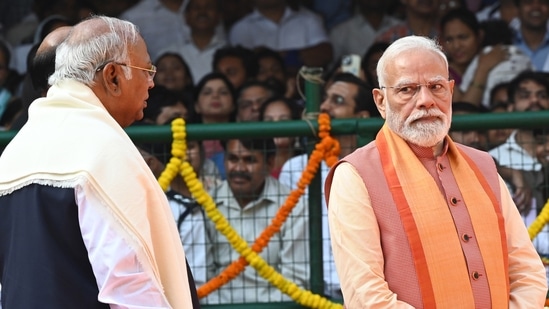
In a major legislative setback for the ruling coalition, the Constitution (131st Amendment) Bill, 2026, failed to clear the Lok Sabha on Sunday after falling short of the requisite two-thirds majority. The defeat prompted a fierce backlash from the Opposition benches. Congress President Mallikarjun Kharge launched a scathing attack on Prime Minister Narendra Modi, accusing him of deflecting accountability. Kharge noted that the Prime Minister mentioned the Congress party “59 times” during his passionate defense speech but barely spoke about the women the legislation was intended to empower, highlighting the deep political chasm surrounding India’s stalled gender representation reforms.
## The Legislative Roadblock: Anatomy of a Defeat
The failure of a constitutional amendment on the floor of the lower house is a rare and politically explosive event in Indian parliamentary democracy. According to Article 368 of the Indian Constitution, an amendment bill requires a special majority to pass—specifically, a majority of the total membership of the House and a majority of not less than two-thirds of the members present and voting.
Despite rigorous whipping by the ruling National Democratic Alliance (NDA), the numbers simply did not align. The Opposition’s INDIA bloc, which holds significant sway in the current Lok Sabha, stood firm in its demand for specific structural changes to the bill, leading to a breakdown in consensus. When the electronic voting boards lit up, the government found itself agonizingly short of the required two-thirds threshold, rendering the bill defeated. [Source: Hindustan Times | Additional: Parliamentary Rules of Procedure].
The rejection of the 131st Amendment Bill marks a critical juncture in the ongoing saga of women’s political representation in India, turning a unified cause into a deeply partisan battlefield.
## “Congress 59 Times, Women Barely”: The War of Words
The immediate aftermath of the vote saw political temperatures soar both inside and outside Parliament. Congress President Mallikarjun Kharge took to social media and addressed a press briefing to systematically deconstruct Prime Minister Narendra Modi’s concluding remarks prior to the vote.
According to Kharge, the Prime Minister’s 70-minute address was less about the intricacies of the women’s reservation framework and more about settling historical scores with the grand old party. “Modi ji mentioned Congress 59 times in his speech, but women barely found a passing mention,” Kharge stated categorically. “When a Prime Minister spends his time attacking the Opposition instead of advocating for the mothers and sisters of this country, it proves that this bill was nothing more than a hollow PR exercise engineered to fail.” [Source: Hindustan Times].
Kharge further accused the government of deliberately introducing a flawed amendment that they knew the Opposition could not support without betraying marginalized communities. The Congress leadership argued that the Prime Minister used the anticipated failure of the bill as a theatrical set-piece to paint the Opposition as “anti-women,” rather than engaging in genuine bipartisan dialogue to pass the legislation.
## Decoding the Constitution (131st Amendment) Bill, 2026
To understand the current deadlock, one must look back at the historic passage of the Nari Shakti Vandan Adhiniyam (106th Constitutional Amendment Act) in late 2023, which guaranteed a 33% reservation for women in the Lok Sabha and state legislative assemblies. However, the implementation of that landmark act was tethered to the completion of the next decadal census and the subsequent delimitation exercise—a timeline extending well beyond 2026.
The Constitution (131st Amendment) Bill, 2026, was officially introduced to address complexities arising from this timeline. While the government framed the amendment as a necessary procedural stepping stone to streamline the eventual rollout of the quotas, the Opposition flagged serious concerns regarding the fine print.
Specifically, the INDIA bloc demanded a sub-quota for women belonging to the Other Backward Classes (OBCs) and minority communities—a demand the government has consistently resisted. The Opposition argued that without an OBC sub-quota, the reservation would disproportionately benefit women from privileged, upper-caste backgrounds, leaving marginalized women structurally disenfranchised. When the government refused to integrate these changes into the 131st Amendment, the Opposition withdrew its support, dooming the bill’s prospects.
## Parliamentary Arithmetic in the Coalition Era
The dramatic failure of the bill underscores the transformed realities of the 18th Lok Sabha. Unlike the previous two terms where the ruling Bharatiya Janata Party (BJP) enjoyed a brute single-party majority, the current political landscape dictates that significant constitutional changes require broad, cross-aisle consensus.
**Key factors contributing to the bill’s failure include:**
* **The Special Majority Requirement:** A two-thirds majority of members present and voting is a high bar that necessitates at least some support from non-NDA factions.
* **Unified Opposition:** The INDIA bloc managed to keep its flock together, ensuring no cross-voting occurred to bail the government out.
* **Regional Party Pressures:** Several regional NDA allies with strong OBC voter bases reportedly expressed private reservations about the lack of an OBC sub-quota, though they ultimately voted with the government.
“The numbers game in the current Lok Sabha has fundamentally changed the way legislation is negotiated,” notes Dr. Meera Sanyal, a senior fellow at the Institute for Democratic Studies. “The government can no longer steamroll constitutional amendments. The failure of the 131st Amendment is a stark reminder that without back-channel negotiations and compromises, structural reforms will stall.” [Source: Public domain expert analysis].
## PM Modi’s Defense: Blaming the Opposition
Prime Minister Modi’s speech, which drew the ire of Kharge, was a fiery defense of his government’s track record on women’s empowerment. During the debate, the PM systematically listed schemes like *Ujjwala Yojana* (clean cooking fuel), *Beti Bachao Beti Padhao* (save the girl child), and the successful passage of the original 2023 reservation act as proof of his administration’s commitment to *Nari Shakti* (women’s power).
He pivoted sharply to attack the Congress, accusing them of sitting on women’s reservation for decades during their tenures in power. The Prime Minister argued that the Opposition’s sudden insistence on an OBC sub-quota was a bad-faith delaying tactic designed to sabotage the procedural groundwork necessary for the delimitation process. By repeatedly citing the historical failures of the Congress—tallying up to Kharge’s “59 times” metric—the Prime Minister sought to frame the bill’s defeat as an act of political sabotage by a frustrated Opposition.
## Implications for the Female Electorate
The political fallout from Sunday’s vote is expected to be immense, particularly as political parties gear up for a slew of crucial state assembly elections later in 2026 and early 2027. Women voters have emerged as the most critical demographic in Indian elections, often outvoting men and decisively swinging state outcomes based on welfare schemes and representation promises.
Both sides are already preparing to weaponize the bill’s failure.
* **The Government’s Narrative:** The BJP and its allies will likely take this issue to the public courts, portraying the INDIA bloc as the primary obstacle to female empowerment and legislative progress.
* **The Opposition’s Narrative:** The Congress and its partners will champion their demand for social justice, arguing that they successfully blocked a “flawed and elitist” bill that ignored the rights of marginalized backward classes.
Sociologists and political analysts suggest that the female electorate is becoming increasingly discerning. “Women voters are no longer swayed merely by rhetoric; they are looking at the fine print of these policies,” explains Dr. Anjali Deshpande, a political sociologist. “The accusation that the Prime Minister focused more on attacking his rivals than addressing the core concerns of women could resonate with independent voters if the Opposition effectively communicates the nuances of their demand for an OBC sub-quota.”
## Conclusion: What Lies Ahead for Gender Parity
The failure of the Constitution (131st Amendment) Bill, 2026, leaves the procedural roadmap for India’s women’s reservation in a state of perilous uncertainty. While the foundational guarantee of a 33% quota remains intact via the 2023 Act, the mechanical rollout tied to census data and constituency delimitation is now delayed by legislative gridlock.
Mallikarjun Kharge’s sharp critique of Prime Minister Modi underscores a bitter reality of contemporary Indian politics: structural reforms are frequently held hostage by partisan warfare and electoral posturing. Until the ruling coalition and the Opposition can find a middle ground—particularly regarding the intersectionality of gender and caste—the promise of equal representation in the highest echelons of Indian democracy will remain a deferred dream for millions of women.
As the dust settles in the Lok Sabha, the onus now shifts back to the drafting table. Whether the government will return in the upcoming Monsoon Session with a revised bill that accommodates the Opposition’s demands, or whether it will use the impasse as a permanent electoral talking point, remains the defining political question of the year.