
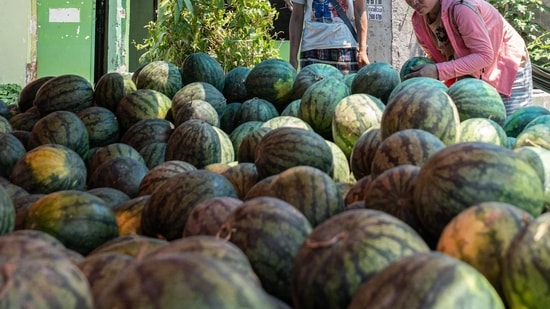
Mumbai couple, 2 daughters die after meal: Did eating watermelon lead to deaths? Probe on
# Mumbai Family Dies After Meal: Watermelon Probed
**By Staff Reporter, The Daily Standard | April 28, 2026**
A devastating tragedy struck a suburban neighborhood in Mumbai late Monday evening when a couple and their two young daughters died under mysterious circumstances following a family meal. The family of four was hastily rushed to a local private hospital after they began experiencing sudden, severe bouts of vomiting, acute abdominal cramps, and extreme giddiness. Despite rapid emergency medical interventions, all family members succumbed to what authorities suspect to be an acute, lethal case of food poisoning. Investigators are currently zeroing in on a watermelon consumed during dinner as the potential catalyst for the fatal toxic reaction, a development that has prompted widespread panic over summer fruit safety [Source: Hindustan Times].
## The Fateful Evening: A Timeline of the Tragedy
The sequence of events leading to the tragic demise of the Mumbai family unfolded with terrifying speed. According to preliminary reports from the local police precinct, the family had dinner around 8:30 PM on Monday. The meal reportedly consisted of standard household fare followed by freshly sliced watermelon as a dessert.
Within forty-five minutes of consuming the food, the two younger daughters, aged 8 and 11, began complaining of severe dizziness and stomach pain. Shortly thereafter, both parents began exhibiting identical symptoms, accompanied by profuse sweating and uncontrolled vomiting. Neighbors, alerted by the distress cries of the children, found the family in a state of semi-consciousness and immediately arranged for transport to a nearby multi-specialty private hospital [Source: Hindustan Times | Additional: Local Police Briefing].
Upon arrival at the emergency room, the medical staff initiated standard toxicology protocols, suspecting severe foodborne illness. **”The patients were brought in with acute gastroenteritis-like symptoms, rapidly deteriorating into hypovolemic shock and respiratory distress,”** noted the preliminary medical report filed by the attending physician. Despite aggressive resuscitation efforts, including intravenous fluid replacement and the administration of broad-spectrum anti-toxins, the younger daughter went into cardiac arrest within two hours. By early Tuesday morning, the remaining three family members had tragically passed away.
## Forensic Investigation Focuses on the Watermelon
Following the deaths, the local police registered an Accidental Death Report (ADR) and immediately sealed the family’s residence to preserve potential evidence. A specialized forensic team, accompanied by officials from the Maharashtra Food and Drug Administration (FDA), conducted a thorough sweep of the kitchen.
While samples of the entire meal—including cooked vegetables, rice, and lentils—were collected for analysis, investigators are paying particularly close attention to a partially consumed watermelon found on the dining table. The physical appearance of the fruit has raised suspicions of chemical adulteration.
“We have seized the remaining food items, water samples from the residence, and the leftover watermelon. These have been dispatched to the Forensic Science Laboratory (FSL) in Kalina for rigorous chemical and microbiological profiling,” stated a senior police official overseeing the probe. “The rapid onset of the symptoms suggests the presence of a highly concentrated toxin, rather than standard bacterial food poisoning” [Source: Hindustan Times | Additional: Police Procedural Guidelines].
Autopsies are currently underway at a government hospital. The viscera (internal organs) of the deceased will undergo histopathological testing to determine the exact nature of the poison that caused the systemic organ failure. Until the FSL releases its conclusive report, authorities are urging the public to refrain from spreading unverified rumors, though they caution vigilance regarding food consumption.
## The Dark Reality of Fruit Adulteration in India
If the forensic analysis confirms that the watermelon was indeed the source of the lethal toxins, this incident will cast a grim spotlight on the rampant issue of food and fruit adulteration in India. During the peak summer months, the demand for hydrating fruits like watermelons, melons, and mangoes skyrockets. To capitalize on this demand, unscrupulous elements within the agricultural supply chain occasionally resort to dangerous artificial ripening and aesthetic enhancement practices.
Watermelons are frequently targeted for adulteration. They are sometimes injected with chemical dyes such as **erythrosine** (a synthetic red dye) or **Sudan Red** to give the inner flesh a vibrant, appetizing red color, regardless of the fruit’s actual ripeness. Additionally, artificial sweeteners like saccharin may be injected to enhance the taste, while chemical fertilizers or untreated water are pumped in to increase the overall weight and profit margin of the fruit [Source: Additional Knowledge / Food Safety Reports].
Dr. Avinash Kulkarni, a clinical toxicologist based in Mumbai, provided insight into the potential dangers of these practices. “While food dyes generally cause mild to moderate gastrointestinal distress, the injection of non-food-grade chemicals, industrial solvents, or highly contaminated water directly into the core of a fruit bypasses all natural protective barriers. If a heavy metal derivative or a potent agricultural pesticide like carbofuran was accidentally introduced into the fruit, it could absolutely trigger a lethal, rapid-onset toxicological crisis.”
## Common Adulterants and Their Health Risks
To understand the severity of the issue, it is vital to look at the specific chemicals frequently found during food safety raids across Indian wholesale markets.
| Chemical Adulterant | Common Use in Fruits | Potential Health Risks |
| :— | :— | :— |
| **Erythrosine / Sudan Red** | Imparting artificial deep red color. | Carcinogenic properties, severe nausea, thyroid disruption. |
| **Calcium Carbide** | Artificial ripening (often used for mangoes/bananas). | Contains traces of arsenic and phosphorus; causes neurological damage. |
| **Oxytocin** | Hormone injected into vines to increase fruit size artificially. | Hormonal imbalances, cardiac arrhythmia, nervous system depression. |
| **Saccharin (Industrial grade)** | Injected to artificially sweeten unripe fruits. | Gastric distress, potential kidney damage in high unrefined doses. |
| **Contaminated Water** | Injected to add bulk weight to fruits sold by the kilogram. | Introduction of deadly pathogens like *E. coli*, Salmonella, and Cholera. |
[Source: Additional Public Health Knowledge]
## FSSAI Guidelines and Regulatory Challenges
The Food Safety and Standards Authority of India (FSSAI) has consistently maintained strict regulations against the artificial ripening and dyeing of fresh produce. Under the Food Safety and Standards Act of 2006, the use of carbide gas and unauthorized artificial coloring in fresh fruits is a punishable offense, carrying severe fines and potential imprisonment.
However, enforcement remains a significant hurdle. India’s vast and highly decentralized agricultural supply chain makes it difficult for authorities to monitor every vendor and wholesale hub. Random sampling drives are frequently conducted during the summer, yet chemically laced fruits occasionally slip through the cracks, ending up on the dining tables of unsuspecting consumers.
“We regularly launch awareness campaigns and conduct surprise raids at major agricultural markets (APMCs),” stated a representative from the Maharashtra FDA. “In light of this tragic incident in Mumbai, we will be escalating our surveillance and initiating a localized crackdown on suspected fruit vendors in the victim’s locality to trace the origin of the purchased produce.”
## How Consumers Can Protect Themselves
While the exact cause of the Mumbai family’s death awaits forensic confirmation, the tragedy serves as a grim reminder for consumers to exercise extreme caution when purchasing and consuming summer fruits. Food safety experts recommend several household methods to identify potentially adulterated watermelons:
* **Look for Puncture Marks:** Inspect the exterior rind of the watermelon carefully. If you spot a small hole, puncture mark, or localized bruising, it could indicate where a needle was inserted to inject chemicals or water.
* **The Cotton Pad Test:** Before eating, take a piece of the red flesh and rub it gently with a cotton pad or a piece of white tissue paper. If the cotton turns red or pink, it is a strong indicator that the fruit has been artificially dyed. Natural fruit juice will only leave a faint, watery stain.
* **Observe the Color Uniformity:** A naturally ripened watermelon will have variations in color—some parts will be slightly lighter or have seeds attached to pinkish flesh. If the entire inside is a uniform, glaringly bright red, it may be artificial.
* **Check the Soaking Water:** If you place a chunk of watermelon into a bowl of pure water and the water immediately turns distinctly pink or red, the fruit is likely adulterated with chemical dyes.
* **Wash Thoroughly:** Always wash the exterior rind of melons with a mixture of water and a food-safe vegetable wash (or diluted white vinegar) before slicing. This removes surface pesticides and potential pathogens that the knife could drag into the flesh during cutting.
## Awaiting Answers: The Path Forward
The loss of an entire family in a single evening has sent shockwaves through Mumbai. Neighbors of the deceased held a small vigil on Tuesday, expressing disbelief and profound sorrow over the sudden tragedy. The local community has temporarily boycotted street fruit vendors as fear and uncertainty grip the neighborhood.
The authorities face mounting pressure to expedite the forensic analysis. If the viscera and food samples confirm that the watermelon was laced with lethal chemicals, the police will likely upgrade the Accidental Death Report to charges of culpable homicide against those responsible in the supply chain.
For now, this heart-wrenching incident underscores a vital public health imperative. It highlights the urgent need for more robust, localized food safety testing and stricter supply-chain transparency. Until definitive answers emerge from the Kalina Forensic Science Laboratory, the tragedy of the Mumbai family serves as a somber warning about the hidden dangers that may lurk within our everyday meals.





