
play
**Words That Cut Deep: Netanyahu’s Grim Map Rhetoric**
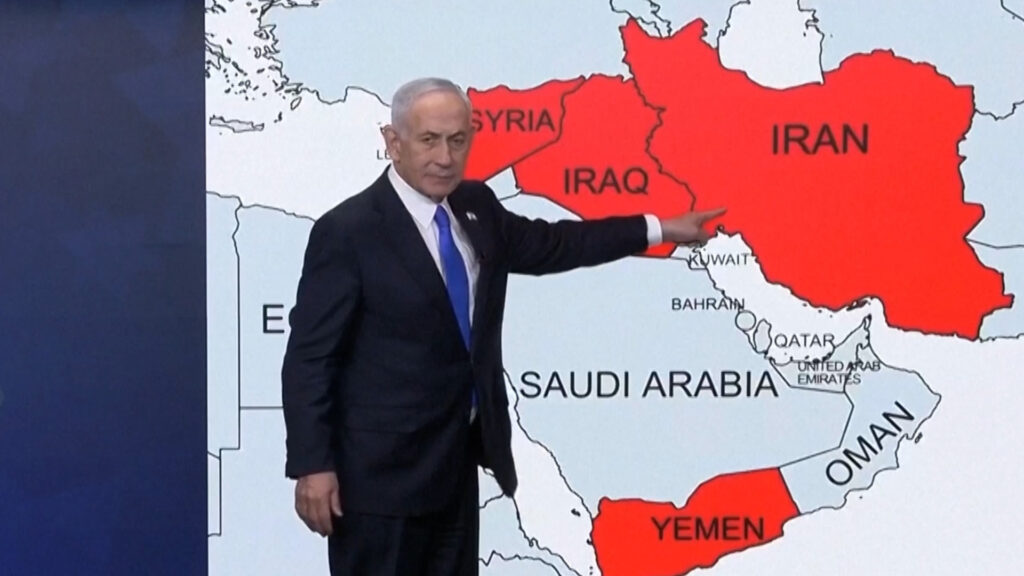
When leaders speak of ‘strangling’ an enemy, it’s not just a strategic metaphor. For countless families, it’s a chilling reality. It means blocked aid routes, destroyed homes, futures lost. It’s the constant, gnawing fear in Gaza, where every day brings more questions than answers. Benjamin Netanyahu, standing beside a map, recently articulated a vision that sends shivers down the spine of anyone hoping for peace. His words weren’t just about military might; they were a declaration of intent that paints a stark picture for the region.
The Israeli Prime Minister, never one to mince words, reportedly stated, ‘We strangled them and have more to do.’ This wasn’t some off-the-cuff remark; it was delivered with the gravitas of a leader outlining future moves, perhaps gesturing towards strategic points on a Middle East map. It’s a direct window into Israel’s uncompromising approach to the conflict, especially in Gaza. We’re talking about an ongoing offensive that has devastated civilian infrastructure, displaced millions, and created a humanitarian crisis of epic proportions. His government views its actions as essential for security, for dismantling Hamas. But the cost? It’s something the world can’t ignore.
What Does ‘More To Do’ Really Mean?
The Gist: Israeli Prime Minister Benjamin Netanyahu’s statement, ‘We strangled them and have more to do,’ reveals his government’s unyielding military strategy. Delivered potentially near a Middle East map, it signals continued operations in Gaza and broader regional aims. It underscores Israel’s aggressive resolve, impacting countless civilian lives.
This kind of language, so stark and declarative, tells us a lot. It suggests a zero-sum game, where one side’s survival seemingly hinges on the utter subjugation of the other. It doesn’t leave much room for diplomatic solutions or the nuanced complexities of regional coexistence. What happens after the ‘strangling’ is complete? What kind of peace can grow from such scorched earth? History tells us that prolonged, intense conflict often begets more conflict. The international community grapples with this too, struggling to balance Israel’s security concerns with the urgent need for humanitarian aid and a lasting political resolution. The words might feel strong, but the aftermath of such a philosophy often leaves only deeper wounds and enduring bitterness, pushing any genuine stability further out of reach.





