
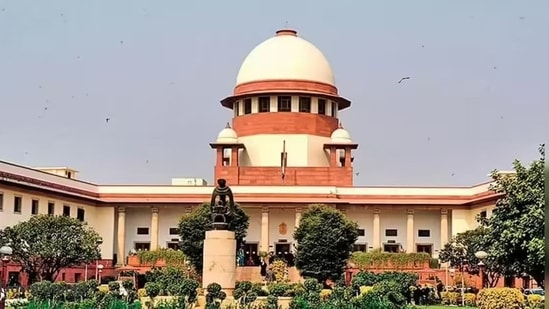
Petition filed in Supreme Court for ‘urgent' removal of IPS Ajay Pal Sharma from Bengal over ‘partisan conduct’
# SC Plea to Remove Bengal Poll Observer IPS Sharma
**By Special Correspondent, National Election Watch**, April 29, 2026
On Wednesday, an urgent petition was filed in the Supreme Court of India demanding the immediate removal of Uttar Pradesh cadre IPS officer Ajay Pal Sharma from his role as a police observer for the West Bengal assembly elections. Deployed by the Election Commission of India (ECI) to the highly sensitive South 24 Parganas district, Sharma—widely documented in the media as an “encounter specialist”—is facing accusations of “partisan conduct.” The plea argues that his appointment threatens the neutrality of the electoral process in a volatile region. This legal challenge thrusts the Supreme Court into the center of a brewing political storm, raising critical questions about the ECI’s administrative discretion and the delicate balance of federal bureaucracy during high-stakes state elections. [Source: Hindustan Times].
## The Controversy Surrounding the Appointment
The Election Commission of India routinely deploys Indian Administrative Service (IAS) and Indian Police Service (IPS) officers from outside states to act as general and police observers during state assembly elections. The primary objective is to ensure that local administrative machinery remains impartial and that elections are conducted in a free, fair, and transparent manner. However, the specific deployment of IPS Ajay Pal Sharma to West Bengal has sparked intense scrutiny.
Sharma, an officer belonging to the Uttar Pradesh cadre, has built a high-profile career marked by stringent law enforcement and anti-gangster operations. While his supporters view his track record as evidence of an unyielding commitment to maintaining law and order, his detractors argue that his policing methods and perceived closeness to the ruling dispensation in his home state make him unsuitable for an independent monitoring role in a fiercely contested state like West Bengal.
The petition filed before the Supreme Court explicitly cites apprehensions of “partisan conduct.” The petitioners argue that the deployment of an officer with a tough, militarized policing reputation to a politically charged district is a calculated move designed to intimidate local political workers and influence the deployment of Central Armed Police Forces (CAPF) in a biased manner.
“The role of an election observer is rooted in absolute neutrality and the ability to inspire confidence among all political stakeholders,” noted Dr. Arindam Sen, a constitutional law expert and former legal advisor to the state government. “When an officer’s past record becomes a focal point of partisan debate, the institutional credibility of the Election Commission is inadvertently placed on trial. The Supreme Court will have to weigh the ECI’s prerogative against the fundamental right to a level playing field.” [Additional: Electoral Law Analysis].
## South 24 Parganas: A High-Stakes Electoral Battleground
To understand the gravity of the petition, one must examine the geopolitical and electoral significance of the district in question. South 24 Parganas is one of West Bengal’s largest and most politically pivotal districts. Stretching from the southern fringes of Kolkata down to the complex riverine geography of the Sundarbans, the district accounts for a massive chunk of assembly constituencies.
Historically, South 24 Parganas has been a formidable stronghold for the ruling Trinamool Congress (TMC). However, in recent electoral cycles, the opposition Bharatiya Janata Party (BJP) has made aggressive inroads, transforming the district into a hyper-competitive battleground. The sheer geographical complexity of the region—comprising deltaic islands, dense forests, and densely populated semi-urban clusters—makes policing and election monitoring an administrative nightmare.
Elections in this district have previously been marred by allegations of voter intimidation, booth capturing, and sporadic clashes between rival political factions. The role of the police observer here is not merely administrative; it is deeply tactical. The observer is responsible for overseeing the “vulnerability mapping” of polling booths, deciding which areas require the highest concentration of CAPF personnel, and ensuring that local state police do not act as agents of the ruling party.
By challenging IPS Sharma’s deployment, the petitioners are essentially attempting to safeguard the electoral ecosystem of South 24 Parganas from what they perceive as unwarranted external interference masked as electoral oversight.
## Legal Arguments Presented Before the Supreme Court
The legal foundation of the petition rests on the interpretation of Article 324 of the Constitution of India, which vests the “superintendence, direction, and control” of elections in the Election Commission. While the ECI enjoys sweeping powers to appoint personnel to ensure fair polls, the Supreme Court has historically maintained that these powers are not absolute and must conform to the principles of natural justice and fairness (Article 14).
According to the details emerging from the apex court, the plea demands the ‘urgent’ removal of Sharma, arguing that his presence violates the Model Code of Conduct’s implicit requirement for unbiased election officials. The legal representatives for the petitioners are expected to argue that an observer must not only be neutral but must *appear* to be neutral to the electorate and participating candidates.
The petition reportedly highlights specific instances from Sharma’s tenure in Uttar Pradesh, arguing that his “encounter specialist” moniker creates an atmosphere of fear rather than a secure environment conducive to democratic participation. Furthermore, the plea likely questions the methodology the ECI used to select Sharma for this specific, highly sensitive district, demanding transparency in the empanelment and allocation of election observers. [Source: Hindustan Times].
Legal scholars anticipate that the ECI will defend its decision robustly, citing its constitutional mandate and the necessity of deploying strong, experienced officers to districts with a history of electoral violence. “The Election Commission cannot function if every administrative deployment is subjected to judicial review based on political apprehensions,” explained senior Supreme Court advocate Meenakshi Rao. “The burden of proof lies heavily on the petitioners to demonstrate actionable bias, rather than relying on the officer’s media reputation.”
## The Role of Police Observers in Indian Elections
To fully grasp the implications of this controversy, it is essential to outline the statutory and practical responsibilities of a police observer under the ECI’s framework.
**Key Responsibilities of a Police Observer:**
* **Deployment of CAPF:** Observers dictate the strategic placement of Central Armed Police Forces, ensuring they are utilized for area domination, route marches, and static guarding of polling stations, rather than being kept idle by local police authorities.
* **Vulnerability Mapping:** They review and approve the list of “critical” and “vulnerable” polling booths, relying on historical data, local intelligence, and direct complaints from political parties.
* **Monitoring State Police:** Observers act as a watchdog over the state police apparatus, ensuring that local Station House Officers (SHOs) and Superintendents of Police (SPs) execute non-bailable warrants impartially and do not harass opposition workers.
* **Grievance Redressal:** They are mandated to be accessible to all political candidates and the general public to receive and act upon complaints regarding security lapses or partisan policing.
When an officer from a different state cadre assumes this role, they are expected to bring a fresh, unbiased perspective, unencumbered by local political loyalties. However, when the officer’s own background becomes a subject of polarization, their ability to execute these critical functions effectively is severely compromised.
## Political Reactions and State-Center Dynamics
The petition against IPS Ajay Pal Sharma is not an isolated legal maneuver; it is a manifestation of the deep-seated political distrust between the state government of West Bengal and the central government in New Delhi. The 2026 assembly elections are shaping up to be a fierce contest, mirroring the intensity of previous electoral showdowns in the state.
Ruling party leaders in West Bengal have frequently accused the central government of utilizing independent constitutional bodies, including the ECI, to further a partisan agenda. The deployment of officers with perceived ideological or administrative alignments to the central ruling party is a recurrent flashpoint. By labeling Sharma an “encounter specialist,” political strategists aim to paint his appointment as an implicit threat of state-sponsored intimidation, thereby mobilizing their own political base against central intervention.
Conversely, national opposition parties campaigning in West Bengal argue that stringent officers like Sharma are desperately needed to dismantle the local nexus of political violence and bureaucratic complicity. They contend that local police forces are often compromised, making the robust intervention of neutral, out-of-state observers the only safeguard for democratic integrity.
This dynamic transforms the Supreme Court petition from a simple administrative dispute into a proxy battle over the federal structure and the sanctity of India’s electoral mechanics.
## Previous Precedents of Observer Removals
While it is common for political parties to submit memorandums to the Election Commission requesting the transfer of local officials (such as District Magistrates or Superintendents of Police), legal challenges targeting ECI-appointed central observers are relatively rare.
Historically, the Election Commission has its own internal mechanisms for reviewing the performance and conduct of its observers. If a credible complaint of bias or dereliction of duty is received, the ECI has, on occasion, quietly withdrawn or relocated observers to preserve the sanctity of the process.
However, escalating the matter to the Supreme Court signifies a lack of faith in the ECI’s internal grievance redressal systems. If the apex court admits the petition and issues a notice to the Election Commission, it could set a profound legal precedent. It opens the door for continuous judicial intervention in the ECI’s day-to-day administrative deployments, a scenario the constitutional framers sought to avoid by granting the Commission broad autonomy during the election period.
## Implications for the Election Commission of India
The Supreme Court’s handling of this petition will have far-reaching implications for the Election Commission of India. At its core, the dispute questions the methodology of observer empanelment. How does the ECI select an officer for a specific district? Is there an algorithm, a randomized process, or is it based on the subjective assessment of an officer’s “toughness”?
If the court demands transparency regarding the deployment matrix, the ECI may be forced to overhaul its selection protocols, perhaps introducing stricter conflict-of-interest guidelines that take into account an officer’s public profile and past administrative controversies.
“The ECI’s strength lies in its unquestioned authority during the Model Code of Conduct period,” states Dr. Vikram Sahay, a political science professor specializing in Indian electoral systems. “If the courts begin micromanaging which officer goes to which district, it could severely hamstring the Commission’s ability to act swiftly and decisively in volatile regions like South 24 Parganas.”
## Conclusion and Future Outlook
The urgent petition filed in the Supreme Court seeking the removal of IPS Ajay Pal Sharma from his role as police observer in West Bengal’s South 24 Parganas district is a critical juncture in the 2026 assembly elections. It highlights the intense friction between state and central narratives, the delicate nature of electoral oversight, and the heavy burden of ensuring absolute neutrality in Indian democracy.
As the legal proceedings unfold, all eyes will be on the Supreme Court’s bench to see if it intervenes in the Election Commission’s administrative domain or upholds the constitutional body’s autonomy.
**Key Takeaways:**
1. **Legal Challenge:** A Supreme Court plea seeks the removal of UP cadre IPS Ajay Pal Sharma as a police observer in West Bengal due to alleged “partisan conduct.”
2. **High-Stakes Region:** The deployment is in South 24 Parganas, a highly sensitive and politically contested district requiring stringent, yet neutral, electoral oversight.
3. **Institutional Scrutiny:** The case challenges the Election Commission’s absolute discretion in deploying central observers, weighing administrative autonomy against the doctrine of fairness.
The outcome of this legal battle will not only dictate the security architecture for the upcoming polling phases in South 24 Parganas but will also set a lasting precedent for how electoral observers are vetted, perceived, and deployed in future Indian elections.





