
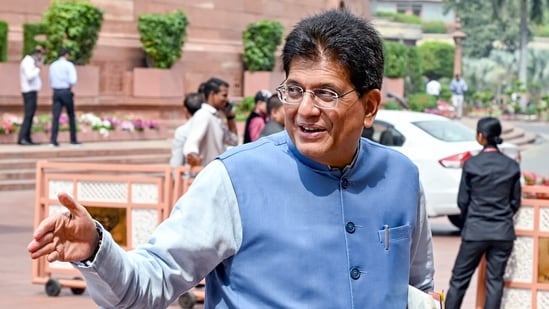
Piyush Goyal to finalise seat-sharing for Tamil Nadu elections today: BJP| India News
Katchatheevu Row Ignites Fiery BJP DMK Confrontation Tamil Nadu Political Implications
The political landscape in Tamil Nadu is currently a crucible of heated exchanges, with the Bharatiya Janata Party (BJP) and the ruling Dravida Munnetra Kazhagam (DMK) locked in an intense war of words. Amidst this simmering tension, a significant announcement from the BJP regarding the historical Katchatheevu island issue has further amplified the already strident verbal volleys, drawing deep lines in the sand as the state gears up for crucial electoral battles. This development has not merely rekindled an old debate but has strategically positioned it at the forefront of contemporary political discourse, shaping narratives and potentially influencing voter sentiment across the state.
For those unfamiliar, Katchatheevu is a small, uninhabited island located in the Palk Strait, between India and Sri Lanka. Historically, the island was a fishing ground for fishermen from both countries. However, in 1974, an agreement between India and Sri Lanka formally ceded Katchatheevu to Sri Lanka. This decision, made by the then-Congress government at the Centre, with the DMK also in power in Tamil Nadu, has been a perennial point of contention, particularly for the fishing communities along Tamil Nadu’s coast. Fishermen from places like Rameswaram have consistently faced challenges, including arrests and seizure of their boats by Sri Lankan authorities, often citing boundary infringements near Katchatheevu. The island’s cession effectively curtailed traditional fishing rights that generations of Tamil Nadu fishermen had enjoyed, leading to persistent demands for its retrieval or renegotiation of fishing access.
The recent spark in this long-standing issue came when the BJP, through various national and state leaders, publicized what they claimed were previously undisclosed documents and internal government communications pertaining to the 1974 agreement. This “announcement” by the BJP was less about new information and more about a strategic re-packaging and aggressive public dissemination of historical facts, aiming to highlight the alleged culpability of both the Congress and the DMK in the island’s cession. The BJP’s narrative suggests that these parties knowingly surrendered Indian territory, thereby betraying the interests of Tamil Nadu and its fishermen. Prime Minister Narendra Modi and other senior BJP figures prominently featured this issue in their campaign speeches, accusing the DMK of having a dual standard—publicly advocating for Katchatheevu’s return while allegedly having been complicit in its original transfer. The core of their argument is that the Congress-DMK alliance of that era made a grave error, the consequences of which continue to plague Tamil Nadu’s fishing community.
The DMK, naturally, has not taken these accusations lying down. Their response has been swift and equally fervent, accusing the BJP of politicizing a sensitive and complex historical issue purely for electoral gain. DMK leaders, including Chief Minister M.K. Stalin, have countered by pointing out the BJP’s decade-long tenure at the Centre without any tangible efforts to retrieve Katchatheevu or resolve the fishermen’s predicament. They argue that the BJP’s sudden interest in the issue is opportunistic, a desperate attempt to create a wedge between the DMK and the people of Tamil Nadu, particularly the fishing communities. The DMK maintains that their party founder, Kalaignar M. Karunanidhi, had vociferously opposed the cession at the time and continued to advocate for the island’s retrieval throughout his political career. They highlight resolutions passed in the Tamil Nadu Assembly, under DMK leadership, urging the Union government to take steps for Katchatheevu’s return. Furthermore, the DMK has turned the tables, questioning the BJP’s own commitment to Tamil Nadu’s welfare, citing various central schemes and financial allocations where they feel the state has been short-changed.
This renewed focus on Katchatheevu carries significant implications for the political landscape in Tamil Nadu. Firstly, it forces both parties to re-engage with a deep-rooted historical grievance that resonates emotionally with a substantial segment of the population, especially in coastal constituencies. For the BJP, it’s an attempt to project itself as the true guardian of Tamil interests, challenging the DMK’s long-held narrative as the sole protector of regional pride. By linking the DMK to a perceived historical misstep of the Congress, the BJP aims to erode the credibility of the INDIA bloc, especially ahead of general elections.
On the other hand, the DMK finds itself in a position where it must robustly defend its historical stance while simultaneously exposing what it terms the BJP’s hypocritical and politically motivated maneuvering. This requires a delicate balance of historical revisionism and present-day critique. The local media, often reflecting community sentiments, has been abuzz with debates, interviews with fishermen, and historical analyses, providing a platform for these competing narratives to unfold. Smaller, independent news outlets and community radios often amplify the voices of those directly affected, highlighting the enduring impact of the 1974 agreement on their daily lives and livelihoods.
Political observers in Tamil Nadu suggest that this Katchatheevu debate serves as a microcosm of the larger ideological and electoral battle playing out in the state. The BJP seeks to establish a stronger foothold in a region where it has traditionally struggled, while the DMK aims to maintain its dominance by painting the BJP as an external force unsympathetic to Tamil Nadu’s unique cultural and political aspirations. The intensity of these exchanges underscores the high stakes involved. Beyond the immediate political scoring, the ongoing discussion brings crucial issues faced by Tamil Nadu fishermen back into the national spotlight, albeit through a highly partisan lens. Their struggles with international maritime boundaries, lack of clear fishing zones, and safety concerns remain paramount, irrespective of which party leverages the issue for political mileage.
Key Takeaways:
* The BJP’s revelation of Katchatheevu documents has significantly escalated the political rhetoric between the BJP and the DMK in Tamil Nadu.
* The issue, stemming from the 1974 cession of Katchatheevu to Sri Lanka, impacts Tamil Nadu fishermen’s traditional rights.
* BJP accuses Congress and DMK of historical complicity, aiming to undermine their credibility ahead of elections.
* DMK counters by highlighting BJP’s inaction over 10 years and questioning the timing of their renewed interest.
* The debate underscores the fierce competition for political dominance in Tamil Nadu, intertwining history with contemporary electoral strategies.
* The core concerns of the fishing community, though politicized, remain central to the discourse.
As Omni 360 News continues to monitor these developments, it is evident that the Katchatheevu issue is more than just a historical dispute; it is a potent symbol in the ongoing political contest for the hearts and minds of Tamil Nadu voters. The ability of each party to articulate its narrative convincingly, and to connect with the lived experiences of those most affected, will play a crucial role in how these verbal volleys ultimately translate into electoral outcomes. The political heat, far from subsiding, appears set to intensify as the election season approaches its peak.





