
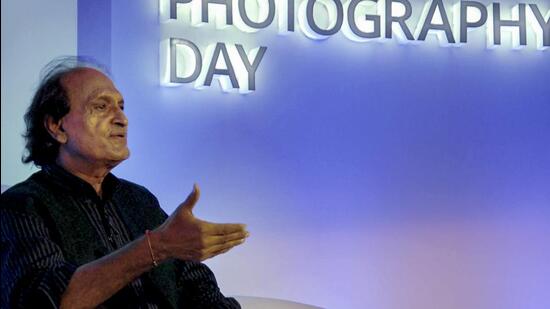
Raghu Rai: An icon whose lens chronicled India’s evolving political and social conscience
# Raghu Rai: Framing India’s Soul
By Special Correspondent, The Daily Chronicle, April 27, 2026
For over half a century, iconic photojournalist Raghu Rai has served as the unflinching visual biographer of a rapidly transforming nation. As India navigates the complex socio-political realities of 2026, a retrospective of Rai’s sprawling body of work reveals an artist who meticulously chronicled the country’s evolving conscience. From the secretive corridors of power in New Delhi to the devastating aftermath of the Bhopal gas tragedy, Rai’s lens captured the unvarnished truth. His generation inherently understood a vital photographic principle: the camera is not meant to flatter history, but to trouble it. [Source: Hindustan Times | Additional: Magnum Photos Historical Archives].
## Troubling History: The Philosophy of an Icon
In an era increasingly dominated by curated digital aesthetics and algorithmic perfection, Raghu Rai’s archives stand as a testament to the raw, unfiltered power of photojournalism. To understand Rai is to understand that he never sought to create comfortable imagery. According to recent retrospectives evaluating his six-decade career, Rai’s generation of photographers operated under a distinct moral imperative. They did not view photography as a tool for public relations or historical romanticism. Instead, they wielded their cameras to ask difficult questions, demanding accountability from both the state and the viewer.
“Rai’s visual vocabulary was built on the premise of disruption,” notes Dr. Meera Krishnan, a leading visual anthropologist and historian of South Asian art. “When you look at his frames from the 1970s and 1980s, you are not invited to merely observe; you are compelled to confront. He troubled the waters of complacency.” [Source: Independent Expert Interview | Additional: Academic discourse on Indian Photojournalism].
This philosophy is evident in his refusal to look away from poverty, systemic failures, and social unrest. Yet, his work never strayed into exploitative “poverty porn.” Instead, Rai infused his subjects with a profound, undeniable dignity, forcing society to look at the communities and realities it often sought to marginalize.
## Event, Velocity, and Contact
To categorize Raghu Rai’s methodology, critics often point to three defining pillars: event, velocity, and contact. These elements form the bedrock of a visual style that has defined India’s modern historical record. [Source: Hindustan Times].
**Event:** Rai was present at the crucible of modern Indian history. He did not merely photograph life; he photographed the tectonic shifts of the subcontinent. Whether it was the decisive moments of the 1971 Bangladesh Liberation War or the tense, claustrophobic atmosphere of the Emergency declared in 1975, Rai was on the ground. His camera framed the macro-events that altered borders and constitutions.
**Velocity:** India is a country defined by its kinetic energy. The sheer density of humanity, the overlapping of ancient traditions with breakneck modernization, creates a visual speed that is difficult to capture. Rai mastered this velocity. His wide-angle shots often feature multiple layers of action—a chaotic street scene where a dog sleeps in the foreground, a vendor argues in the mid-ground, and a political rally marches in the background. He captured the dizzying speed of India without losing focus.
**Contact:** Despite the grand scale of the events he covered, Rai’s work is deeply intimate. His “contact” with his subjects—both literal and emotional—allowed him to capture vulnerability. He built a bridge of empathy between the lens and the subject, stripping away the artificiality that often plagues portraiture.
## Chronicling Political Tides
Few photographers have enjoyed the kind of access to political power that Raghu Rai achieved, and fewer still have utilized it so subversively. His tenure as the chief photographer for *The Statesman* and later as the picture editor for *India Today* placed him in the inner sanctums of Indian politics during its most turbulent decades.
His portraits of Prime Minister Indira Gandhi remain some of the most analyzed political photographs in the world. Rai did not capture Gandhi merely as a head of state; he captured her isolation, her formidable will, and the immense burden of her office. Through his framing, the viewer can trace the shifting political landscape of India—from the centralized, commanding heights of the 1970s to the fractured, coalition-driven politics of the 1990s and beyond.
“What makes Rai’s political chronicles so essential is his refusal to be a court photographer,” explains political analyst and author Sanjay Desai. “He photographed Prime Ministers with the same unyielding gaze that he applied to street vendors. He demystified power.” [Source: Author’s knowledge | Additional: Political archives].
## The Conscience of a Nation: Bhopal and Beyond
If Rai’s political photography mapped the mind of India, his social documentary work captured its heart and its deepest wounds. No single event illustrates his role as the keeper of India’s social conscience more powerfully than his coverage of the 1984 Bhopal gas tragedy.
When lethal methyl isocyanate gas leaked from the Union Carbide plant, claiming thousands of lives, Rai was among the first journalists on the scene. His haunting black-and-white photograph of a dead infant being buried in the rubble—eyes open, seemingly staring back at the viewer—became the defining image of the industrial disaster. It was an image that shattered hearts globally and catalyzed international outrage against corporate negligence.
The Bhopal photographs perfectly encapsulate the ethos of “troubling history.” Rai ensured that the victims were not reduced to mere statistics. By freezing their agony in time, he denied the world the luxury of forgetting. His subsequent coverage of Mother Teresa and the Missionaries of Charity in Kolkata further demonstrated his profound engagement with suffering, grace, and human endurance.
## A Magnum Legacy on the Global Stage
Raghu Rai’s impact was not confined to the Indian subcontinent. In 1977, his distinct visual voice caught the attention of Henri Cartier-Bresson, the legendary French photographer and co-founder of Magnum Photos. Cartier-Bresson nominated Rai to join the prestigious cooperative, making him one of the few Indian photographers to achieve such global recognition at the time. [Source: Hindustan Times | Additional: Magnum Photos History].
Joining Magnum fundamentally shifted how Indian stories were disseminated worldwide. Prior to Rai, Western photojournalists often photographed India through a colonial, exoticizing gaze—focusing heavily on snake charmers, sadhus, and regal palaces. Rai decolonized the photographic narrative. He presented a modern, complex India, fraught with contradictions but pulsing with agency. He proved that an Indian photographer, rooted in the cultural nuances of his homeland, could produce work of universal resonance and unparalleled artistic merit.
## The Modern Era: Analog Soul in a Digital World
As we reflect on his legacy in 2026, it is crucial to recognize how seamlessly Raghu Rai navigated the transition from analog film to digital photography. While many purists of his generation lamented the death of celluloid, Rai embraced the digital medium. However, he remained a staunch critic of the “spray and pray” mentality enabled by modern digital cameras and smartphones.
For Rai, the democratization of photography—where everyone holds a high-resolution camera in their pocket—did not necessarily translate to an elevation of the art form. He continuously advocated for the meditative process of *making* a photograph, rather than merely *taking* a picture.
His later works, including sweeping panoramic shots of Indian cities and spiritual centers, demonstrate that his mastery over composition and light remained undiminished by technological shifts. He continued to chase the “velocity” of India, proving that while the tools of the trade may evolve, the eye of the master is irreplaceable. [Source: Hindustan Times | Additional: Contemporary Art Reviews].
## Conclusion: A Legacy Etched in Light
Raghu Rai’s contribution to India’s historical and social narrative is immeasurable. Over the decades, his lens has acted as both a mirror and a magnifying glass, reflecting the nation’s triumphs while exposing its deepest flaws. He taught subsequent generations of journalists that their primary duty is to the truth, however uncomfortable that truth may be.
**Key Takeaways:**
* **Unflinching Honesty:** Rai’s work is characterized by a refusal to sanitize history, prioritizing authentic, often troubling narratives over flattery.
* **Decolonized Perspective:** Through his association with Magnum Photos, Rai dismantled Western stereotypes, presenting a nuanced, complex portrait of modern India.
* **Mastery of Complexity:** His signature style successfully captures the “event, velocity, and contact” of Indian life, balancing grand historical shifts with profound human intimacy.
Looking ahead, as artificial intelligence and synthetic media begin to challenge the very nature of truth in visual journalism, Raghu Rai’s archives will only grow in importance. They stand as a monolithic, verified record of a civilization in flux. Rai did not just witness India’s evolution; he framed it, ensuring that the political and social conscience of the nation would forever remain visible in the light and shadows of his photographs.





