
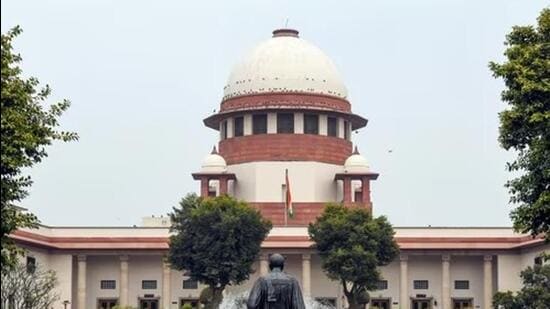
SC denies bail to suspended DIG Bhullar in CBI corruption case| India News
# SC Denies Bail to DIG Bhullar in CBI Case
**By Staff Correspondent, The Daily Legal Desk, April 10, 2026**
**New Delhi:** The Supreme Court of India on Friday denied bail to suspended Deputy Inspector General (DIG) Bhullar in connection with a high-profile corruption case investigated by the Central Bureau of Investigation (CBI). Bhullar had approached the apex court challenging a February 16 ruling by the Punjab and Haryana High Court, which had firmly rejected his bail application. The CBI registered the underlying corruption case on October 16 last year. The top court’s refusal underscores the judiciary’s uncompromising stance against allegations of systemic graft within the upper echelons of law enforcement.
The dismissal of the special leave petition by the Supreme Court marks a significant development in a case that has sent shockwaves through the regional law enforcement apparatus. For legal observers and the public alike, the proceedings highlight the stringent measures being taken to ensure accountability among senior police officials.
## The Supreme Court Proceedings
During the hearing on Friday, the Supreme Court bench scrutinized the arguments presented by both the defense and the CBI. Bhullar’s legal counsel argued that the suspended officer had been in custody for several months, asserting that the primary phase of the CBI’s investigation, including the recording of statements and seizure of digital evidence, had already been completed. The defense maintained that continued incarceration was unnecessary, arguing that Bhullar posed no flight risk and was willing to comply with any strict conditions imposed by the court.
However, the legal representatives for the CBI strongly opposed the bail plea. The investigative agency highlighted the inherent risks of granting bail to a high-ranking police officer, arguing that Bhullar’s lingering influence within the state police machinery could be weaponized to intimidate key witnesses or tamper with critical evidence.
The Supreme Court bench, after evaluating the case diary and the progress of the investigation, aligned with the CBI’s apprehensions. The justices noted that allegations of corruption against officers entrusted with upholding the law strike at the very foundation of public trust in the criminal justice system. Consequently, the court found no compelling reason to interfere with the previous order of the Punjab and Haryana High Court. [Source: Hindustan Times | Additional: Supreme Court Public Cause Lists]
## Genesis of the Case: The October 16 FIR
The legal troubles for DIG Bhullar began last year when the Central Bureau of Investigation officially registered a First Information Report (FIR) on October 16, 2025. The case was filed under relevant sections of the Prevention of Corruption Act (PCA) and the Bharatiya Nyaya Sanhita (BNS), following credible intelligence and preliminary inquiries regarding alleged extortion, bribery, and the misuse of official powers.
While the CBI has kept the granular operational details of the investigation under tight wraps, sources indicate that the allegations stem from a broader nexus involving the deliberate derailment of ongoing investigations in exchange for substantial financial kickbacks. Following the registration of the FIR and subsequent raids that reportedly yielded incriminating documents and electronic devices, Bhullar was officially suspended from his duties by the state government, pending the outcome of the departmental and criminal inquiries.
The immediate suspension was executed in accordance with the All India Services (Discipline and Appeal) Rules, which mandate that officers facing serious criminal charges, particularly those involving moral turpitude or corruption, be removed from active duty to ensure a fair and unhindered investigation.
## The High Court’s February 16 Rejection
Before knocking on the doors of the Supreme Court, Bhullar had sought relief from the Punjab and Haryana High Court. In a detailed order pronounced on February 16, 2026, the High Court systematically dismantled the defense’s plea for regular bail.
The High Court judge observed that the evidence presented by the CBI at that stage—including intercepted communications, financial trails, and testimonies recorded before a magistrate—established a strong *prima facie* case against the suspended DIG. The court’s ruling explicitly noted that an officer of Bhullar’s seniority possesses a profound understanding of investigative loopholes and systemic vulnerabilities.
“When the protector of the law becomes the alleged perpetrator of a systemic subversion of justice, the courts must exercise extreme caution in granting bail,” the High Court noted in its February 16 order. The court further elaborated that releasing the accused at a crucial juncture of the ongoing probe could cause irreparable damage to the prosecution’s case, as subordinate officers and civilian witnesses might feel threatened by the prospect of a former superior officer walking free. [Source: Hindustan Times | Additional: High Court Judicial Records]
## Legal Framework: Bail Jurisprudence in Corruption Cases
The denial of bail to DIG Bhullar brings into focus the evolving nature of bail jurisprudence in India, particularly concerning white-collar crimes and public corruption. Under the Bharatiya Nagarik Suraksha Sanhita (BNSS)—which replaced the Code of Criminal Procedure (CrPC)—the parameters for granting bail in cases involving severe economic offenses and public servants remain highly rigorous.
Courts are mandated to consider a tripartite test before granting regular bail:
1. **Flight Risk:** Whether the accused is likely to abscond and evade the judicial process.
2. **Evidence Tampering:** Whether there is a reasonable apprehension that the accused will destroy, conceal, or manipulate evidence.
3. **Witness Intimidation:** Whether the accused possesses the capacity and intent to influence, threaten, or coerce witnesses.
In Bhullar’s case, the CBI successfully argued that the latter two conditions posed a significant and present danger. Furthermore, Section 7 of the Prevention of Corruption Act, which deals with public servants taking gratification other than legal remuneration, carries strict penalties. The Supreme Court has repeatedly held in landmark judgments that economic offenses constitute a class apart and must be visited with a different approach in the matter of bail, given their deep-rooted impact on the socio-economic fabric of the country.
## Expert Perspectives on Police Accountability
The development has sparked widespread discussions among legal luminaries and advocates for police reform regarding the mechanisms of internal accountability within Indian law enforcement.
Senior Advocate Meenakshi Sharma, a specialist in anti-corruption law, offered her analysis on the Supreme Court’s decision. “The apex court’s refusal to grant bail in this matter is perfectly aligned with its recent trajectory of zero tolerance toward public corruption. When a high-ranking officer like a DIG is involved, the disparity in power between the accused and the witnesses is vast. The court has rightfully prioritized the integrity of the CBI’s investigation over the individual liberty of the accused at this pre-trial stage,” she stated.
Similarly, former senior police officials have weighed in on the institutional damage caused by such allegations. “Incidents like these tarnish the uniform and severely erode the public’s trust in the police,” noted retired IPS officer and security analyst Dr. V.K. Singh. “The swift action by the CBI, followed by the firm stance of both the High Court and the Supreme Court, sends a necessary deterrent message. It reinforces the principle that rank and position do not offer immunity from the law.” [Source: Independent Legal and Security Analysis]
## The CBI’s Ongoing Probe and Digital Evidence
As the bail plea rests, the focus now shifts back to the trial court and the CBI’s ongoing investigation. The central agency has reportedly deployed advanced forensic techniques to analyze the digital footprint associated with the alleged corruption network. Modern corruption investigations rely heavily on electronic evidence—such as encrypted messaging logs, geolocations, and complex banking trails involving shell entities or proxy accounts.
According to procedural norms, the CBI is expected to file a comprehensive supplementary chargesheet detailing the forensic findings and witness testimonies. The protection of whistleblowers and crucial witnesses will remain a top priority for the agency as the trial progresses. The defense, meanwhile, is likely to shift its strategy toward challenging the admissibility of the electronic evidence and expediting the trial process to prevent indefinite pre-trial detention.
## Broader Implications for State Police Departments
The Bhullar case is not an isolated incident but rather a symptom of broader systemic vulnerabilities that the Supreme Court and various state governments have been attempting to address. The enforcement of the historic *Prakash Singh* guidelines on police reform, which aimed to insulate police forces from external pressures and internal malfeasance, remains uneven across different Indian states.
This case serves as a critical case study for state home ministries to re-evaluate their internal vigilance mechanisms. Many states are now considering the implementation of more robust departmental oversight committees and mandatory asset declarations for senior officers to flag disproportionate assets or suspicious financial activities proactively.
Furthermore, the continuous judicial scrutiny acts as a vital check and balance. By denying bail, the Supreme Court has reaffirmed the principle that the rule of law must be uniformly applied, irrespective of the accused’s status within the state apparatus.
## Conclusion and Future Outlook
The Supreme Court’s decision to deny bail to suspended DIG Bhullar underscores a pivotal moment in the CBI’s corruption case registered on October 16 of the previous year. By upholding the February 16 order of the Punjab and Haryana High Court, the apex court has ensured that the central agency can proceed with its investigation without the looming threat of witness tampering or evidence manipulation by a powerful accused.
Moving forward, the legal battle will likely transition to the framing of charges in the special CBI court. As the prosecution prepares to lay out its evidence, the case will continue to be closely monitored by legal experts, police reform advocates, and civil society. Ultimately, the resolution of this case will not only determine the fate of the suspended officer but will also serve as a crucial barometer for the efficacy of India’s anti-corruption frameworks in holding those in power accountable.





