
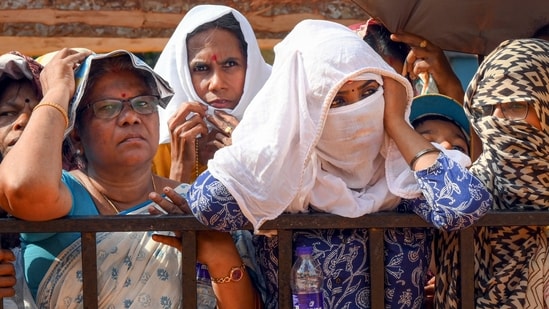
Undeclared power cuts trigger protests across Kerala
# Kerala Power Cuts Spark Statewide Protests
**By Staff Reporter, The National Wire | April 29, 2026**
**Thiruvananthapuram:** Searing temperatures and escalating electricity demands have pushed Kerala into a severe energy crisis, resulting in rolling, undeclared power cuts that have ignited widespread protests across the southern Indian state. On Wednesday, April 29, 2026, the Kerala State Electricity Regulatory Commission (KSERC) intervened in the escalating crisis, officially permitting the Kerala State Electricity Board (KSEB) to procure an additional 250 megawatts (MW) of power daily. This emergency regulatory measure, effective immediately and lasting until May 15, aims to mitigate the widening supply-demand gap. However, public frustration remains at a boiling point as residents and businesses grapple with spontaneous grid failures amidst an unforgiving summer heatwave. [Source: Hindustan Times].
## The Breaking Point: Surging Demand Meets Dwindling Supply
The current power crisis in Kerala is the culmination of erratic weather patterns and a surge in post-pandemic domestic and commercial energy consumption. Throughout April 2026, the state has witnessed unprecedented daytime temperatures, particularly in districts like Palakkad, Thrissur, and Kannur, where the mercury has consistently hovered around 40°C (104°F). This intense heatwave has triggered a massive spike in the use of air conditioners and cooling appliances.
Recent data indicates that the state’s peak evening demand has repeatedly breached the **5,500 MW** threshold, a significant jump from the historical average of 4,200 MW for this time of year. Unfortunately, the state’s internal power generation capabilities are currently crippled. Kerala relies heavily on its hydroelectric projects to meet domestic demand. However, the water levels in the state’s major reservoirs, including the massive Idukki and Sabarigiri dams, have plummeted to roughly **28% of their total capacity**.
With internal generation restricted to preserve water until the anticipated arrival of the Southwest Monsoon in early June, KSEB has been forced to heavily rely on the central grid and external power purchases. When imported power falls short of the surging real-time demand, the grid operators are forced to initiate load shedding—colloquially experienced by the public as unannounced, erratic power cuts.
## Public Outcry Over Undeclared Outages
The lack of an official load-shedding schedule has been the primary catalyst for public anger. Over the past week, unannounced power cuts lasting anywhere from 45 minutes to three hours have disrupted daily life, industrial production, and vital services.
Spontaneous protests have erupted in various parts of the state. In commercial hubs like Kochi and Kozhikode, agitated citizens and local business owners have staged sit-ins outside regional KSEB section offices. The core grievance is not just the lack of electricity, but the unpredictability of the outages.
“If the electricity board announces a specific schedule for load shedding, we can plan our production and run diesel generators accordingly,” says **Mathew Varghese**, a representative of the Kerala Small Scale Industries Association (KSSIA). “But these sudden, undeclared trippings are destroying our machinery, halting our assembly lines, and leaving our workers idle. The economic loss to the MSME sector alone is staggering.” [Additional Source: Local Chamber of Commerce Statements].
## Regulatory Intervention: Procuring 250 MW Additional Power
Sensing the escalating socio-economic tension, the state government pushed for immediate regulatory relief. According to the Hindustan Times, the Kerala State Electricity Regulatory Commission (KSERC) has granted KSEB the critical approval to procure **250 MW of additional power daily** until May 15.
This ruling is a lifeline for the state’s beleaguered power grid. Under standard operating procedures, KSEB is bound by strict budgetary and regulatory limits regarding how much power it can purchase from short-term markets, as these purchases are often highly expensive. The KSERC’s temporary waiver allows the board to bypass some of these financial caps to ensure grid stability and minimize outages.
To secure this 250 MW, KSEB is actively participating in the Day-Ahead Market (DAM) and the Real-Time Market (RTM) through the Indian Energy Exchange (IEX). Furthermore, the board is looking to secure short-term bilateral contracts with independent power producers and thermal plants in neighboring states like Tamil Nadu and Karnataka.
## Financial Strain on the Electricity Board
While the regulatory approval to buy more power provides immediate relief to consumers, it places an enormous financial burden on KSEB. The board is already navigating precarious financial waters, grappling with legacy debts and delayed tariff revisions.
During peak summer months, the cost of electricity on the national power exchange skyrockets due to competitive bidding from multiple heat-struck states across India. While KSEB’s average cost of long-term power generation and procurement usually sits between ₹3.50 to ₹4.50 per unit, short-term emergency purchases on the exchange can surge to the regulatory cap of **₹10 per unit**, or even higher if special waivers are invoked.
**Dr. Rajesh Nair**, an independent energy economist based in Thiruvananthapuram, highlights the unsustainability of this approach. “Procuring 250 MW daily at premium short-term rates for over two weeks will burn a massive hole in KSEB’s treasury,” Dr. Nair explains. “This is a reactive stopgap, not a solution. Ultimately, this financial deficit will be passed down to the consumer in the form of elevated power tariffs or fuel surcharges later in the fiscal year.” [Additional Source: Independent Energy Analysis].
## The Hydroelectric Dependency Trap
The current crisis underscores a deeply rooted structural vulnerability in Kerala’s energy sector: an over-reliance on hydroelectric power. Historically, Kerala has prided itself on its clean energy matrix, heavily anchored by a vast network of dams. Nearly **70% of the state’s internally generated electricity** comes from hydro sources.
However, climate change is rapidly rendering this model unreliable. The traditional monsoon patterns that refill these vital reservoirs have become increasingly erratic. The trailing effects of the recent El Niño weather phenomenon resulted in a deficient Northeast Monsoon in late 2025, leaving the reservoirs partially depleted even before the summer of 2026 began.
When hydro generation falters, the state is forced to import roughly 60% to 70% of its total daily power requirement through the central transmission grid. Any minor disruption in the national grid, or a sudden spike in local demand, instantly destabilizes Kerala’s power supply, leading to the undeclared load shedding currently sparking protests.
## Small Businesses and IT Sectors Bear the Brunt
The ripple effects of the power crisis are being felt profoundly across various sectors of the state’s economy. The Micro, Small, and Medium Enterprises (MSME) sector is reporting significant operational losses. Small-scale textile manufacturers, food processing units, and localized manufacturing hubs rely on continuous power to maintain tight profit margins. The cost of running diesel generators—given the high state-level taxes on petroleum—is economically unfeasible for most small business owners.
Similarly, Kerala’s burgeoning Information Technology (IT) sector, centered around Technopark in Thiruvananthapuram and Infopark in Kochi, is facing logistical challenges. While major IT campuses have robust backup infrastructure, the thousands of employees working remotely or from smaller satellite offices find their productivity severely hampered by erratic internet and power supplies.
## Accelerated Push for Renewable Alternatives
The 2026 summer protests have reignited debates regarding Kerala’s urgent need to diversify its energy portfolio. Energy analysts emphasize that the state must aggressively accelerate its adoption of solar and wind energy to complement its hydro reserves.
While initiatives like the ‘Soura’ project, which aims to install rooftop solar panels on residential and commercial buildings, have made some headway, the pace of implementation remains sluggish compared to neighboring states like Tamil Nadu and Karnataka. Furthermore, Kerala’s unique geography—characterized by high population density and ecological sensitivity—makes large-scale land acquisition for traditional solar parks challenging.
Experts are advocating for innovative solutions, such as expanding floating solar power plants on existing reservoirs. Floating solar not only generates electricity but also reduces the evaporation rate of the reservoir water, addressing both energy and water scarcity simultaneously.
## Conclusion: A Critical Juncture for Kerala’s Energy Future
The KSERC’s authorization to purchase an additional 250 MW of power daily until May 15 offers a necessary, albeit temporary, reprieve from the widespread, undeclared power cuts. If KSEB successfully procures this power without encountering grid transmission bottlenecks, the intensity of the outages—and the accompanying public protests—should subside in the coming days.
However, May 15 is merely a date on the calendar. If the summer heat persists and the pre-monsoon showers are delayed, KSEB may be forced to seek an extension of this emergency procurement, further straining its finances.
The current unrest across Kerala serves as a stark warning. As climate change continues to disrupt traditional weather patterns and economic growth drives up power demand, the state can no longer rely solely on rain-fed hydro projects. A strategic, well-funded pivot toward diversified renewable energy and robust smart-grid infrastructure is no longer an environmental luxury—it is an economic necessity to keep the lights on and the public at peace.





