
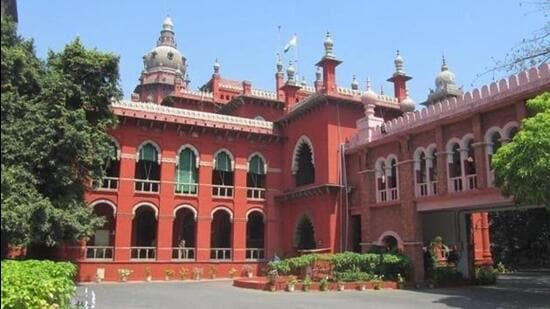
Unity cannot be forced: Madras HC allows village temple drama in Tamil Nadu
# HC Permits Temple Drama: Unity Can’t Be Forced
**By Special Legal Correspondent, India News Desk | May 9, 2026**
On Saturday, the Madras High Court granted official permission for a traditional village temple drama to proceed in the Sivagangai district of Tamil Nadu, delivering a crucial ruling amid brewing caste tensions. Addressing fierce disputes between rival factions battling for control over the local festival, the court astutely observed that “unity cannot be forced.” By directing the local police to provide adequate protection rather than preemptively banning the event, the High Court reinforced the delicate balance between upholding cultural rights and maintaining law and order. [Source: Hindustan Times, May 2026].
## The Anatomy of the Sivagangai Dispute
The controversy originated in a rural pocket of Sivagangai, a district deeply rooted in agrarian traditions and vibrant cultural history. Like many agrarian communities in Tamil Nadu, the village’s socio-cultural life revolves heavily around its annual temple festival. These festivals, often held during the Tamil months of Chithirai and Vaikasi, are marked by traditional processions, rituals, and all-night mythological dramas locally known as *Therukoothu* or *Nadagam*.
However, organizing these events is rarely a simple administrative task. In this specific case, two rival groups within the village clashed over the right to organize, sponsor, and control the temple drama. Control over the festival committee is traditionally viewed as a symbol of social hierarchy, prestige, and dominance. When the rival group, citing caste-based grievances and historical disenfranchisement, objected to the primary organizers’ plans, the local administration intervened.
Fearing an outbreak of violence, local law enforcement initially hesitated to grant permission for the cultural drama. The police frequently rely on Section 144 of the Criminal Procedure Code (or its equivalent under the newly enacted Bharatiya Nagarik Suraksha Sanhita) to deny permission for such events, citing “law and order concerns” and the potential for caste clashes. Consequently, the organizers approached the Madurai Bench of the Madras High Court, seeking a writ of mandamus to compel the police to provide security and allow the play to go on.
## The Judicial Standpoint: “Unity Cannot Be Forced”
Presiding over the case, the High Court took a pragmatic and deeply constitutional approach to the localized conflict. The judge noted that while social harmony and communal unity are the ultimate goals of a civilized society, they must evolve organically through mutual respect and understanding.
“Unity cannot be forced,” the court noted, pointing out that an artificial peace achieved by silencing cultural expression or imposing blanket bans does not resolve underlying social fissures. The bench emphasized that the state apparatus cannot abdicate its responsibility to maintain law and order simply by prohibiting lawful assemblies and religious ceremonies.
Legal experts have widely praised the court’s stance. “The High Court has rightly identified that fundamental rights cannot be held hostage by the threat of violence from a dissenting group,” explains Dr. S. K. Rajan, a senior advocate specializing in constitutional law. “If the police are allowed to ban every event that faces opposition, it effectively grants a ‘heckler’s veto’ to any disgruntled faction. The state’s duty is to police the threat, not to police the culture.” [Source: Independent Legal Analysis].
## Constitutional Nuances: Article 25 and Free Expression
The Sivagangai ruling touches upon the foundational pillars of the Indian Constitution—specifically, Article 25, which guarantees the freedom of conscience and the right freely to profess, practice, and propagate religion, and Article 19(1)(a), which ensures freedom of speech and expression.
Traditional dramas in Tamil Nadu are not merely entertainment; they are a profound blend of religious worship and artistic expression. Deities are invoked, mythological stories (such as the *Mahabharata* or local folklore) are recounted, and moral lessons are imparted. Denying the right to stage these dramas directly infringes upon the community’s right to cultural and religious practice.
The Madras High Court has historically maintained that while the right to practice religion is subject to public order, morality, and health, the threshold for “public order” cannot be so low that a mere verbal dispute or the threat of a scuffle results in the cancellation of an ancient tradition. By stepping in, the court effectively ordered the state machinery to elevate its operational readiness, ensuring that the festival can proceed under a protective umbrella.
## Sociological Undertones of Temple Honors
To truly understand the gravity of the High Court’s decision, one must look at the sociological landscape of rural Tamil Nadu. Temples are the socio-political epicenters of these villages. The dispute in Sivagangai is a microcosm of a broader, systemic issue regarding *Mariyadhai* (temple honors).
For decades, the right to pull the temple chariot, tie the sacred thread, or sponsor the *Annadanam* (free food distribution) and the cultural drama has been tightly controlled by dominant castes. However, with increasing education, economic mobility, and political awareness, marginalized communities and sub-castes are rightfully demanding equitable participation in these public spheres.
Dr. V. R. Karthikeyan, a prominent sociologist researching South Indian rural dynamics, notes: “Control over temple festivals in Tamil Nadu is rarely just about piety; it is deeply intertwined with social capital. When a rival group contests the organization of a temple drama, they are fundamentally contesting the traditional power hierarchy of the village. The court’s acknowledgment that ‘unity cannot be forced’ reflects a mature understanding that social transitions are messy, and legal suppression of these events only deepens the resentment.”
The High Court’s ruling navigates this complex web by refusing to legitimize dominance, instead focusing purely on the legality of the event and the obligation of the state to ensure a safe environment for all participants.
## Court-Mandated Guidelines for the Event
While permitting the temple drama to go ahead, the Madras High Court did not issue a blank check. Recognizing the volatility of the situation in Sivagangai, the judiciary laid down stringent conditions to ensure that the cultural event does not devolve into a platform for hate speech or caste chauvinism.
Based on established precedents in similar cases, the court’s directives to the organizers and local police typically include the following non-negotiable terms:
* **Content Restrictions:** The organizers must ensure that the drama’s dialogue, songs, and performances do not contain any casteist slurs, derogatory remarks, or content that glorifies a particular community while demeaning another.
* **Time Regulations:** The event must strictly adhere to permitted timings, usually concluding before the early hours of the morning to prevent late-night anti-social activities.
* **Visual Displays:** There is a strict ban on the erection of flex boards, banners, or hoardings that display caste leaders, politically sensitive slogans, or inflammatory imagery near the temple premises.
* **Accountability:** The organizing committee is held personally liable for any damage to public or private property. If violence breaks out due to their negligence, they must bear the financial and legal consequences.
* **Police Discretion:** The local police inspector is empowered to intervene, halt the program, and take immediate action if any of the stipulated conditions are violated.
By imposing these guardrails, the court ensured that the freedom of expression does not cross the line into incitement or public nuisance.
## The Precedent Set for Future Rural Disputes
The judgment emanating from the Madurai Bench will likely serve as a crucial touchstone for future administrative decisions across Tamil Nadu. District Collectors and Superintendents of Police are frequently caught in the crossfire between constitutional rights and the practical realities of managing thinly stretched police forces.
By articulating that the police must step up to provide security rather than taking the administratively convenient route of banning the event, the judiciary is pushing for a more robust, accountable, and proactive law enforcement mechanism.
Furthermore, the ruling sends a clear message to warring factions in rural districts: the courts will not allow minoritarian or majoritarian bullying to dictate the cultural calendar of a region. Disputes over festival control must be settled through dialogue, civil litigation, or intervention by the Hindu Religious and Charitable Endowments (HR&CE) department, rather than through threats of violence that hold the community’s traditions hostage.
## Conclusion: A Delicate Equilibrium
The Madras High Court’s decision to permit the temple drama in Sivagangai is a testament to the judiciary’s nuanced handling of India’s complex socio-religious fabric. By declaring that “unity cannot be forced,” the court has acknowledged the realities of caste tensions while refusing to let those tensions extinguish lawful cultural expressions.
As Tamil Nadu moves deeper into its traditional festival season, this ruling provides a vital framework. It mandates that law enforcement agencies elevate their conflict-resolution capabilities and prioritize the protection of fundamental rights. Ultimately, the judgment serves as a reminder that true social harmony is built not through the forced silence of administrative bans, but through the equitable, safe, and regulated expression of community heritage.





