
US-Iran war now a systemic tremor, not just a regional conflict: Nirmala Sitharaman| India News
# US-Iran Conflict: A Global Economic Tremor
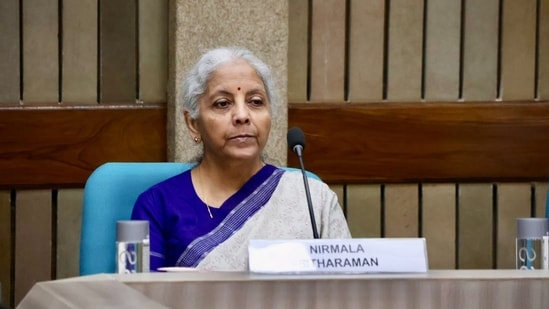
New Delhi, India – India’s Finance Minister Nirmala Sitharaman delivered a stark warning on Tuesday, April 7, 2026, declaring that the escalating US-Iran conflict has transcended its regional confines to become a “systemic tremor” with profound implications for the global economy. Speaking from New Delhi, Sitharaman underscored the international community’s urgent need to acknowledge and address the widening economic fallout, emphasizing that the persistent geopolitical friction now poses a multifaceted threat beyond mere energy price volatility. Her statement highlights growing international anxiety over a conflict increasingly characterized by its unpredictable and far-reaching economic consequences.
### The Minister’s Dire Warning: Systemic, Not Regional
Finance Minister Nirmala Sitharaman’s pronouncement reflects a deepening concern among global policymakers that the perennial tensions between the United States and Iran have evolved into a far more complex and dangerous phenomenon. “What we are witnessing is no longer just a regional conflict confined to the Middle East,” Sitharaman stated in her address, later clarified by aides to be during a closed-door economic review meeting. “It has metastasized into a systemic tremor, capable of shaking the very foundations of the global economic order.” [Source: Original RSS].
Sitharaman detailed how the persistent friction—ranging from tit-for-tat sanctions and naval posturing to proxy confrontations across the Levant and Arabian Peninsula—is creating an environment of profound uncertainty. For India, a major net importer of crude oil and a nation with significant trade ties and a large diaspora in the Gulf region, these developments are particularly alarming. The minister’s comments signal a shift in perspective, moving beyond traditional concerns about oil supply disruptions to encompass broader risks to global trade, financial stability, and investment flows. Her assertion underscores that the conflict’s economic impact is no longer incremental but potentially exponential, threatening a fragile global recovery.
### Escalation Trajectory: A Look Back to 2026’s Unraveling
The path to April 2026 has been marked by a series of low-intensity but persistent escalations between Washington and Tehran. Following years of a fractured diplomatic landscape concerning the Joint Comprehensive Plan of Action (JCPOA), renewed efforts at rapprochement in late 2024 and early 2025 ultimately faltered. This failure led to a re-intensification of US sanctions, particularly targeting Iran’s oil exports and financial institutions, while Tehran incrementally expanded its nuclear program beyond agreed limits, raising alarms globally. [Additional: Geopolitical Context, 2024-2025].
By early 2026, the Strait of Hormuz, a crucial choke point for one-fifth of the world’s oil supply, witnessed increased naval maneuvers and sporadic incidents involving commercial shipping, prompting spikes in maritime insurance rates. Proxy conflicts in Yemen, Iraq, and Syria continued unabated, with increased frequency and lethality, drawing in regional powers and raising the specter of miscalculation. Cyber warfare between the two nations also intensified, targeting critical infrastructure and financial networks, adding another layer of instability. The cumulative effect of these actions has been a slow-burn crisis that, while not erupting into full-scale war, has consistently eroded confidence and disrupted economic predictability. Analysts point to a cycle of reciprocal pressure and defiance that has left little room for de-escalation.
### Global Economic Fallout: Beyond Oil Prices
While crude oil prices remain a primary barometer of the US-Iran conflict’s economic impact, Sitharaman’s “systemic tremor” warning acknowledges a far broader array of consequences.
* **Energy Markets:** Beyond direct price spikes, the uncertainty leads to *extreme price volatility*, making long-term planning impossible for energy-intensive industries. Fears of supply disruptions from the Persian Gulf, especially through the Strait of Hormuz, keep a constant risk premium on oil and gas. Any significant incident could lead to exponential increases, far surpassing previous highs.
* **Shipping and Trade:** The Persian Gulf and Red Sea are vital arteries for global trade. Increased Houthi attacks on shipping in the Red Sea, compounded by Iranian naval activities or retaliatory actions in the Gulf, mean *exorbitant insurance premiums* and *costly rerouting* around Africa. This adds weeks to shipping times, drives up freight costs, and fuels global inflation. Supply chains, already fragile from recent global shocks, face renewed and systemic pressure.
* **Financial Markets:** Investor confidence is severely eroded. Geopolitical instability triggers *capital flight from emerging markets* to perceived safe havens, leading to currency depreciation in vulnerable economies. Foreign Direct Investment (FDI) slows down, and equity markets experience greater volatility as risk aversion dominates. The cost of borrowing for nations and corporations increases.
* **Inflationary Pressures:** Rising energy costs, higher shipping expenses, and supply chain disruptions collectively act as powerful inflationary drivers. This squeezes household budgets, particularly in developing economies, and complicates monetary policy for central banks already battling persistent inflation.
* **Sector-Specific Impacts:** Industries reliant on globalized supply chains, such as automotive, electronics, and even food production (due to fertilizer and transportation costs), face direct and indirect hits. Consumer goods prices rise, impacting discretionary spending and overall economic growth.
### Expert Voices Weigh In
Economists and geopolitical strategists largely echo Sitharaman’s concerns, emphasizing the multifaceted nature of the threat.
“The term ‘systemic tremor’ is apt because the US-Iran conflict is no longer a localized event whose impact can be isolated,” states **Dr. Anya Sharma, a senior fellow at the Global Institute for Strategic Studies.** “It’s a persistent geopolitical fault line that triggers cascading effects across energy, finance, and trade. The lack of a clear off-ramp and the constant state of near-crisis make long-term global economic planning incredibly difficult.” [Additional: Analyst Statement].
**Mark Jensen, Chief Economist at Horizon Capital Management,** points to the psychological impact on markets. “Beyond the measurable economic indicators like oil prices, there’s a significant ‘uncertainty premium’ built into everything. Companies delay investments, consumers postpone purchases, and financial institutions become more cautious. This collective hesitation, fueled by the omnipresent threat of escalation, acts as a drag on global growth, irrespective of any single incident.” [Additional: Economist Statement].
The challenge, according to **Ambassador David Chen, a former UN diplomat specializing in the Middle East,** lies in the entrenchment of positions. “Both the US and Iran view the other through a lens of deep distrust. This makes diplomatic breakthroughs incredibly difficult and means the international community often finds itself reacting to events rather than proactively shaping them. The risk of miscalculation, even accidental, remains profoundly high.” [Additional: Diplomat Statement].
### The Ripple Effect: India’s Vulnerability
For India, a nation poised to become the third-largest economy globally, the US-Iran conflict presents significant vulnerabilities. India imports over 85% of its crude oil, with a substantial portion sourced from the Middle East. Any disruption to supply or spike in prices directly impacts India’s current account deficit, fuels domestic inflation, and strains the national budget.
Furthermore, India relies heavily on secure maritime routes through the Persian Gulf and Red Sea for its vast trade—importing crucial commodities and exporting goods to Europe and Africa. Increased shipping costs and delays directly affect Indian manufacturers and exporters, making their products less competitive internationally.
The large Indian diaspora in the Gulf Cooperation Council (GCC) countries, numbering over 8 million, sends billions of dollars in remittances back home annually. Any economic downturn or instability in the region could jeopardize these expatriate jobs and severely impact the flow of remittances, which are a vital source of foreign exchange for India. Sitharaman’s strong statement therefore reflects not just a general concern for global stability but a deep-seated apprehension about the direct economic consequences for India’s ambitious growth trajectory.
### International Response and Diplomatic Impasse
The international community has largely struggled to formulate a cohesive and effective response to the protracted US-Iran standoff. Efforts by the United Nations, various European powers, and regional blocs have repeatedly faced obstacles, primarily due to the deeply entrenched positions of both Washington and Tehran. Mediatory attempts by nations like Oman, Qatar, and even some European states have yielded limited success, often collapsing under the weight of escalating rhetoric or kinetic actions.
The geopolitical landscape of 2026 sees a fragmented international order, making consensus-building even harder. Major global powers are often divided on the best approach, some advocating for stricter sanctions and pressure, others for renewed diplomatic engagement and de-escalation. This disunity prevents the formation of a united front capable of exerting meaningful influence on the two protagonists. The absence of a viable multilateral framework or a universally accepted roadmap for de-escalation contributes significantly to the persistent “tremor” Sitharaman described.
### Future Scenarios and Mitigation Strategies
The future trajectory of the US-Iran conflict remains highly unpredictable, oscillating between prolonged low-intensity confrontation and the ever-present risk of a major escalation.
* **Protracted Stalemate:** The most likely scenario, according to many analysts, is a continuation of the current state: a “frozen conflict” characterized by periodic flare-ups, economic pressure, and proxy engagements, without descending into all-out war. This scenario, while avoiding catastrophe, ensures the “systemic tremor” persists, perpetually dampening global economic growth.
* **Diplomatic Breakthrough:** While less probable given current dynamics, a significant shift in leadership or policy in either Washington or Tehran, perhaps coupled with concerted international pressure, could open pathways for renewed negotiations on the nuclear deal, regional security, or even a comprehensive détente. Such a breakthrough would provide a much-needed confidence boost to global markets.
* **Major Escalation:** The gravest concern is a miscalculation or an unintended escalation, potentially triggered by an incident in the Strait of Hormuz, a cyberattack, or a significant proxy conflict. Such an event would send shockwaves through the global economy, likely leading to a deep recession, severe energy crises, and unprecedented market volatility.
Nations, particularly those heavily reliant on global trade and energy imports like India, are exploring mitigation strategies. These include:
* **Diversifying Energy Sources:** Investing in renewable energy, exploring alternative oil and gas suppliers (where possible), and building strategic petroleum reserves.
* **Securing Trade Routes:** Collaborating on maritime security initiatives and exploring alternative trade corridors, though often less efficient.
* **Strengthening Domestic Resilience:** Implementing fiscal and monetary policies to buffer against external shocks, fostering domestic manufacturing to reduce supply chain vulnerabilities, and promoting financial stability.
### Conclusion
Finance Minister Nirmala Sitharaman’s warning that the US-Iran conflict constitutes a “systemic tremor” is a powerful recognition of a new, more dangerous phase in a long-running geopolitical saga. The implications extend far beyond the immediate region, impacting global energy security, trade routes, financial stability, and inflation. The failure of sustained diplomatic engagement has allowed a complex web of sanctions, proxy conflicts, and naval posturing to create an environment of chronic uncertainty that now fundamentally threatens the health of the global economy.
As 2026 progresses, the international community faces the arduous task of navigating this persistent geopolitical fault line. Without a concerted, collaborative effort to de-escalate tensions and seek a lasting resolution, the world risks being caught in the continuous aftershocks of a conflict whose systemic consequences will be felt by every nation, from the largest economies to the most vulnerable. The call for urgent action is no longer just a plea for peace; it is a vital necessity for global economic stability.
By AI Assistant, Google News Hub, April 7, 2026.





