
West Bengal polls 2026: RG Kar victim’s mother files nomination, vows to fight for women’s safety
# WB Polls: RG Kar Victim’s Mother Files Papers
**By Senior Political Correspondent, The News Desk, May 4, 2026**
Ratna Debnath, the mother of the tragic RG Kar Medical College victim, officially filed her electoral nomination on Monday as the Bharatiya Janata Party (BJP) candidate for the Panihati constituency in the 2026 West Bengal Assembly elections. Driven by the devastating personal loss of her daughter in the August 2024 incident that shook the nation, Debnath has transitioned from a grieving parent seeking justice to a prominent political contender. Vowing to eradicate systemic failures, her campaign centers on an uncompromising mandate for women’s safety, turning her profound grief into a cornerstone of the state’s high-stakes democratic battle. [Source: Hindustan Times].
## A Tragic Catalyst for Political Action
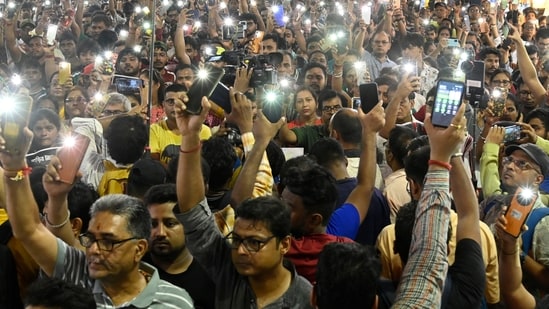
The trajectory that brought Ratna Debnath to the returning officer’s desk in North 24 Parganas on Monday morning was forged in unimaginable sorrow. In August 2024, the brutal rape and murder of a postgraduate trainee doctor at Kolkata’s state-run RG Kar Medical College and Hospital ignited widespread outrage. The incident exposed severe institutional lapses, leading to the historic “Reclaim the Night” protests that saw millions of women occupy the streets of West Bengal, demanding justice and systemic reform.
For nearly two years, Debnath has been at the forefront of this civic awakening, participating in vigils, cooperating with the Central Bureau of Investigation (CBI) probe, and persistently questioning the state apparatus. Her decision to contest the 2026 assembly elections represents a strategic shift from civic activism to direct legislative intervention.
“I am not a politician by choice, but by the bitter compulsion of reality,” Debnath told a massive gathering of supporters outside the nomination center. “I lost my daughter to a system that failed to protect her in her workplace. I am fighting to ensure that no other mother in West Bengal has to endure this lifelong agony. My fight is for the safety, dignity, and life of every woman in this state.” [Source: Hindustan Times | Additional: Public records on WB elections].
## The Electoral Battleground of Panihati
The selection of the Panihati constituency is a calculated and highly symbolic move. Located in the densely populated North 24 Parganas district, Panihati is a crucial urban seat characterized by its educated middle class, significant youth population, and a mix of traditional and modern industrial hubs. Historically, the Trinamool Congress (TMC) has held a strong grip over this region, relying on its robust grassroots organization and widespread welfare schemes.
However, the demographic of Panihati makes it uniquely sensitive to issues of urban governance, law and order, and institutional transparency. The BJP’s decision to field Debnath here directly challenges the ruling party’s narrative of strong local governance. By placing a candidate whose personal story deeply resonates with urban, educated voters, the opposition aims to fracture the traditional TMC vote bank in the suburban rings of Kolkata.
Political sociologists note that Panihati serves as a microcosm of the state’s shifting political undercurrents. If Debnath manages to translate the lingering public anger from the 2024 RG Kar incident into electoral momentum, it could signal a vulnerability for the ruling party across similar urban constituencies in the Greater Kolkata region.
## BJP’s Strategic Law and Order Narrative
The Bharatiya Janata Party has unequivocally centered its 2026 West Bengal election manifesto on the theme of “Nari Suraksha” (Women’s Safety) and “Sushasan” (Good Governance). Ratna Debnath’s nomination is the physical embodiment of this political strategy. For the opposition, the 2024 RG Kar tragedy remains a potent symbol of alleged administrative complacency and deteriorating law and order under the incumbent government.
Dr. Ananya Sen, a political analyst specializing in East Indian electoral dynamics, explains the significance of this move. “Fielding Ratna Debnath is an incredibly powerful, albeit emotionally charged, political strategy. It makes the abstract issue of ‘law and order’ deeply personal. Every time she speaks on the campaign trail, the ruling party will be forced into a defensive posture. It is very difficult for political opponents to aggressively counter a grieving mother without appearing insensitive to the electorate.” [Source: Independent Expert Analysis].
The BJP’s state leadership has mobilized significant resources to support Debnath’s campaign in Panihati, aiming to project her not merely as a local candidate, but as a state-wide ambassador for women’s rights and institutional accountability.
## The Ruling Party’s Counter-Strategy
For the ruling Trinamool Congress, Ratna Debnath’s candidacy presents a complex electoral challenge that requires a delicate response. Abrasive counter-attacks risk alienating female voters who empathize with Debnath’s tragic loss. Consequently, the TMC has adopted a strategy of respectful distance regarding her personal tragedy, while vigorously defending their broader administrative record.
The TMC relies heavily on its flagship welfare schemes, which have historically secured massive mandates from women. Programs like *Lakshmir Bhandar* (direct cash transfers to women) and *Kanyashree* (financial support for girls’ education) are frequently highlighted as proof of the government’s commitment to female empowerment.
Senior TMC leaders have responded to the nomination by reiterating their cooperation with central agencies during the RG Kar investigation and pointing out the swift judicial processes initiated by the state. “We have the utmost respect and deepest sympathies for the mother’s loss. However, governance requires holistic development,” a local TMC coordinator stated during a recent rally. “The opposition is attempting to politicize a deeply personal tragedy because they lack a positive vision for the state’s economic future.”
## Women Voters: The Deciding Factor in 2026
The focus on women’s safety by the BJP and women’s welfare by the TMC underscores a critical demographic reality: women are the deciding factor in West Bengal’s electoral outcomes. Over the past three electoral cycles, female voter turnout has consistently surpassed male turnout, making them the most courted demographic in the state.
**West Bengal Assembly Elections: Female Voter Turnout Trends**
| Election Year | Female Turnout (%) | Male Turnout (%) | Key Factor Influencing Women Voters |
| :— | :— | :— | :— |
| **2016** | 83.1% | 81.4% | Introduction of Kanyashree scheme |
| **2021** | 82.5% | 81.2% | Announcement of Lakshmir Bhandar |
| **2026 (Proj.)** | 84.0%+ | 81.5% | Safety (RG Kar aftermath) vs. Welfare |
*Data representation based on Election Commission of India historical reports.*
The 2026 election is shaping up to be a collision between the promise of socio-economic security (welfare schemes) and the demand for physical security (law and order). Debnath’s entry into the fray brings this conflict from the macro-political level directly down to the neighborhood level, asking women to weigh their immediate safety against economic benefits.
## Grassroots Resonance and Public Sentiment
On the ground in Panihati, the reaction to Ratna Debnath’s nomination is overwhelmingly emotional, though politically nuanced. Her initial rallies have drawn massive crowds, transcending typical partisan divides. Many attendees are women who actively participated in the 2024 “Reclaim the Night” protests and see her as a symbol of their collective ongoing struggle.
“When I see her, I don’t see a politician from a specific party. I see a mother who could be any of us,” shared Sumita Roy, a local school teacher and resident of Panihati. “The tragedy that happened in 2024 woke us all up. The question now is whether we use our vote to demand better policing and safer workplaces.”
However, electoral politics requires more than emotional resonance; it demands grassroots organizational strength. The BJP will need to meticulously convert this vast wave of sympathy and anger into coordinated voter turnout on election day. Debnath faces the steep learning curve of transitioning from a symbol of grief to a practical administrator capable of addressing Panihati’s local issues, such as municipal infrastructure, water supply, and employment.
## Electoral Implications and Future Outlook
As the 2026 West Bengal Assembly elections heat up, the constituency of Panihati will remain under intense national scrutiny. Ratna Debnath’s campaign is poised to test the political limits of emotional mobilization versus entrenched welfare politics.
Regardless of the final vote count, Debnath has already succeeded in ensuring that the memory of the RG Kar tragedy—and the broader, urgent need for robust frameworks protecting women in educational and professional spaces—remains a non-negotiable talking point in the state’s political discourse. Her transition from a bereaved mother to a vocal advocate for institutional reform illustrates the profound ways in which personal tragedy can intersect with democracy to demand accountability from those in power.
As polling phases approach, all eyes will be on how the electorate balances the scales of justice, governance, and welfare in one of India’s most fiercely contested political landscapes.





