
Will South India lose Lok Sabha seats after delimitation? The math explained| India News
# South India’s 2026 Delimitation Math
**By Siddharth Rao, National Policy Desk** | **April 17, 2026**
NEW DELHI — As India approaches the constitutional unfreezing of its electoral boundaries, a fierce political debate has erupted over the impending nationwide delimitation exercise and its impact on South India’s political representation. Set against the backdrop of the newly implemented women’s reservation quota, the latest mathematical projections suggest the Lok Sabha will undergo a massive expansion, potentially growing to 816 seats. Under the current working proposals, Southern states are projected to see their absolute number of parliamentary seats rise from 129 to 195, while the remaining 621 seats will be allocated to other regions, predominantly in the fast-growing Northern belt. This complex intersection of demography, federalism, and constitutional law will determine the balance of political power in the world’s largest democracy for the next half-century.
## Decoding the Proposed Numbers Game
The fundamental fear among southern states—Andhra Pradesh, Telangana, Karnataka, Kerala, and Tamil Nadu—has long been that a population-based delimitation would severely dilute their political clout. However, the proposed mathematics offer a more nuanced reality of absolute gains masking relative stagnation.
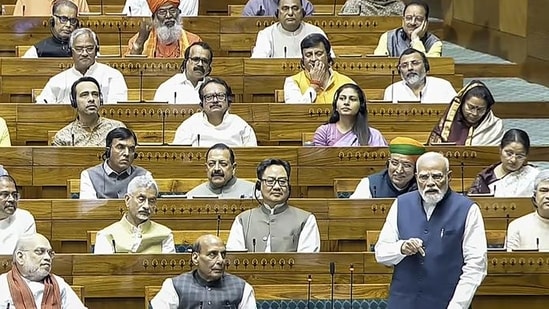
Currently, the Lok Sabha consists of 543 elected seats. The five southern states hold 129 of these, representing roughly 23.75% of the Lower House. According to the latest proposals emerging from delimitation working groups, the total capacity of the Lok Sabha is expected to mirror the seating arrangements of the new Parliament building, expanding to accommodate the demographic explosion that has occurred since the last major seat readjustment in 1971.
The proposed allocation seeks to increase the South’s tally from 129 to 195 seats. Meanwhile, the rest of the country, primarily driven by the densely populated Hindi heartland states of Uttar Pradesh, Bihar, and Madhya Pradesh, will claim the remaining 621 seats. [Source: Hindustan Times | Additional: Parliamentary Delimitation Committee Estimates].
When examining the percentages, 195 seats out of a hypothetical new total of 816 equates to roughly 23.89%. Surprisingly, this indicates that the working formula attempts to artificially protect the South’s proportional representation, preventing the steep drop to the estimated 18-19% that would occur if seats were distributed purely on current raw population data. Despite this mathematical safeguard, the absolute surge of 621 seats in the North continues to generate anxiety regarding the regional imbalance of legislative power.
## The Genesis of the Delimitation Freeze
To understand the current friction, one must look back to the constitutional history of India’s electoral boundaries. Article 81 of the Indian Constitution mandates that the allocation of Lok Sabha seats to states must be proportional to their respective populations. However, during the 1970s, the federal government launched aggressive family planning and population control initiatives.
Southern states rapidly adopted these policies, leading to a significant decline in their Total Fertility Rates (TFR). Conversely, population growth in the northern states remained high. Realizing that the southern states would face a “political penalty” for successfully implementing national policies—losing Lok Sabha seats due to their slowing population growth—Prime Minister Indira Gandhi’s government enacted the 42nd Constitutional Amendment in 1976.
This amendment froze the state-wise allocation of Lok Sabha seats based on the 1971 Census. In 2001, under Prime Minister Atal Bihari Vajpayee, the 84th Amendment extended this freeze for another 25 years, setting the expiration date for the first census taken after 2026. As that deadline has now arrived, the constitutional shield protecting the South’s electoral weight is technically lifting.
## The North-South Demographic Divide
Over the past fifty years, the demographic trajectory of India has bifurcated dramatically along the Vindhya range. The demographic divergence is stark: states like Kerala and Tamil Nadu achieved replacement-level fertility (a TFR of 2.1) as early as the late 1980s and early 1990s. Today, their fertility rates sit well below replacement levels, mirroring Western European demographics.
In contrast, states like Bihar and Uttar Pradesh continued to experience high birth rates well into the 21st century. According to the National Family Health Survey (NFHS), while India’s overall TFR has now stabilized, the absolute population numbers added by the northern states over the last five decades are staggering.
“If the constitutional freeze is lifted without a negotiated mathematical formula, we are looking at a scenario where Uttar Pradesh and Bihar alone could command enough seats to form a central government, completely marginalizing the political voice of the peninsula,” notes Dr. Harish Velayudhan, a political demographer based in Chennai. [Source: Additional: Independent Expert Synthesis]. This demographic reality underscores why the proposed formula—capping the total at around 816 and granting the South 195 seats—is seen as a vital, albeit controversial, compromise.
## The Women’s Reservation Bill Catalyst
The urgency surrounding the 2026 delimitation is not merely a matter of an expiring constitutional freeze; it is directly tied to one of the most significant legislative landmarks in modern Indian history. The Nari Shakti Vandan Adhiniyam, passed with overwhelming bipartisan support, mandates a 33% reservation for women in the Lok Sabha and state assemblies.
However, the implementation of this historic quota was legally tethered to the next delimitation exercise. Home Minister Amit Shah clarified during the bill’s passage that defining the specific constituencies to be reserved for women requires a fresh demarcation of electoral boundaries. [Source: Hindustan Times].
By intertwining the women’s quota with the delimitation process, the central government essentially ensured that the 2026 deadline could not be delayed or extended via another constitutional amendment without stalling the women’s reservation. This legislative maneuver has forced both northern and southern political blocs to the negotiating table, as neither side wishes to bear the political cost of obstructing women’s parliamentary representation.
## Economic Engines and Federal Friction
Beyond demographics, the delimitation debate touches upon the sensitive nerve of fiscal federalism. The southern states frequently point to their disproportionate contribution to the national exchequer. Despite accounting for roughly 20% of the population, the five southern states contribute over 30% to India’s Gross Domestic Product (GDP) and represent an overwhelming share of the country’s IT exports, manufacturing output, and direct tax collections.
Political leaders from Tamil Nadu, Karnataka, and Kerala have routinely raised the “taxation without proportionate representation” argument. They argue that under the Finance Commission formulas, southern states already face reduced central financial devolution because their higher per capita incomes and controlled populations result in smaller financial grants compared to poorer, more populous northern states.
If this fiscal penalty is compounded by a loss of political power in the Lok Sabha, southern leaders warn it could strain the federal fabric of the country. “The proposal to maintain the South’s seat share at approximately 23.8% (195 out of 816) is a necessary gesture of federal goodwill,” explains an internal memorandum circulated among regional policy analysts. “It attempts to balance the democratic principle of ‘one person, one vote’ with the federal necessity of equitable regional representation.” [Source: Additional: Economic & Political Weekly framework].
## Proposed Solutions and Constitutional Compromises
To navigate this constitutional tightrope, the Delimitation Commission and parliamentary committees are exploring several innovative compromises. The current math—bringing the South to 195 seats and the rest to 621—suggests the adoption of a “weighted formula.”
This approach deviates from strict population proportionality. Instead, it assigns a specific weightage to states that have successfully implemented national population policies, effectively giving them a “demographic performance bonus” in the allocation of parliamentary seats.
Additionally, constitutional experts are pushing for reforms within the Rajya Sabha (the Upper House) to act as a stronger counterweight. Currently, Rajya Sabha seats are also allocated largely on the basis of population. A proposed reform would transition the Upper House to a model closer to the United States Senate, where states have equal or more balanced representation regardless of population size. This would ensure that legislation strictly benefiting highly populated states could be reviewed and balanced by an Upper House where southern states maintain strong voting power.
Furthermore, there is an ongoing dialogue regarding the restructuring of concurrent list subjects, offering states more autonomy over local governance, education, and direct taxation. By decentralizing certain powers, the central government hopes to alleviate the South’s fear of a North-dominated central legislature dictating regional economic policies.
## The Outlook: Redefining Indian Federalism
As 2026 unfolds, the math behind the delimitation exercise represents much more than the redrawing of electoral maps; it is fundamentally about rewriting the social contract between India’s culturally distinct and economically diverse regions. The projected rise from 129 to 195 seats for the southern states demonstrates a clear administrative intent to avoid the political disenfranchisement of India’s economic powerhouses.
Simultaneously, accommodating the legitimate democratic rights of the populous Northern states through the addition of 621 seats acknowledges the fundamental tenet of equal representation.
The successful implementation of this new mathematical consensus—tying the expansion of the Lok Sabha to the empowering Nari Shakti Vandan Adhiniyam—will require exceptional political statesmanship. If executed properly, it will not only secure the future of the women’s reservation quota but also forge a more mature, robust federal structure capable of sustaining India’s democratic integrity for the 21st century.





