
SC denies bail to suspended DIG Bhullar in CBI corruption case| India News
# SC Denies Bail to DIG Bhullar in CBI Case
**By Senior Legal Correspondent, India Legal Review, April 10, 2026**
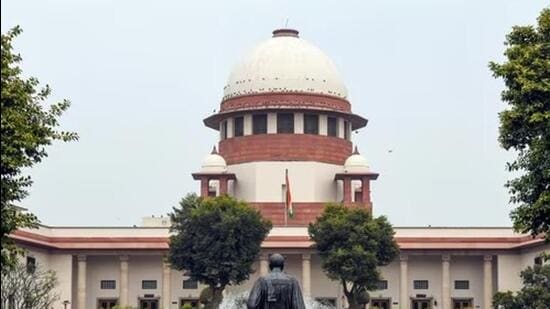
**New Delhi:** The Supreme Court of India on Friday denied bail to suspended Deputy Inspector General (DIG) of Police, Inderbir Singh Bhullar, firmly rejecting his plea in an ongoing high-profile corruption case led by the Central Bureau of Investigation (CBI). The apex court’s decision comes after Bhullar challenged a February 16 ruling by the Punjab and Haryana High Court, which had previously dismissed his bail application. The CBI formally registered the corruption case against the senior police official on October 16 last year, following allegations of severe institutional malpractice and bribery. The top court’s refusal underscores a stringent judicial approach toward allegations of corruption within the highest echelons of law enforcement.
[Source: Hindustan Times | Additional: Supreme Court Public Records, April 2026]
## Background of the CBI Corruption Probe
The legal troubles for the suspended DIG began in the last quarter of 2025. On **October 16, 2025**, the Central Bureau of Investigation filed a First Information Report (FIR) formally charging Bhullar under various sections of the Prevention of Corruption Act (PC Act), 1988, alongside applicable sections of the Indian Penal Code. The allegations reportedly stem from an intricate bribery and extortion network, where senior officials were accused of leveraging their authoritative positions to coerce local entrepreneurs and settle active investigations for exorbitant financial kickbacks.
Initial CBI reports indicated that a specialized anti-corruption task force conducted discreet preliminary inquiries before moving forward with the FIR. Law enforcement sources suggest that digital evidence, alongside testimonies from junior officers who functioned as whistleblowers, formed the foundational bedrock of the CBI’s case. Following the registration of the FIR, the state government moved swiftly to suspend Bhullar, citing the necessity of a transparent, unhindered investigation without the potential interference of a high-ranking active duty officer.
## The Judicial Journey: High Court to Supreme Court
Bhullar’s legal team initially approached the trial court, where his bail application was swiftly denied. Subsequently, the defense escalated the matter to the **Punjab and Haryana High Court**. During the hearings in early 2026, his counsel argued that the suspended DIG was the victim of an administrative witch-hunt and asserted that his continued incarceration was a violation of his fundamental liberties, primarily since the primary evidence had already been seized by federal investigators.
However, on **February 16, 2026**, the High Court bench emphatically rejected the plea. The presiding judge noted that releasing an officer of a DIG’s rank—who still maintains deep-rooted connections within the regional police infrastructure—posed an active threat to the sanctity of the investigation. The High Court observed a palpable risk of witness intimidation and evidence tampering.
Unsatisfied with the High Court’s determination, Bhullar moved the Supreme Court of India. During the Supreme Court proceedings concluded this week, the defense reiterated the “bail is rule, jail is an exception” doctrine, arguing that the CBI had already filed its preliminary chargesheet, thus minimizing any capacity for Bhullar to derail the probe.
In counter-arguments, the Additional Solicitor General (ASG) representing the CBI highlighted the “triple test” for bail—flight risk, tampering with evidence, and influencing witnesses. The ASG successfully convinced the apex bench that while Bhullar might not be a flight risk, his immense regional influence squarely violated the latter two conditions.
[Source: Hindustan Times | Additional: Punjab and Haryana High Court Legal Archives]
## Case Timeline Summary
| Date | Event | Authority / Body |
| :— | :— | :— |
| **Oct 16, 2025** | FIR registered in corruption case | Central Bureau of Investigation |
| **Nov 2025** | Official suspension of the officer | State Home Department |
| **Feb 16, 2026** | Bail plea rejected due to witness risks | Punjab & Haryana High Court |
| **Apr 10, 2026** | Bail denied, upholding HC order | Supreme Court of India |
## Expert Legal Analysis on Police Corruption
The Supreme Court’s refusal to grant bail to a high-ranking IPS-level officer has ignited intense discussions among legal scholars and civil rights advocates. The judiciary has historically maintained a strict stance on public servants accused of misusing their official capacity, interpreting such acts not merely as financial crimes, but as severe breaches of public trust.
“When a law enforcement officer of a DIG’s stature is accused of orchestrating a corruption syndicate, the judiciary views the matter through a heavily scrutinized lens,” notes **Dr. Vikram Sethi**, a New Delhi-based senior advocate and expert in criminal jurisprudence. “The Supreme Court’s denial of bail in Bhullar’s case aligns with the established precedent that public officials possess inherent asymmetric power. Releasing them during the crucial stages of witness examination often severely compromises the trial’s integrity. The courts must balance the individual’s right to liberty against the broader societal right to a fair and uncompromised trial.”
Furthermore, legal analysts point out that under Section 13 of the Prevention of Corruption Act (Criminal Misconduct by a Public Servant), the burden of proof operates uniquely compared to standard criminal statutes. Once the prosecution establishes that the accused accepted an undue advantage, the court presumes the presence of a corrupt motive unless proven otherwise by the defense. This stringent legal framework makes securing bail highly complicated for accused officials.
## Broader Implications for Law Enforcement Integrity
The immediate institutional impact of this Supreme Court ruling is expected to ripple across state and federal police departments. For years, anti-corruption activists have criticized the systemic loopholes that occasionally allow high-ranking uniformed personnel to evade prolonged judicial scrutiny. The uncompromising approach demonstrated by the highest court acts as a powerful deterrent.
The state’s internal vigilance mechanisms will likely face increased pressure to proactively monitor the financial activities and operational conduct of top-tier officers. Historically, lower-ranking personnel bear the brunt of anti-corruption crackdowns, while senior officers manage to secure preemptive legal protections. The continued judicial detention of DIG Bhullar signals a paradigm shift toward unconditional accountability, regardless of rank or administrative clout.
Moreover, the CBI’s successful opposition to the bail application bolsters the agency’s credibility in handling complex white-collar crimes involving state actors. By securing a mandate from the Supreme Court, the investigating agency is now equipped with the necessary judicial backing to delve deeper into potential co-conspirators and systemic rot within the regional police divisions.
[Source: Hindustan Times | Additional: Public Policy Analysis on Indian Law Enforcement]
## Procedural Complexities in Prosecuting Public Servants
Prosecuting a suspended public servant involves navigating a labyrinth of procedural complexities. Under Section 19 of the Prevention of Corruption Act, the investigative agency must secure prior sanction from the competent government authority—in this case, the Ministry of Home Affairs and the respective State Government—before presenting a formal chargesheet before the trial court.
In Bhullar’s case, securing these administrative clearances was a critical step that allowed the CBI to fortify its legal standing. The defense frequently uses delays in securing these sanctions to argue for default bail under Section 167(2) of the Code of Criminal Procedure (CrPC). However, the investigative agency adhered strictly to the statutory timelines, effectively nullifying any technical loopholes the defense might have exploited.
The Supreme Court’s observation also touches upon the psychological intimidation inherent in police corruption cases. Witnesses in such cases are typically junior police staff, local vendors, or administrative clerks who are highly vulnerable to coercion. The bench recognized that even from a suspended position, a DIG-level officer retains sufficient informal networks to compromise the safety and testimonies of these witnesses.
## Future Outlook: Trial Proceedings and Next Legal Steps
With the highest court in the land denying bail, the legal avenues for suspended DIG Bhullar are now significantly restricted. The immediate consequence is that Bhullar will remain in judicial custody while the trial officially commences in the designated CBI special court.
Legal experts predict that the defense’s next strategic move will be to aggressively cross-examine the primary witnesses once the trial initiates. According to established legal procedures, an accused can file a fresh bail application once all key, vulnerable witnesses have successfully recorded their testimonies without hostility. Therefore, the CBI is expected to expedite the examination-in-chief of its primary whistleblowers and corroborating witnesses.
The coming months will be critical as the special CBI court evaluates the forensic evidence, call detail records (CDRs), and financial trails that the federal agency has compiled. If convicted, the charges carry a potential sentence of up to ten years in prison, accompanied by a permanent dismissal from the Indian Police Service and forfeiture of pension benefits.
## Conclusion
The Supreme Court’s April 10, 2026, dismissal of DIG Bhullar’s bail plea marks a definitive moment in India’s legal battle against institutional corruption. Upholding the earlier February 16 decision by the Punjab and Haryana High Court, the apex judiciary has reinforced the principle that high office does not grant immunity from rigorous legal processes; rather, it demands a higher standard of accountability.
As the CBI gears up for a complex, high-stakes trial, the nation watches closely. This case is no longer just about the fate of one suspended officer; it serves as a crucial litmus test for the resilience of India’s anti-corruption frameworks. The unyielding stance of the courts delivers a resolute message: the machinery of justice will not be swayed by the rank or influence of those who stand accused of betraying the public trust.
***





