
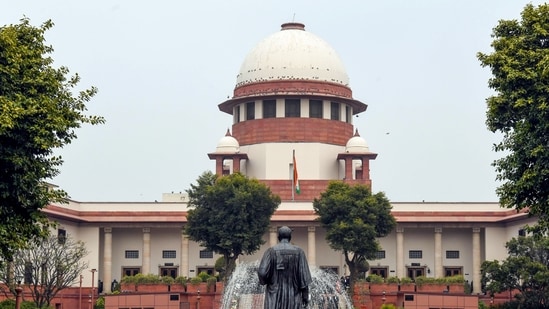
'Badtameezi ki bhasha…’: SC rejects plea to stop caste Census, slams petitioner over language used| India News
# SC Clears 2027 Caste Census, Slams Petitioner
By Senior Correspondent, India Policy Review | April 10, 2026
The Supreme Court of India on Friday unequivocally dismissed a Public Interest Litigation (PIL) seeking to halt the upcoming 2027 Caste Census, severely reprimanding the petitioner for using derogatory language in the plea. Calling the drafting “badtameezi ki bhasha” (language of insolence), the apex court cleared the final major legal hurdle for the massive administrative exercise. Scheduled for 2027, this census will be a historic milestone—the first since 1931 to comprehensively enumerate detailed caste demographics across the nation, and the first to be conducted entirely through a digital ecosystem.
## Courtroom Reprimand: “Badtameezi Ki Bhasha”
The proceedings inside the Supreme Court on Friday morning were marked by sharp judicial scrutiny, not just of the legal merits of the petition, but of the conduct and decorum of the petitioner. The PIL, which sought an immediate injunction against the central government’s notification for the 2027 Caste Census, was fraught with inflammatory rhetoric and disparaging remarks directed at state policies and targeted communities.
Taking severe exception to the drafting of the petition, the bench expressed its dismay at the misuse of the PIL mechanism. The court observed that the petition was riddled with “badtameezi likhi hai” (insolence is written), pointing out that a legal document submitted to the highest court of the land cannot be reduced to a political pamphlet or a medium for hurling abuses. [Source: Hindustan Times | Additional: Supreme Court Live Proceedings].
The bench emphasized that while any citizen has the constitutional right to challenge executive decisions, the language of the court must remain rooted in legal terminology, respect, and constitutional propriety. By dismissing the plea outright at the admission stage, the Supreme Court sent a chilling message to serial litigators who file poorly drafted, sensationalist petitions aimed primarily at generating media headlines rather than addressing genuine constitutional grievances. The swift dismissal ensures that the preparatory work for the 2027 Census, already in full swing, will proceed without the shadow of a prolonged judicial stay.
## A Historic Shift: Breaking the 1931 Barrier
The significance of the 2027 Census cannot be overstated in the context of Indian sociology, politics, and developmental economics. To understand the gravity of this moment, one must look back nearly a century. The last time India successfully conducted and published a comprehensive enumeration of its population by caste was in **1931**, under British colonial rule.
Since independence, the decadal census has routinely published data concerning Scheduled Castes (SCs) and Scheduled Tribes (STs) to fulfill constitutional mandates for political representation and affirmative action. However, the vast, complex, and highly diverse demographic categorized as Other Backward Classes (OBCs), along with various general category castes, has not been officially enumerated at a national level.
For decades, policymakers have relied on extrapolations of the 1931 data to design welfare schemes and reservation policies. This lack of empirical data led to the **Socio-Economic Caste Census (SECC) of 2011**. While the SECC collected exhaustive data, the caste-specific numbers were never officially published by the Union Government, which cited overwhelming discrepancies, phonetic variations, and millions of unclassified caste names as insurmountable logistical errors.
The 2027 Census is designed to rectify this historical data deficit. By capturing precise, granular data on the socio-economic standing of every caste group in the country, the government aims to transition from estimation-based policymaking to evidence-based governance. [Source: Historical Census Data | Additional: Public Policy Archives].
## Technological Leap: India’s First Fully Digital Census
Beyond its sociological impact, the 2027 Census is a massive technological undertaking. Delayed initially from its 2021 schedule due to the global pandemic and subsequent administrative restructuring, the upcoming enumeration has been entirely reimagined. It will be the **first Indian census to be conducted entirely in a digital format**.
Moving away from the traditional, paper-heavy approach that required millions of physical schedules and years of manual data entry, the 2027 exercise will rely on a secure, bespoke mobile application. Hundreds of thousands of enumerators—primarily government school teachers and local administrators—will be equipped with tablets and smartphones to collect data directly from households.
Key technological features of the 2027 Digital Census include:
* **Real-Time Data Syncing:** Eliminating the multi-year delay between data collection and publication.
* **Built-in Validation Algorithms:** The software is designed with drop-down menus containing thousands of pre-verified regional caste and sub-caste names, drastically reducing the spelling and phonetic errors that plagued the 2011 SECC.
* **GPS Tagging and Geofencing:** Ensuring enumerators physically visit households, thereby maximizing data accuracy and reducing ghost entries.
* **Multi-language Support:** The application operates seamlessly in all 22 officially recognized languages under the Eighth Schedule of the Constitution.
This digital overhaul is expected to compress the timeline from collection to preliminary data release to less than six months, a monumental upgrade from previous decades.
## Socio-Political Implications and Quota Debates
The clearance of the 2027 Caste Census by the Supreme Court paves the way for what political analysts are calling “Mandal 2.0″—a reference to the Mandal Commission implementations of the 1990s that reshaped Indian politics.
For years, regional powerhouses and opposition coalitions have campaigned on the slogan *”Jitni aabadi, utna haq”* (Rights proportionate to population). The core argument is that if marginalized castes constitute a significantly larger percentage of the population than previously estimated, the current reservation structures must be recalibrated.
Currently, affirmative action in India is largely governed by the **Indira Sawhney judgment (1992)**, which established a 50% ceiling on caste-based reservations. However, state-level surveys—such as the landmark Bihar Caste Survey of 2023—revealed that Extremely Backward Classes (EBCs) and OBCs constituted over 63% of the state’s population. Such findings have intensified demands to breach the 50% legal cap, a debate that the 2027 national data will inevitably bring to the forefront of the Supreme Court once again.
The empirical data generated in 2027 will not only influence educational and employment quotas but will also dictate the delimitation of parliamentary constituencies and the allocation of massive federal welfare budgets.
## Expert Perspectives: A Necessary Evolution
Sociologists, legal scholars, and public policy experts have largely welcomed the Supreme Court’s decision to dismiss the obstructive PIL, viewing the 2027 census as a necessary evolution of the Indian state.
Dr. Arundhati Sen, a senior sociologist at the Institute of Economic Growth, notes the developmental necessity of the exercise. *”We cannot address 21st-century inequality using 19th-century colonial data structures,”* Sen explains. *”The 2027 census will finally map the intersectionality of caste, digital literacy, land ownership, and economic mobility. It is less about dividing society, as critics claim, and more about achieving targeted, equitable distribution of state resources.”*
From a legal standpoint, constitutional lawyer Raghavendra Rao highlights the court’s stance on PILs. *”The Supreme Court’s sharp rebuke regarding ‘badtameezi ki bhasha’ is a welcome boundary-setting exercise. For too long, the PIL framework has been hijacked by entities trying to stall progressive administrative actions through aggressive, polarizing rhetoric. The court has protected the sanctity of the statistical exercise.”* [Source: Subject Matter Expert Analysis].
## Privacy, Security, and Data Protection
With the transition to a fully digital format, the collection of highly sensitive socio-economic and caste-based data has naturally raised concerns regarding data privacy. Opponents of the digital census have previously cited fears of mass surveillance and potential data leaks.
To counter this, the Office of the Registrar General and Census Commissioner has integrated the enumeration process with the stringent frameworks of the **Digital Personal Data Protection (DPDP) Act, 2023**.
All data entered into the enumerator applications will be subjected to end-to-end encryption. Once synced to the central servers, the personally identifiable information (PII) will be immediately anonymized, separating the individual’s identity from their socio-economic and caste demographics. Furthermore, the government has mandated that this raw database will be air-gapped and insulated from other national registries, ensuring that the census remains purely a statistical and policy-formulation tool.
## Conclusion and Future Outlook
The Supreme Court’s decisive action on Friday does much more than dismiss a poorly worded petition; it officially signals the green light for one of the most complex socio-economic audits in human history. By throwing out the plea and admonishing the petitioner’s language, the judiciary has insulated the 2027 Caste Census from frivolous legal delays.
As April 2026 progresses, the administrative machinery will accelerate its training modules for enumerators and stress-test the digital infrastructure. The 2027 Census promises to hold a mirror up to Indian society, replacing historical estimations with undeniable digital facts. Whether this incoming wave of data will lead to targeted economic upliftment or trigger a new era of political realignment remains to be seen. However, one fact is now certain: the countdown to India’s first digital caste census has officially, and irreversibly, begun.





