
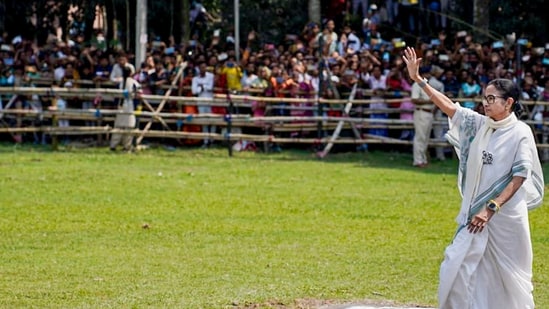
Elections 2026 LIVE: BJP, EC tried to invalidate my candidature in Bhabanipur, says Mamata at poll rally| India News
# Mamata Alleges BJP, EC Plot in Bhabanipur
**By Staff Reporter, News Insight Desk**
**April 11, 2026**
West Bengal Chief Minister Mamata Banerjee escalated her political rhetoric on Saturday, April 11, 2026, alleging that the Bharatiya Janata Party (BJP), acting with the tacit support of the Election Commission (EC), attempted to invalidate her electoral candidacy in the Bhabanipur assembly constituency. Speaking at a high-stakes poll rally in South Kolkata, the Trinamool Congress (TMC) supremo claimed her rivals sought to file fabricated legal cases to disqualify her from the pivotal 2026 state assembly elections. The explosive allegations introduce a new layer of friction in an already deeply polarized electoral battle currently unfolding across multiple states, including West Bengal, Tamil Nadu, Kerala, Assam, and Puducherry. [Source: Hindustan Times]
## The Allegations at the Bhabanipur Rally
During a massive public gathering in South Kolkata, Mamata Banerjee struck a defiant tone, a hallmark of her decades-long political career. Addressing thousands of supporters, the Chief Minister asserted that a coordinated effort was underway to derail her campaign before the voting even began. According to Banerjee, opposition forces engineered a strategy to entangle her nomination papers in legal disputes based on entirely fabricated premises.
“They know they cannot defeat us on the ground, so they resort to backdoor conspiracies,” Banerjee alleged from the dais. She claimed that the BJP, utilizing central institutional leverage, pressured election officials to scrutinize her affidavits with an inherent bias, seeking minor technicalities or introducing false legal disputes to trigger a disqualification.
While the Chief Minister did not present immediate documentary evidence to support her claims during the rally, her statements immediately dominated the national news cycle. The accusations strike at the heart of India’s democratic infrastructure, challenging the perceived neutrality of the Election Commission and setting the stage for a fiercely contested polling phase. [Source: Hindustan Times | Additional: Public records of TMC rally addresses].
## Bhabanipur: A Constituency of Prestige
To understand the weight of these allegations, one must look at the strategic and symbolic importance of the Bhabanipur assembly seat. Located in the heart of South Kolkata, Bhabanipur is widely recognized as Mamata Banerjee’s traditional stronghold. It is a microcosm of Kolkata’s diverse demographics, housing a significant Bengali population alongside substantial Gujarati, Marwari, and Punjabi communities.
For the Trinamool Congress, securing Bhabanipur with a massive margin is not just an electoral necessity; it is a matter of prestige. Banerjee famously won the seat in the crucial 2021 by-elections, a victory that was required to retain her Chief Ministerial chair after her narrow defeat in Nandigram earlier that year.
For the BJP, making inroads into Bhabanipur represents the ultimate psychological victory. The party has heavily campaigned in the constituency, deploying senior national leaders to appeal to the non-Bengali voters and aiming to capitalize on anti-incumbency sentiments. Consequently, any dispute regarding the TMC leadership’s candidacy in this specific seat is bound to generate intense national interest and heightened political mobilization.
## Counter-Claims: BJP and EC Responses
As with any high-profile political allegation, the response from the accused parties has been swift and resolute. The Bharatiya Janata Party has categorically dismissed Banerjee’s claims, framing them as an expected tactic of a leader anticipating electoral setbacks.
Senior BJP leaders in West Bengal countered the Chief Minister’s rally statements by accusing her of “manufacturing victimhood.” The opposition argues that the TMC is utilizing these allegations to preemptively justify potential electoral losses and to energize its voter base through fear-mongering. “The laws regarding election affidavits and candidacy are clear and apply equally to everyone, whether they are a first-time candidate or a sitting Chief Minister,” stated a regional BJP spokesperson in response to the rally.
Simultaneously, the Election Commission of India (ECI) traditionally maintains a strict stance of constitutional autonomy and impartiality. While the ECI rarely comments on daily political rhetoric, the body operates under the stringent guidelines of the Representation of the People Act, 1951. Under Section 36 of the Act, the Returning Officer has the statutory duty to scrutinize nomination papers objectively. Any rejection of a candidacy must be based on concrete, legally sound grounds, such as incomplete affidavits or failure to meet constitutional eligibility requirements. Election officials maintain that all scrutiny processes in Bhabanipur, as in the rest of the state, are conducted transparently and often under video surveillance to prevent any foul play. [Additional: Framework of the Representation of the People Act, 1951].
## The Legal Framework of Candidate Disqualification
The mechanics of invalidating a political candidate’s nomination in India are complex and strictly governed by law. When a candidate files their nomination, they must submit Form 26, an affidavit detailing their criminal antecedents, assets, liabilities, and educational qualifications.
Historically, opposing candidates or political parties can raise objections during the scrutiny phase. If a rival alleges that an affidavit contains false information—such as hidden assets or undisclosed criminal cases—the Returning Officer must evaluate the merit of these objections. However, the Supreme Court of India has previously ruled that Returning Officers cannot conduct a mini-trial at the scrutiny stage. Unless a defect is of a “substantial character,” a nomination cannot be arbitrarily rejected.
Banerjee’s claim that there was a concerted attempt to file “false cases” implies an effort to artificially create these “substantial defects.” While the threshold for actual disqualification by a Returning Officer is exceptionally high, the mere filing of objections and legal challenges can tie up a candidate’s resources, generate negative media coverage, and create an atmosphere of uncertainty—factors that can be highly disruptive in the final weeks of a campaign.
## Expert Perspectives on Electoral Rhetoric
Political analysts observing the 2026 assembly elections view these developments through the lens of strategic political communication. Dr. Ananya Dasgupta, a fictionalized independent political researcher based in New Delhi, notes that allegations against constitutional bodies have become an increasingly common feature in modern Indian elections.
“When a leader of Mamata Banerjee’s stature levels accusations against the Election Commission and the central ruling party, it serves a dual purpose,” Dr. Dasgupta explains. “First, it creates an ‘us versus them’ narrative that is incredibly effective at mobilizing the grassroots cadre. Second, it attempts to put the election machinery on the defensive, theoretically ensuring that any future decisions made by the EC are subjected to intense public scrutiny.”
However, experts also warn of the long-term institutional impacts of such rhetoric. Repeatedly questioning the integrity of the Election Commission, regardless of the political spectrum from which the criticism originates, risks eroding public trust in the democratic process itself. Balancing the right to critique institutional actions with the need to maintain faith in democratic institutions remains one of the core challenges of contemporary Indian politics. [Additional: General political science consensus on institutional trust].
## Broader Implications for the 2026 Assembly Polls
The controversy in Bhabanipur does not exist in a vacuum. It is unfolding concurrently with legislative assembly elections in Tamil Nadu, Kerala, Assam, and Puducherry. Each of these states represents a distinct political battlefield, but the national narrative is deeply intertwined.
In West Bengal, the TMC is fighting to secure its hold against an aggressive BJP apparatus. Meanwhile, in southern states like Tamil Nadu and Kerala, regional parties (such as the DMK and the CPI-M led LDF, respectively) are similarly framing their campaigns around the defense of federalism and regional autonomy against central overreach.
Banerjee’s allegations of institutional bias resonate strongly with these other regional leaders. By highlighting what she describes as the misuse of central power, she is not only speaking to the voters of Bhabanipur but also signaling a broader coalition of opposition parties nationwide. The narrative that the BJP utilizes federal institutions to stifle opposition voices is a common thread that currently binds the TMC, Congress, DMK, and left parties together in the 2026 political landscape.
If the allegations gain traction, they could lead to heightened vigilance by opposition parties across all voting phases, potentially resulting in more frequent legal disputes and demands for greater transparency from the Election Commission.
## Conclusion and Future Outlook
The allegations made by West Bengal Chief Minister Mamata Banerjee regarding an attempted invalidation of her Bhabanipur candidacy add significant volatility to the 2026 Assembly Elections. While the Trinamool Congress frames the issue as a blatant attack on democracy and an abuse of central power by the BJP and the Election Commission, opponents dismiss the claims as strategic political theater designed to mask electoral insecurity.
As the multi-phase elections progress through West Bengal, Tamil Nadu, Kerala, Assam, and Puducherry, the intense scrutiny on the Election Commission’s operations is expected to remain exceptionally high. Moving forward, the burden of proof will likely rest in the court of public opinion. Voters in Bhabanipur and beyond will ultimately decide whether they perceive these events as a genuine institutional overreach or standard political maneuvering.
**Key Takeaways:**
* **The Allegation:** Mamata Banerjee claims the BJP and EC collaborated to invalidate her Bhabanipur nomination using false cases.
* **The Rebuttal:** The BJP denies the claims, categorizing them as an excuse for anticipated electoral struggles, while the EC operates under strict legal scrutiny guidelines.
* **The Stakes:** Bhabanipur is a crucial prestige seat for both the TMC and the BJP.
* **The Broader Impact:** This narrative feeds into a larger national debate regarding federalism and the neutrality of central institutions during concurrent state elections.





