
Arbitration, mediation as integral to modern justice system as litigation: Justice Nagarathna| India News
# ADR as Crucial as Courts: Justice Nagarathna
**By Senior Legal Correspondent, Legal Insight India, April 11, 2026**
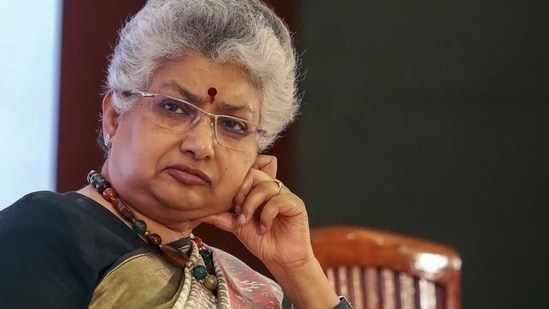
Supreme Court Justice B.V. Nagarathna stated on Saturday that arbitration and mediation are no longer mere alternatives but essential pillars of the modern justice system, standing on equal footing with traditional litigation. Speaking at a prominent legal colloquium in New Delhi, the apex court judge emphasized that integrating Alternative Dispute Resolution (ADR) mechanisms is vital to tackle mounting judicial backlogs and ensure timely justice. Her remarks underscore a paradigm shift in Indian jurisprudence, advocating for a collaborative rather than adversarial approach to dispute resolution in a rapidly evolving socioeconomic landscape. [Source: Hindustan Times]
## The Shifting Paradigm in Indian Jurisprudence
For decades, the Indian legal system has grappled with an overwhelming volume of cases. With the national judicial backlog persistently hovering around the **50 million mark across various tiers of the judiciary**, the structural limitations of conventional litigation have become increasingly apparent. Justice Nagarathna’s timely observations reflect a growing consensus within the highest echelons of the judiciary: the traditional courtroom cannot be the sole venue for resolving disputes.
“Alternative Dispute Resolution must now transition into ‘Appropriate Dispute Resolution’,” Justice Nagarathna remarked during her address. She articulated that treating arbitration and mediation as secondary or supplementary to litigation diminishes their potential. Instead, they must be viewed as the primary mechanisms for specific categories of disputes, particularly those concerning commercial contracts, family disagreements, and cross-border trade.
The shift in nomenclature from “alternative” to “appropriate” is not merely semantic. It represents a fundamental restructuring of how legal professionals and citizens approach conflicts. By prioritizing mediation and arbitration, the justice system can filter out cases that do not require extensive appellate procedures, thereby preserving the courts’ bandwidth for complex constitutional and criminal matters. This approach aligns perfectly with global best practices observed in jurisdictions like Singapore, the United Kingdom, and the United States, where court-annexed mediation resolves a vast majority of civil suits before they ever reach trial. [Source: Hindustan Times | Additional: Global Legal Policy Research]
## Legislative Catalysts: The Mediation Act and Beyond
The foundation for Justice Nagarathna’s vision has been steadily fortified by recent legislative developments, most notably the maturation of the **Mediation Act of 2023**. Now fully integrated into the judicial workflow in 2026, this legislation has fundamentally altered the pre-litigation landscape.
The Act mandates pre-litigation mediation for civil and commercial disputes before parties can approach a court or tribunal, barring urgent cases requiring interim relief. This statutory backing ensures that mediation is no longer perceived as a soft, non-binding exercise but a rigorous, legally recognized process resulting in enforceable mediated settlement agreements.
“The endorsement of ADR by senior judiciary members like Justice Nagarathna validates the legislative intent behind recent reforms,” notes **Dr. Rohan Desai, Senior Fellow at the Centre for Contemporary Legal Policy**. “We are witnessing a cultural shift. Previously, lawyers viewed mediation as a loss of billable hours. Today, specialized mediation advocates are leading the charge, resolving disputes in a fraction of the time, thereby driving up client satisfaction and economic efficiency.”
Furthermore, continuous amendments to the Arbitration and Conciliation Act have aimed to minimize judicial interference in arbitral awards. By restricting the grounds on which an award can be challenged under Section 34 of the Act, lawmakers are signaling to both domestic and international investors that arbitration in India yields finality and certainty.
## Institutional Arbitration: India’s Global Aspirations
A critical component of integrating ADR into the modern justice system is the promotion of institutional arbitration over ad-hoc arbitration. Historically, Indian arbitration was plagued by ad-hoc appointments, leading to prolonged timelines, exorbitant costs, and procedural irregularities.
Justice Nagarathna highlighted the importance of robust institutions like the **India International Arbitration Centre (IIAC)** and the **Mumbai Centre for International Arbitration (MCIA)**. These institutions provide structured rules, fixed fee schedules, and access to highly qualified arbitrators, bringing Indian arbitration standards on par with esteemed international bodies like the Singapore International Arbitration Centre (SIAC) and the International Chamber of Commerce (ICC).
The push for institutional arbitration is intrinsically linked to India’s broader economic aspirations. As the nation targets a highly ambitious GDP milestone, foreign direct investment (FDI) remains a crucial growth engine. Foreign investors heavily weigh the “ease of contract enforcement” when deciding where to deploy capital. By establishing a reliable, institutionalized arbitration ecosystem, India mitigates the legal risks associated with cross-border investments.
## Technology and Online Dispute Resolution (ODR)
No modern legal framework can evolve without the integration of technology, a point well recognized in the push for robust ADR mechanisms. By 2026, **Online Dispute Resolution (ODR)** has transcended its nascent stages to become a vital artery of the justice system. ODR leverages digital platforms, video conferencing, and, increasingly, artificial intelligence to facilitate negotiation, mediation, and arbitration.
Justice Nagarathna’s vision inherently supports the expansion of ODR to democratize access to justice. For citizens in Tier-2 and Tier-3 cities, traveling to metropolitan hubs for dispute resolution is financially prohibitive. E-Lok Adalats and private ODR platforms have successfully democratized this process, resolving millions of micro-disputes—ranging from e-commerce grievances to minor banking discrepancies—entirely online.
**Meera Sanyal, Director of Legal Tech Innovations at ResolveIndia**, explains the technological leap: “The modern justice system is no longer confined to a physical courtroom. Through asynchronous mediation and AI-assisted arbitration platforms, we are resolving consumer disputes in under 30 days. Justice Nagarathna’s validation of ADR provides the jurisprudential backing required for these digital platforms to scale without fear of being overturned by traditional courts.” [Source: Industry Expert Analysis | Additional: Public ODR Data 2026]
## The Economic Impact of Timely Dispute Resolution
The integration of arbitration and mediation is not just a legal necessity; it is an economic imperative. The cost of delayed justice is measured not only in judicial resources but in billions of dollars locked in pending litigation. Capital that could be utilized for infrastructure, business expansion, and job creation frequently remains frozen in escrow accounts or tied up in corporate legal battles.
The table below illustrates the stark contrast in efficiency between traditional litigation and ADR mechanisms in India, highlighting why the apex court is championing the latter:
| Dispute Resolution Method | Average Resolution Time | Cost Predictability | Enforceability |
| :— | :— | :— | :— |
| **Traditional Litigation** | 3 to 10+ Years | Low (Prone to escalating fees) | Subject to multiple appeals |
| **Institutional Arbitration** | 12 to 18 Months | High (Fixed fee structures) | High (Binding, limited appeals) |
| **Structured Mediation** | 3 to 6 Months | Very High (Cost-effective) | High (Mutually agreed terms) |
*Data reflects estimated averages for commercial disputes in the Indian legal landscape as of 2026.*
By pivoting towards ADR, the Indian economy can unlock immense trapped capital. Furthermore, mediation fosters the preservation of business relationships. In a traditional lawsuit, the adversarial nature of the process often guarantees that the litigating entities will sever future business ties. Mediation, rooted in compromise and mutual benefit, allows companies to resolve their immediate grievances while keeping the door open for future collaborations.
## Challenges to Seamless Integration
Despite the optimistic outlook presented by Justice Nagarathna, the path to fully integrating ADR into the bedrock of the Indian justice system is fraught with challenges that policymakers and the legal fraternity must collaboratively navigate.
First is the **capacity building of mediators and arbitrators**. While the Mediation Act establishes a Mediation Council of India to regulate the profession, there remains a qualitative disparity in mediator training across different states. For mediation to be truly integral, the system requires a vast cadre of accredited, highly skilled mediators who understand the psychological, legal, and commercial nuances of dispute resolution.
Second is the **lingering adversarial mindset**. Decades of litigation-heavy legal education have produced generations of lawyers trained to win at all costs rather than find common ground. Integrating ADR requires a systemic overhaul of law school curricula, emphasizing negotiation, emotional intelligence, and collaborative problem-solving from the ground up.
Lastly, **judicial restraint is critical**. While the Supreme Court advocates for ADR, lower courts sometimes exhibit a tendency to interfere with arbitral awards or over-scrutinize mediated settlements. For ADR to function as an independent and equal pillar, the judiciary must consistently practice a hands-off approach, intervening only in cases of glaring procedural fraud or constitutional violations. [Source: Hindustan Times | Additional: Legal Academic Consensus]
## Conclusion: Shaping the Future of Justice
Justice B.V. Nagarathna’s declaration that arbitration and mediation are integral to modern justice encapsulates the inevitable evolution of the Indian legal framework. As the nation continues to grow into a global economic powerhouse, an agile, efficient, and accessible justice system is not a luxury, but an absolute necessity.
The key takeaways from this evolving legal landscape are clear:
1. **Legislative support** through the Mediation Act and Arbitration amendments provides the necessary teeth for ADR to function effectively.
2. **Technological integration** via ODR is democratizing dispute resolution, bringing justice directly to the consumer’s digital doorstep.
3. **Economic revitalization** relies heavily on the swift unlocking of capital currently trapped in prolonged commercial litigation.
4. **Cultural transformation** within the legal fraternity—from an adversarial stance to a collaborative one—remains the final frontier for true integration.
As India approaches 2027—a year that holds historical significance for the judiciary with Justice Nagarathna slated to become India’s first female Chief Justice—her current advocacy for ADR lays the groundwork for her anticipated legacy. By championing arbitration and mediation not as secondary options, but as primary pillars, the Indian justice system is poised to become more humane, efficient, and deeply aligned with the needs of a modern democracy.





