
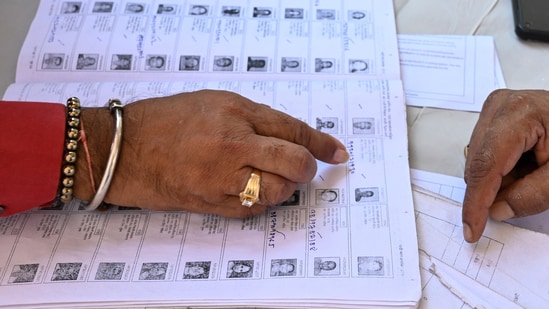
Supreme Court says voting, contesting polls not fundamental rights: ‘It’s well settled'| India News
# Supreme Court: Voting Not Fundamental Right
By Legal Desk Correspondent, Law & Policy Today, April 11, 2026
On Saturday, April 11, 2026, the Supreme Court of India categorically reaffirmed that the right to vote and the right to contest elections are not fundamental rights guaranteed under the Constitution, but rather statutory rights shaped entirely by legislative frameworks. A two-judge bench comprising Justices BV Nagarathna and R Mahadevan delivered the observation, stating that it is “well settled” in Indian jurisprudence that electoral rights exist strictly to the extent provided by law. This critical clarification highlights the legal boundaries of citizen participation in the world’s largest democracy, reminding the electorate that their electoral privileges are governed by specific statutes rather than the absolute protections of Part III of the Constitution. [Source: Original RSS – Hindustan Times]
## The Legal Framework: Statutory vs. Fundamental Rights
To understand the magnitude and meaning of the Supreme Court’s observation, it is essential to distinguish between fundamental rights and statutory rights in the Indian legal context. Fundamental Rights, enshrined in Part III of the Constitution of India (Articles 12 to 35), include the right to equality, freedom of speech, and the right to life and personal liberty. These rights are considered basic human freedoms, fiercely protected by the judiciary, and cannot be easily amended or suspended by the state, except under specific emergency conditions.
Statutory rights, conversely, are creations of the legislature. They are born out of specific laws passed by the Parliament or state assemblies. The right to vote and the right to contest an election fall squarely into this category, governed primarily by the **Representation of the People Act, 1951 (RPA)**.
Because the right to vote is statutory, the Parliament has the authority to impose reasonable restrictions, define voter eligibility, and outline grounds for disqualification without violating the core fundamental rights of a citizen. Justices BV Nagarathna and R Mahadevan reiterated this principle to clarify that any grievances regarding electoral participation must be evaluated within the confines of the RPA, not as a violation of fundamental human rights. [Source: Original RSS | Additional: Indian Constitutional Law Records]
## Context of the Supreme Court’s Observation
The apex court’s remarks came during the hearing of an electoral dispute where the boundaries of voter and candidate rights were called into question. While electoral enthusiasm often leads citizens to view voting as an undeniable natural right, the legal reality is heavily regulated.
Over recent years, various petitions have approached the highest court arguing that the rejection of nomination papers, the denial of voting rights to certain incarcerated individuals, or the stringent regulations around electoral rolls infringe upon a citizen’s fundamental freedoms. By stating that the statutory nature of these rights is “well settled,” the bench effectively shut down legal arguments attempting to elevate electoral disputes to the level of fundamental rights violations under Article 32 of the Constitution.
The timing of this observation in April 2026 is particularly poignant, as India navigates a highly active political calendar with ongoing and upcoming state assembly elections. The judicial reminder serves to streamline election-related litigation, directing it toward the appropriate statutory tribunals and high courts under the Representation of the People Act, rather than clogging the Supreme Court with fundamental rights petitions.
## Historical Precedents and Settled Law
The observation by Justices Nagarathna and Mahadevan does not establish a new legal doctrine; rather, it firmly upholds decades of judicial precedent. The Supreme Court of India has consistently maintained this stance since the early years of the Republic.
* **NP Ponnuswami vs Returning Officer (1952):** In one of the earliest landmark judgments regarding electoral law, a six-judge bench of the Supreme Court ruled that the right to vote or stand for election is not a civil right but a creature of statute or special law, subject to the limitations set out in that law.
* **Jyoti Basu vs Debi Ghosal (1982):** The Supreme Court unequivocally declared that the right to elect, fundamental as it is to democracy, is “neither a fundamental right nor a common law right. It is pure and simple, a statutory right.”
* **Kuldip Nayar vs Union of India (2006):** The Court again differentiated between the constitutional concept of democracy and the specific right to vote, reaffirming the statutory nature of the latter.
However, a nuanced distinction exists within this framework. In the famous **PUCL vs Union of India (2003)** case, the Supreme Court ruled that while the *act of voting* is a statutory right, the *voter’s right to know* the antecedents (criminal history, educational qualifications, and assets) of a candidate is a fundamental right derived from the freedom of speech and expression (Article 19(1)(a)). Thus, the expression of a voter’s choice is constitutionally protected, but the mechanics and permissions of the vote itself remain strictly statutory. [Source: Additional: Supreme Court Landmark Judgments Database]
## The Role of Article 326: Universal Adult Suffrage
A common source of public confusion is **Article 326** of the Constitution, which guarantees “Universal Adult Suffrage.” This article dictates that elections to the House of the People (Lok Sabha) and the Legislative Assemblies of States shall be on the basis of adult suffrage—meaning every citizen who is not less than 18 years of age and is not otherwise disqualified by law has the right to be registered as a voter.
While Article 326 mandates the *system* of adult franchise, it inherently leaves the *conditions* of that franchise to the legislature. Section 62 of the Representation of the People Act, 1951, operationalizes this by detailing exactly who can vote and under what circumstances they might be barred (such as being confined in a prison, being of unsound mind, or being disqualified due to corrupt electoral practices). Because the Constitution itself allows the law to dictate disqualifications, the Supreme Court correctly identifies the active right to vote as flowing from the statute, not as an unalienable fundamental right.
## Expert Perspectives on Electoral Jurisprudence
Legal scholars and constitutional experts have weighed in on the significance of maintaining this legal boundary.
“The Supreme Court’s observation is a textbook reiteration of a necessary legal principle,” says Dr. Aranya Sen, a prominent constitutional law scholar based in New Delhi. “If voting were declared a fundamental right under Part III, any minor regulatory change by the Election Commission, or any legal disqualification for contesting polls, would face strict scrutiny under fundamental rights jurisprudence. This could severely paralyze the administration of elections.”
Similarly, Senior Advocate Manish K. Sharma points out the practical implications for maintaining electoral integrity. “The statutory nature of the right to contest polls allows the Parliament to enforce strict guidelines, such as disqualifying individuals convicted of serious crimes from running for office under Section 8 of the RPA. If contesting were a fundamental right, balancing these necessary restrictions against constitutional guarantees would be incredibly complex and legally fraught.” [Source: Additional: Expert Legal Commentary]
## Implications for Democracy and the Electorate
What does this ruling mean for the average voter? In practical terms, the voting experience remains unchanged. However, from a legal and civic standpoint, it underscores the immense power vested in the Parliament. Because voting is a statutory right, the legislature holds the power to expand, restrict, or modify electoral participation through the amendment of the Representation of the People Act.
This dynamic places a heavy responsibility on the electorate to remain vigilant. The protection of democratic participation relies not on immutable constitutional clauses, but on the ongoing democratic process itself—electing representatives who will uphold and expand democratic norms through fair statutory laws.
Furthermore, this settled law impacts how electoral reforms are pursued. Civil society groups advocating for changes—such as voting rights for Non-Resident Indians (NRIs), remote voting for internal migrants, or the restoration of voting rights for undertrial prisoners—must direct their advocacy toward the legislature to amend the RPA, rather than relying solely on the judiciary to mandate these changes via constitutional interpretation.
## Looking Ahead: The Future of Electoral Reforms
As India continues to modernize its electoral infrastructure, the interplay between statutory rights and democratic ideals will remain a focal point of debate. Discussions around the integration of advanced technologies, the security of Electronic Voting Machines (EVMs), and the push for greater accessibility for persons with disabilities are all framed within the boundaries of statutory law.
The clear demarcation provided by Justices BV Nagarathna and R Mahadevan ensures that the judiciary’s role remains one of interpreting the law rather than rewriting electoral policy. It signals to lawmakers that the onus of progressive electoral reform rests entirely on the floor of the Parliament.
## Conclusion: Key Takeaways
The Supreme Court’s April 2026 declaration serves as a crucial constitutional refresher for the nation. The key takeaways from the bench’s observations are:
1. **Strictly Statutory:** Voting and contesting elections are statutory rights derived primarily from the Representation of the People Act, 1951.
2. **Not Fundamental:** They are not fundamental rights protected under Part III of the Constitution, meaning they are subject to legislative restrictions and conditions.
3. **Settled Jurisprudence:** The ruling by Justices Nagarathna and Mahadevan echoes decades of unbroken judicial precedent in India.
4. **Legislative Power:** The Parliament holds the ultimate authority to define the parameters of electoral participation, disqualification, and reform.
Ultimately, while the right to vote may not be a fundamental right in the strictest legal sense, it remains the most fundamental pillar of India’s democratic structure. The Supreme Court’s clarification ensures that the legal mechanics of this pillar remain orderly, legally sound, and within the rightful domain of legislative action.





