
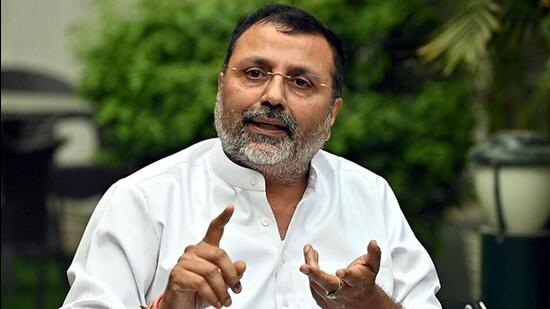
Parl panel suggests X ‘Community Notes’ may be treated as publishing activity: Chairperson| India News
# X Notes Face Publisher Tag in India
By Policy Desk, Tech & Regulatory Wire, April 11, 2026.
In a significant regulatory development this Saturday, an Indian Parliamentary panel recommended that X’s (formerly Twitter) “Community Notes” feature be classified as a direct publishing activity. The committee has officially urged the **Ministry of Electronics and Information Technology (MeitY)** to enforce a publisher tax model on the social media giant, fundamentally challenging its status as a neutral intermediary. This unprecedented move, which cites the platform’s active role in content contextualization, threatens to strip X of its legal safe harbor protections. Legal scholars and digital rights experts warn that this reclassification could drastically impact free expression, reshape content moderation, and alter the foundational operational framework of social media intermediaries in India. [Source: Hindustan Times RSS | Additional: Public Tech Policy Records].
## The Parliamentary Panel’s Proposition
The core of the Parliamentary panel’s argument rests on the assertion that the mechanics of Community Notes transcend passive hosting. Introduced globally as a decentralized, crowdsourced fact-checking tool, Community Notes allows contributors to append context to potentially misleading posts. However, the panel’s chairperson highlighted that because X’s proprietary algorithms ultimately determine which notes are displayed publicly based on a consensus-driven ranking system, the platform is engaging in editorial curation.
By determining what context is appended to user-generated content, the panel argues that X is functioning less like a traditional digital bulletin board and more like a digital publisher. The recommendation delivered to MeitY suggests that any platform actively shaping the narrative or modifying the consumption context of a post must bear the responsibilities—and financial liabilities—of a publisher.
This assertion strikes at the heart of how modern social media platforms operate. Historically, platforms have utilized algorithmic feeds to rank content, which regulators have largely tolerated under intermediary guidelines. However, the explicit attachment of “fact-checking” labels directly to user content crosses a new threshold in the eyes of the panel. The committee’s report urges MeitY to swiftly draft amendments that clearly delineate crowdsourced editorializing from passive content hosting. [Source: Hindustan Times RSS].
## Unpacking the Publisher Tax Model
Perhaps the most economically disruptive element of the panel’s recommendation is the suggestion of a “publisher tax model.” If MeitY acts on this recommendation and formally strips X of its intermediary status, the platform would be subject to the same tax regulations and compliance mandates as traditional digital news media outlets.
A publisher tax in this context operates on two fronts. Firstly, it implies that X could be taxed on the revenue generated from the engagement specifically driven by these Community Notes. Secondly, it aligns with broader global movements—such as those seen in Australia and Canada—where tech platforms are pressured to compensate local news ecosystems or pay levies for acting as primary news distributors.
**Key elements of the proposed publisher tax model include:**
* **Revenue Levies:** Taxation on digital ad revenue generated on posts featuring editorialized Community Notes.
* **Compliance Costs:** Mandatory investments in local grievance officers specifically tasked with handling disputes over published “Notes.”
* **Registration Requisites:** Potential requirements for platforms to register under digital media guidelines governed by the Ministry of Information and Broadcasting (MIB), in addition to MeitY regulations.
Financial analysts project that applying traditional publishing taxes to user-generated social platforms could severely impact the profitability of these entities in the Indian market, potentially leading to the geo-blocking of specific features to avoid financial penalties.
## Safe Harbor and Section 79 in Jeopardy
The legal linchpin of the digital economy in India is **Section 79 of the Information Technology Act, 2000**. This section provides “safe harbor” protections, ensuring that intermediaries (like social media platforms, ISPs, and web hosts) are not held legally liable for the third-party data or information they host, provided they act merely as a conduit and observe due diligence.
If MeitY adopts the panel’s view that Community Notes constitutes “publishing,” X would inherently lose its Section 79 protections for any post carrying a note.
| Feature | Intermediary Status (Safe Harbor) | Publisher Status |
| :— | :— | :— |
| **Content Origin** | Created entirely by third-party users. | Curated, edited, or appended by the platform. |
| **Legal Liability** | Immune from prosecution for user posts (if compliant with takedown requests). | Directly liable for defamation, misinformation, or illegal content. |
| **Regulatory Body** | MeitY (IT Rules 2021/2023). | MeitY & potentially Ministry of I&B. |
| **Editorial Control** | Algorithmic sorting without altering the core message. | Active contextualization, fact-checking, or appending text. |
Legal experts note that losing this protection would mean X could be sued for defamation, copyright infringement, or other legal violations based on the content of the Community Notes themselves. Dr. Aranya Sen, a prominent technology law researcher in New Delhi, explained the gravity of the situation:
*”The safe harbor principle relies on the platform remaining a neutral arbiter. The moment an algorithm decides that Post A requires a ‘correction’ while Post B does not, the platform exercises editorial discretion. However, regulating this under a publisher framework threatens to dismantle the very infrastructure of digital interactivity.”* [Additional: Expert Analysis on IT Rules].
## The Architecture of Community Notes
To understand the regulatory friction, one must examine the technical architecture of the Community Notes feature. Originally launched under previous management as “Birdwatch,” the feature was significantly expanded under Elon Musk’s ownership. The stated goal was to combat misinformation not through top-down corporate censorship, but through decentralized, user-driven consensus.
Contributors rate notes based on helpfulness. The platform’s open-source algorithm requires a note to receive positive ratings from users who historically disagree on other topics. This “bridge-building” algorithm ensures that notes only appear when people with diverse perspectives agree that the added context is accurate and necessary.
However, from a regulatory standpoint, the parliamentary panel views the final algorithmic display as a platform-endorsed action. Even if the text is written by a user, the platform’s infrastructure serves as the ultimate gatekeeper, selecting which note becomes highly visible public context. This blurring of lines between user generation and systemic promotion is exactly what regulators are now scrutinizing.
## Free Speech and Censorship Concerns
The panel’s push to reclassify X as a publisher has triggered immediate alarms within the digital rights and free speech communities. Experts warn that treating Community Notes as publishing could result in a severe chilling effect on digital discourse in India.
If platforms face legal and financial liabilities for crowdsourced fact-checking, the most rational corporate response would be to disable the feature entirely within the Indian jurisdiction. Digital rights advocates argue this would paradoxically result in more misinformation, removing a crucial tool that users rely on to identify deepfakes, out-of-context videos, and fabricated news.
Furthermore, critics fear that the “publisher” classification could be used as a political tool. If X is treated as a publisher, the government could exercise broader powers to demand the removal of context notes that contradict official narratives, citing publisher compliance laws.
*”We are looking at a classic double-edged sword,”* noted Rohan Verma, a constitutional lawyer focusing on digital rights. *”On one hand, the government wants platforms to actively curb misinformation. On the other hand, the moment a platform deploys an effective tool like Community Notes to do exactly that, it is penalized and taxed as a publisher. This regulatory paradox leaves platforms with no choice but to engage in excessive, silent censorship to avoid liability.”* [Additional: Digital Rights Advocacy Perspectives].
## Global Precedents and Industry Reactions
India is not operating in a vacuum regarding the regulation of Big Tech, but this specific approach to crowdsourced fact-checking is highly unique. The European Union’s Digital Services Act (DSA), for example, legally compels platforms to mitigate systemic risks of disinformation, actively encouraging features similar to Community Notes. The EU framework maintains intermediary protections provided the platform acts transparently and in good faith.
Conversely, India’s proposed direction signals a departure from the “good faith” protection models. Industry bodies representing technology companies in India have expressed deep concern over the panel’s report. They argue that applying a publisher tax to a moderation feature will disincentivize innovation in platform safety.
Tech industry analysts suggest that if MeitY officially drafts rules based on this panel’s recommendation, it could lead to protracted litigation. Major tech firms like Google, Meta, and X would likely mount joint legal challenges, as the precedent would instantly affect Meta’s third-party fact-checking labels and YouTube’s information panels.
## Conclusion and Future Outlook
The Parliamentary panel’s recommendation to MeitY marks a critical juncture in the ongoing evolution of internet regulation in India. By suggesting that X’s Community Notes function as a publishing activity rather than neutral moderation, lawmakers are challenging the fundamental definitions that have governed the internet for over two decades.
**Key Takeaways:**
1. **Redefining Moderation:** The traditional lines between passive intermediary hosting and active editorial publishing are being heavily scrutinized, primarily due to algorithmic curation.
2. **Economic Ramifications:** The potential introduction of a publisher tax model could impose heavy financial and compliance burdens on social media companies operating in India.
3. **Threat to Fact-Checking:** Stripping safe harbor protections from contextualized posts may force platforms to disable crowdsourced fact-checking entirely to avoid litigation.
4. **Free Speech Paradigm:** The move raises profound concerns about the chilling effect on free expression and the removal of vital tools combating digital misinformation.
Looking ahead, all eyes are on the Ministry of Electronics and Information Technology. MeitY must now weigh the Parliamentary panel’s assertive recommendations against the vocal warnings from digital rights experts and the tech industry. Whether India chooses to foster decentralized moderation or mandate strict publisher liabilities will set a monumental precedent, inevitably shaping the future of global digital discourse.





