
Arbitration, mediation as integral to modern justice system as litigation: Justice Nagarathna| India News
# ADR Key to Modern Justice: Justice Nagarathna
By Legal Affairs Correspondent, The Judiciary Chronicle, April 11, 2026
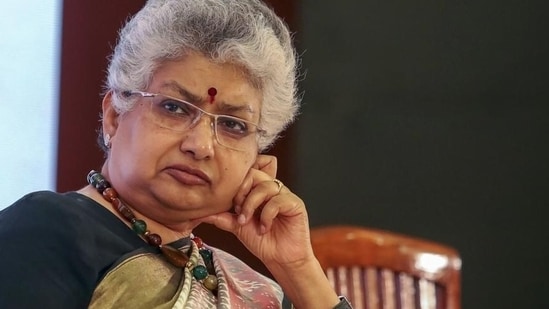
Supreme Court Justice B.V. Nagarathna declared Saturday in New Delhi that alternative dispute resolution (ADR) mechanisms, specifically arbitration and mediation, are now as integral to India’s justice system as traditional litigation. Speaking at a national legal conclave on April 11, 2026, she emphasized that ADR is no longer merely a secondary option but a primary institutional pillar necessary to tackle the nation’s massive case backlog and foster economic growth. Her remarks signal a definitive shift in the judiciary’s approach toward modernizing conflict resolution and transforming the legal landscape. [Source: Hindustan Times].
## A Paradigm Shift in Indian Jurisprudence
For decades, the Indian justice system has been synonymous with the adversarial courtroom model—a colonial-era legacy characterized by lengthy trials, complex procedures, and often adversarial posturing. Justice Nagarathna’s address highlighted a conscious pivot away from this model toward collaborative, interest-based dispute resolution.
Justice Nagarathna, who is slated to become India’s first female Chief Justice in 2027, commands significant influence over the future trajectory of Indian jurisprudence. Her assertion that arbitration and mediation are “integral” elevates ADR from an “alternative” to a “parallel” justice delivery mechanism.
“The modern justice system cannot sustain itself on litigation alone. Mediation and arbitration provide a democratic, participatory, and efficient avenue for justice that is tailored to the needs of a rapidly evolving society,” she noted during her address. [Source: Hindustan Times | Additional: Supreme Court Judiciary Context 2026].
This shift is not merely philosophical; it is intensely practical. By encouraging parties to resolve disputes outside the courtroom, the judiciary aims to preserve relationships—whether in family disputes or complex commercial ventures—that are often irreparably damaged by traditional litigation.
## Combating the Mounting Pendency Crisis
The most immediate catalyst for institutionalizing ADR is the sheer volume of cases clogging Indian courts. As of early 2026, the National Judicial Data Grid (NJDG) estimates that over 50 million cases remain pending across various tiers of the Indian judiciary.
**Key Impacts of ADR on Judicial Backlog:**
* **Filtering Mechanism:** Mandatory pre-litigation mediation acts as a sieve, resolving a substantial percentage of commercial and civil disputes before they ever reach a judge.
* **Resource Allocation:** By offloading contractual and family disputes to specialized arbitrators and mediators, judges can dedicate judicial time to constitutional, criminal, and complex statutory matters.
* **Speed of Resolution:** While a civil suit can take upwards of a decade to resolve through trials and appeals, arbitration and mediation typically yield outcomes in a matter of months.
Justice Nagarathna pointed out that a justice system delayed is a justice system denied. Mediation, in particular, offers a healing touch, allowing parties to draft their own solutions rather than having a binary win-loss judgment imposed upon them by a magistrate.
## Legislative Milestones: The Mediation Act
The legal infrastructure supporting Justice Nagarathna’s vision has been steadily fortifying over the past few years. A major turning point was the enactment and subsequent implementation of the Mediation Act, 2023, which fundamentally altered how civil disputes are approached in India.
By 2026, the framework established by the Act has matured. The establishment of the Mediation Council of India has standardized the training and certification of mediators, ensuring a high baseline of professional competence.
Furthermore, the legal landscape has witnessed aggressive amendments to the Arbitration and Conciliation Act, aimed at minimizing judicial interference in arbitral awards. Historically, a major criticism of arbitration in India was that it merely added another layer of litigation, as losing parties would routinely challenge arbitral awards in High Courts. Recent judicial pronouncements have severely restricted the grounds for such appeals, reinforcing the finality of arbitration.
### Comparative Look: Traditional Litigation vs. Institutional ADR
| Feature | Traditional Court Litigation | Institutional Arbitration/Mediation |
| :— | :— | :— |
| **Timeframe** | 5 to 15+ Years (including appeals) | 6 to 18 Months |
| **Formality** | Highly formal, strict evidence rules | Flexible, tailored to parties’ needs |
| **Confidentiality** | Public record | Strictly confidential |
| **Decision Maker** | State-appointed Judge | Domain-expert Arbitrator/Mediator |
| **Appealability** | Multiple tiers of appeal | Extremely limited grounds for appeal |
## Economic Catalyst: Ease of Doing Business
Beyond decongesting the courts, a robust ADR mechanism is paramount to India’s economic ambitions. For foreign investors and multinational corporations, the predictability and enforceability of contracts are non-negotiable metrics when evaluating investment destinations.
Currently, billions of rupees are tied up in infrastructural, real estate, and commercial litigation. Prolonged legal battles choke corporate cash flows and stall major public works projects. Justice Nagarathna’s endorsement of arbitration directly aligns with the broader governmental push to improve India’s ranking in the global “Ease of Doing Business” indices.
Ramanathan Iyer, a senior commercial arbitrator based in Mumbai, notes the practical impact of this judicial backing: *”When the highest echelons of the Supreme Court champion arbitration, it sends a powerful signal to global markets. We are transitioning from ad-hoc, unpredictable arbitrations to highly structured institutional arbitration. Centers like the Mumbai Centre for International Arbitration (MCIA) and the New Delhi International Arbitration Centre (NDIAC) are now competing with Singapore and London in terms of efficiency.”* [Source: Industry Expert Analysis 2026].
## Challenges Plaguing the ADR Ecosystem
Despite the optimistic outlook presented by Justice Nagarathna, the path to fully integrating ADR into the mainstream is fraught with challenges.
**1. The Cost of Justice:** While mediation can be cost-effective, institutional arbitration remains prohibitively expensive for small and medium enterprises (SMEs). Arbitrator fees, administrative costs of institutions, and specialized legal representation can quickly inflate budgets.
**2. Supply of Competent Mediators:** The mandate for pre-litigation mediation has created a sudden surge in demand. However, there remains a bottleneck in the supply of adequately trained, culturally sensitive, and domain-specific mediators. A poorly conducted mediation can frustrate parties and push them right back into the adversarial court system.
**3. Mindset of the Bar:** For decades, the Indian legal profession has been monetarily structured around prolonged litigation. Shifting the mindset of lawyers from “litigators” to “resolution professionals” requires fundamental changes in legal education and fee structuring. Many practitioners still view mediation as a loss of billable hours rather than an efficient service to the client.
## The Rise of Online Dispute Resolution (ODR)
Addressing some of these logistical and financial challenges is the rapid ascent of Online Dispute Resolution (ODR). Accelerated by the digital shifts of the post-pandemic era, ODR platforms have become deeply embedded in the consumer and e-commerce sectors by 2026.
Justice Nagarathna’s broad definition of a “modern justice system” implicitly includes these technological advancements. Low-value, high-volume disputes—such as e-commerce return failures, digital payment glitches, and minor banking grievances—are now routinely handled by algorithmic ODR platforms and virtual mediators.
These platforms use asynchronous communication, video conferencing, and occasionally AI-assisted sentiment analysis to bring parties to an agreement without requiring them to step out of their homes. This democratization of dispute resolution ensures that ADR is not just a luxury for massive conglomerates, but an accessible tool for the everyday citizen.
## Expert Perspectives on the ADR Ecosystem
Legal scholars and practitioners have widely lauded Justice Nagarathna’s statements, viewing them as a necessary reality check for the legal fraternity.
Dr. Shalini Deshmukh, a professor of Alternative Dispute Resolution at the National Law School, views this as a definitive turning point. *”Justice Nagarathna is preparing the groundwork for her upcoming tenure. By clearly stating that litigation and ADR are equals, she is instructing lower courts to respect arbitral awards and enforce mediated settlement agreements strictly. The days of treating ADR as a ‘soft’ legal option are officially over,”* Deshmukh stated.
Furthermore, corporate counsels are modifying their strategies. “We no longer draft standard, boilerplate arbitration clauses,” says Vikram Sethi, General Counsel for a major Indian tech conglomerate. “We are instituting multi-tiered dispute resolution clauses—negotiation, followed by mediation, followed by institutional arbitration. Litigation is our absolute last resort.”
## Conclusion: A Future-Ready Justice System
Justice B.V. Nagarathna’s remarks on April 11, 2026, serve as both an acknowledgment of current judicial realities and a roadmap for the future. Recognizing arbitration and mediation as equally integral to the justice system as traditional courts is a monumental step toward building a modern, efficient, and user-centric legal framework in India.
**Key Takeaways:**
* **Equivalence to Litigation:** ADR is no longer a peripheral legal tool; it is a central pillar of Indian justice.
* **Economic Necessity:** Efficient arbitration is crucial for unlocking capital and boosting foreign direct investment.
* **Cultural Shift:** The legal fraternity must transition from a purely adversarial mindset to a collaborative, solution-oriented approach.
As India continues its trajectory as a global economic powerhouse, a justice system that is swift, predictable, and adaptable is non-negotiable. With legislative frameworks like the Mediation Act maturing, and the highest echelons of the judiciary championing the cause, the integration of ADR into the everyday lives of citizens and corporations is not just an aspiration—it is rapidly becoming the new standard of Indian justice.





