
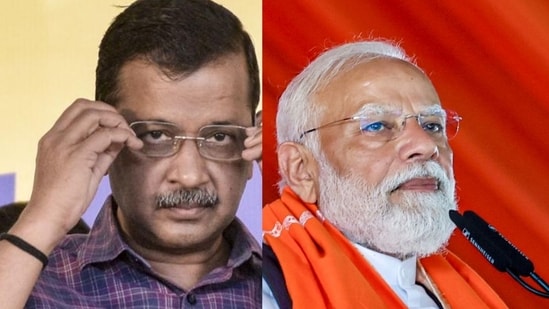
‘What if Modiji loses Bengal elections even after taking over all institutions’: Kejriwal targets PM| India News
# Kejriwal Targets PM Modi on Bengal Polls
By Senior Political Correspondent, The Daily Chronicle, April 11, 2026
On April 11, 2026, Aam Aadmi Party (AAP) national convenor and Delhi Chief Minister Arvind Kejriwal launched a scathing political attack on Prime Minister Narendra Modi, questioning the Bharatiya Janata Party’s (BJP) electoral prospects in the highly anticipated West Bengal Assembly elections. Speaking amid heightened political tensions, Kejriwal asked, **“What if Modiji loses Bengal elections even after taking over all institutions?”** The high-stakes legislative elections are scheduled to take place in two distinct phases on **April 23 and April 29, 2026**. Kejriwal’s remarks underscore the opposition’s overarching national narrative alleging the central government’s misuse of independent federal agencies, framing the Bengal contest as a critical litmus test for India’s democratic framework and federal structure. [Source: Hindustan Times].
## The 2026 West Bengal Electoral Battlefield
The political climate in West Bengal has reached a boiling point as the state prepares for its assembly polls. Unlike the protracted eight-phase election witnessed in 2021, the Election Commission of India has consolidated the 2026 polls into two strategic phases, aiming to streamline the democratic process while maintaining stringent security protocols.
The primary contest remains a fierce ideological and electoral battle between the incumbent Trinamool Congress (TMC), led by Chief Minister Mamata Banerjee, and the opposition BJP, which has positioned itself as the principal challenger. The Left-Congress alliance also seeks to reclaim its historical footprint in the state. In this volatile mix, Kejriwal’s intervention, despite AAP having a minimal electoral presence in West Bengal, serves a broader strategic purpose. By openly targeting the Prime Minister over Bengal, Kejriwal is actively reinforcing a united national opposition front against the ruling National Democratic Alliance (NDA).
## Deconstructing the ‘Institutional Control’ Remark
Kejriwal’s provocative question regarding the “take over” of institutions taps into a recurring grievance articulated by various regional and national opposition parties. For several years, leaders from the AAP, TMC, Indian National Congress, and other regional powerhouses have alleged that central investigative agencies—such as the **Enforcement Directorate (ED)** and the **Central Bureau of Investigation (CBI)**—are being disproportionately deployed against political rivals.
Furthermore, opposition figures have frequently scrutinized the autonomy of the Election Commission, raising concerns over scheduling, the deployment of central armed police forces (CAPF), and the handling of model code of conduct violations. By hypothesizing a BJP loss “even after taking over all institutions,” Kejriwal attempts to craft a narrative that portrays the regional electorate as an indomitable force capable of overriding perceived institutional bias.
“The rhetoric deployed by the Delhi Chief Minister is a classic political maneuver designed to pre-emptively delegitimize the central government’s electoral machinery while simultaneously lowering the expectations for the BJP,” notes Dr. Ananya Chatterjee, a professor of political science and electoral analyst based in New Delhi. “If the TMC wins, the opposition will frame it as a victory of the people against the ‘system.’ If the BJP wins, the groundwork has already been laid to blame institutional subversion.” [Additional: Political Science Analysis/Public Knowledge].
## Strategic Implications for the National Opposition
The timing of Kejriwal’s statement on April 11, just twelve days before the first phase of voting on April 23, is far from coincidental. It highlights a continuing effort to foster cohesion among India’s fractured opposition parties. While regional interests often clash, projecting solidarity against a common adversary remains a cornerstone of the opposition’s national strategy.
Chief Minister Mamata Banerjee has historically shared a complex but cooperative relationship with Arvind Kejriwal. Both leaders helm regional parties that successfully displaced national giants in their respective states, and both have built their brands on robust regional welfarism. By vocalizing support for Bengal’s resistance against the BJP’s election machinery, Kejriwal bridges the geographical gap between the politics of the National Capital Territory and the eastern seaboard, attempting to nationalize the localized electoral outcomes of West Bengal.
## The BJP’s Counter-Narrative and Defense
The Bharatiya Janata Party has vehemently and consistently denied all allegations of institutional overreach, categorizing Kejriwal’s statements as baseless fear-mongering designed to shield corrupt politicians. BJP leadership maintains that federal agencies operate with total autonomy and are merely executing their mandate to eradicate corruption, a central plank of PM Modi’s governance model.
In response to narratives similar to Kejriwal’s, BJP spokespersons argue that opposition leaders facing anti-incumbency and administrative failures are relying on “victimhood politics.” In West Bengal, the BJP’s campaign heavily emphasizes alleged systemic corruption within the TMC administration, citing previous high-profile arrests related to education recruitment scams and municipal administration irregularities.
“The opposition’s strategy is a transparent attempt to deflect from their own governance deficits,” states a senior political commentator aligned with the ruling party’s perspective. “By blaming the institutions, leaders like Kejriwal and Banerjee are attempting to construct a pre-emptive alibi for potential electoral setbacks.” [Additional: Historical Political Discourse Analysis].
## Voter Sentiment and Electoral Arithmetic
As the April 23 and April 29 polling dates approach, the reality on the ground in West Bengal presents a complex tapestry of voter sentiment. The electorate is deeply engaged with both localized welfare initiatives and broader ideological debates.
To understand the dynamics of the 2026 election, it is crucial to examine the primary factors driving voter mobilization on both sides of the political spectrum:
| Electoral Factor | Incumbent Strategy (TMC/Opposition Bloc) | Challenger Strategy (BJP/NDA) |
| :— | :— | :— |
| **State Welfare Schemes** | Relies heavily on the expansion of direct benefit transfers, such as *Lakshmir Bhandar* and student credit cards, targeting female voters and youth. | Promises to implement central schemes seamlessly, arguing that state-level corruption prevents funds from reaching the grassroots. |
| **Federalism and Identity** | Frames the election as a battle for “Bengali pride” against outside political forces, utilizing the “insider vs. outsider” narrative. | Focuses on cultural nationalism, border security, and integrating West Bengal into the broader national development narrative. |
| **Law and Order** | Accuses the central government of utilizing central forces to intimidate voters and disrupt the state’s administrative machinery. | Highlights localized political violence, advocating for a “double-engine government” to restore absolute law and order. |
Both phases of the election will heavily rely on mobilizing the rural demographic, which historically acts as the deciding factor in West Bengal’s political landscape. The BJP aims to consolidate the anti-TMC vote, while the incumbent government is banking on its extensive network of grassroots welfare delivery.
## Federalism Under the Microscope
Kejriwal’s comments also elevate the West Bengal elections into a broader debate regarding Indian federalism. Over the past decade, the friction between opposition-ruled states and the BJP-led central government has escalated significantly. Disputes over the distribution of Goods and Services Tax (GST) revenues, the role of centrally appointed Governors, and the jurisdiction of federal investigative agencies have dominated parliamentary and public discourse.
Rajat Sen, an expert in constitutional law and regional politics, suggests that the Bengal elections are a proxy war for the future of federal relations. “When a Chief Minister from Delhi makes an impassioned statement about an election in Kolkata, it signifies that regional leaders view their political survival as intertwined,” Sen explains. “If the BJP secures a decisive victory in Bengal, it validates their centralized model of governance. If the regional forces hold their ground, it revitalizes the demand for greater state autonomy.”
## Conclusion: A High-Stakes Verdict Awaits
The comments made by Arvind Kejriwal serve as a powerful rhetorical framing device just weeks before West Bengal heads to the polls. By publicly daring the Prime Minister and questioning the integrity of state institutions, the AAP leader has amplified the national resonance of a state-level election.
As voters prepare to cast their ballots on **April 23 and April 29**, the outcome will undoubtedly send ripples across the Indian political spectrum. A victory for the BJP would mark a historic paradigm shift in eastern Indian politics, potentially validating their aggressive expansionist strategy and anti-corruption messaging. Conversely, a resilient performance by the incumbent TMC, backed rhetorically by leaders like Kejriwal, would serve as a powerful counter-narrative, suggesting that regional identity and state-level welfarism can withstand the formidable electoral machinery of the central ruling party.
Ultimately, the results will not only determine who governs West Bengal for the next five years but will also shape the tenor of national political discourse, the perceived legitimacy of federal institutions, and the operational strategy of both the BJP and the united opposition moving forward.





