
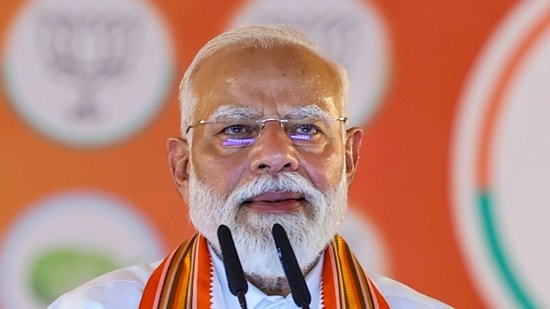
‘Scorching heat, yet enthusiasm’: PM Modi shares rally turnout video, hails ‘West Bengal mood’| India News
# Modi Hails Bengal Rally Turnout Amid Heatwave
By Senior Political Correspondent, National News Desk | April 11, 2026
Prime Minister Narendra Modi praised the unwavering dedication of his supporters in West Bengal on Saturday, April 11, 2026, after addressing a massive political rally amid a severe and unforgiving heatwave. Taking to the social media platform X (formerly Twitter), the Prime Minister shared a video highlighting the massive crowd, captioning it with a note on the “scorching heat, yet enthusiasm,” and hailing what he described as a shifting “West Bengal mood.” As the state plunges into the critical 2026 Legislative Assembly elections, this visual display of mobilization underscores the Bharatiya Janata Party’s (BJP) aggressive push to challenge the incumbent Trinamool Congress (TMC), despite regional temperatures soaring well above 40 degrees Celsius.
[Source: Hindustan Times | Additional: Election Commission of India Guidelines 2026].
## The Social Media Strategy: Capturing the Nation’s Attention
The clip shared by Prime Minister Modi on X rapidly became a focal point of the weekend’s political discourse. The video, panning across a sea of supporters waving saffron flags, captured a raucous and deeply energized crowd braving the blistering afternoon sun. In his post, Modi explicitly drew attention to the physical toll of the weather, framing the public’s willingness to endure it as a direct metric of their desire for political change in the state.
“Scorching heat, yet enthusiasm. The mood in West Bengal is clear,” the Prime Minister wrote, setting the tone for the final leg of the BJP’s campaigning in the state. [Source: Hindustan Times].
This social media maneuver is a classic element of modern political strategy in India. By sharing high-definition, panoramic visuals of rally turnouts, political leaders aim to create a bandwagon effect. In West Bengal, a state historically characterized by intense, deeply entrenched political loyalties and high voter turnouts, projecting an image of unstoppable momentum is crucial. For the BJP, which has spent the last five years working to consolidate its position as the primary opposition, these visuals serve as morale boosters for grassroots cadres facing a formidable opponent in Chief Minister Mamata Banerjee’s TMC.
## Combating the Extreme Heat: Logistics and Dedication
April 2026 has brought one of the most severe heatwaves to the eastern Indian subcontinent in recent memory, with the India Meteorological Department (IMD) issuing “orange” and “red” alerts across several districts of West Bengal, including Bankura, Purulia, and Paschim Medinipur. Temperatures in these regions have frequently crossed the 42-degree Celsius mark, transforming daytime political rallies into grueling endurance tests.
Organizing a rally of the Prime Minister’s scale under such conditions requires immense logistical orchestration. Event managers and party workers were forced to implement extensive heat-mitigation measures to ensure public safety.
**Key Rally Logistics Implemented:**
* **Hydration Stations:** Hundreds of thousands of water pouches and oral rehydration solution (ORS) packets were distributed among the attendees.
* **Medical Camps:** Temporary medical tents staffed with paramedics and equipped with cooling fans and ice packs were set up at the periphery of the rally grounds to treat heat exhaustion.
* **Shaded Enclosures:** While the sheer size of the crowd meant many stood in the open, organizers maximized the use of massive overhead tarpaulins and strategically placed misting fans.
Despite these measures, the physical discomfort of attending a mid-day rally is profound. Political analysts note that when voters turn out in the tens of thousands under such punishing meteorological conditions, it generally signifies a highly mobilized base. The Prime Minister’s acknowledgment of this specific sacrifice is a strategic validation of his supporters’ efforts, transforming their physical endurance into a badge of ideological commitment.
## High Stakes in the 2026 West Bengal Assembly Polls
To understand the weight of the Prime Minister’s remarks regarding the “West Bengal mood,” one must look at the broader electoral battlefield of 2026. The West Bengal Legislative Assembly elections are among the most fiercely contested in India.
In the previous Assembly elections in 2021, the TMC secured a resounding victory, winning over 210 seats and thwarting the BJP’s ambitious “Ebar Bangla” (This time, Bengal) campaign. However, the BJP successfully decimated the traditional Left-Congress alliance, emerging as the principal opposition with over 70 seats—a historic high for the right-wing party in the state.
Five years later, the BJP is attempting to capitalize on anti-incumbency sentiments, leveraging allegations of local-level corruption, debates over women’s safety, and central welfare schemes. The Prime Minister’s personal investment in the state’s campaign—evidenced by his frequent visits and high-profile rallies—demonstrates the BJP central leadership’s determination to finally breach what has been a formidable regional fortress.
## Expert Analysis: Decoding the ‘West Bengal Mood’
While rally turnouts are an impressive metric of organizational strength, political experts caution against treating them as an absolute guarantee of electoral success. India’s electoral history is replete with examples of massive rallies that did not translate into proportional vote shares.
Dr. Ananya Dasgupta, a Kolkata-based political sociologist and election analyst, provides context to the phenomenon:
*”The Prime Minister’s ability to draw crowds in Bengal is undisputed. The turnout in such blistering conditions is a testament to his enduring personal charisma and the BJP’s improved cadre machinery. However, the ‘mood’ of West Bengal is complex. Rally crowds reflect the enthusiasm of the committed voter base, but the silent majority—particularly women beneficiaries of state welfare schemes—often decides the final outcome in the polling booth.”*
Furthermore, the narrative of a “changing mood” is a psychological tool. By projecting an image of imminent victory, the BJP hopes to sway undecided voters who prefer to back a winning horse, while simultaneously attempting to demoralize the grassroots workers of the opposing camp.
## The Incumbent’s Stance: Trinamool Congress Prepares
The ruling Trinamool Congress has not remained silent in the face of the BJP’s aggressive campaigning. Chief Minister Mamata Banerjee, known for her own formidable street-fighter political style, has been matching the BJP’s rally schedule stride for stride, entirely unfazed by the heatwave.
The TMC’s counter-narrative focuses heavily on regional pride, portraying the BJP as a party of “outsiders” who do not understand the cultural nuances of Bengal. Furthermore, the TMC relies on its expansive array of social welfare programs, which have created a loyal vote bank over the last decade and a half.
By dismissing the BJP’s claims of a shifting mood, TMC leaders argue that the crowds at prime ministerial rallies are heavily synthesized, often transported from neighboring districts, and do not represent the organic sentiment of the local constituencies. This battle of optics—where both sides claim the visual dominance of the streets—is a defining characteristic of the 2026 election cycle.
## Voter Demographics and Shifting Allegiances
To validate the Prime Minister’s claim of a changing mood, political observers are closely monitoring several critical demographic segments that will dictate the 2026 results. The battleground is fractured along several socio-economic and geographical lines:
| Demographic / Region | Importance in 2026 Elections | BJP’s Pitch | TMC’s Defense |
| :— | :— | :— | :— |
| **Women Voters** | Constitute nearly 50% of the electorate; traditionally a strong TMC base. | Highlighting issues of women’s safety, central empowerment schemes, and law & order. | Relying on the highly successful *Lakshmir Bhandar* direct cash transfer scheme. |
| **Matua Community** | Crucial voting bloc in border districts like North 24 Parganas and Nadia. | Leveraging the implementation of the Citizenship Amendment Act (CAA) to promise secure citizenship. | Warning against the potential disenfranchisement risks associated with the NRC and CAA processes. |
| **North Bengal** | A region where the BJP has historically performed well in recent national polls. | Promising infrastructure development and addressing local grievances regarding state neglect. | Pushing state-funded regional development boards and tribal welfare initiatives. |
| **Youth Electorate** | A growing demographic frustrated by regional unemployment. | Promising industrialization, private sector jobs, and a corruption-free recruitment process. | Highlighting state-sponsored student credit cards and self-employment micro-loans. |
The enthusiasm PM Modi noted in his post is likely heavily concentrated among the youth and communities seeking structural changes in governance. However, breaking the TMC’s entrenched support among rural women remains the ultimate hurdle for the BJP’s ambitions in the state.
## Future Outlook: A Tightly Contested Electoral Battle
As the phased elections in West Bengal progress, the interplay between extreme weather and high-voltage political campaigning will continue to dominate headlines. The Prime Minister’s recent X post, citing the “scorching heat, yet enthusiasm,” is more than just a passing observation; it is a calculated political statement designed to project resilience, momentum, and an impending change of guard.
[Source: Hindustan Times | Additional: Public Electoral Data].
The 2026 West Bengal Assembly election is shaping up to be a defining moment in Indian regional politics. Whether the visible enthusiasm at BJP rallies successfully translates into the electoral numbers required to form a government remains the paramount question. What is undeniable, however, is that the political temperature in West Bengal is currently matching the meteorological one—both are breaking historical records, and neither shows any signs of cooling down before the final votes are counted.





