
‘Vishwaguru's huglomacy’: Cong questions PM Modi as Pakistan plays US-Iran peacemaker| India News
# Congress Slams Modi’s ‘Huglomacy’ Over Pak Move
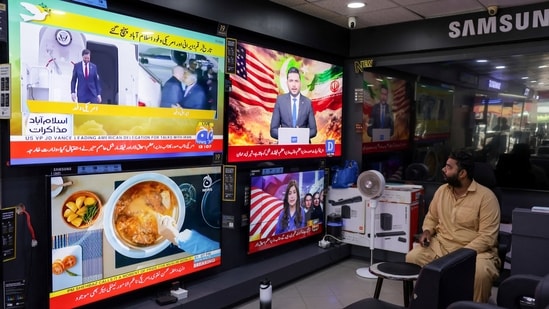
**New Delhi** — On April 11, 2026, the Indian National Congress launched a scathing attack on Prime Minister Narendra Modi’s foreign policy, dubbing it “huglomacy” and questioning the strategic utility of his cultivated “Vishwaguru” (world teacher) persona. The sharp critique comes as regional rival Pakistan takes an unexpected center stage, stepping in as a mediator between the United States and Iran. As Islamabad hosts crucial diplomatic back-channel talks, the opposition in New Delhi is forcefully asking whether India’s massive diplomatic investments and PM Modi’s heavily publicized personal rapport with US President Donald Trump have yielded any tangible strategic returns for India’s regional security.
## The “Vishwaguru” Critique and the Limits of “Huglomacy”
The domestic political temperature in New Delhi rose sharply following statements from senior Congress leadership. Congress communications chief Jairam Ramesh took to social media and subsequent press briefings to ask rhetorically whether the Prime Minister’s personalized brand of diplomacy was failing at a critical juncture [Source: Hindustan Times].
Ramesh criticized what he termed the “self-declared Vishwaguru” approach, arguing that optics-driven diplomacy—often characterized by warm embraces with global leaders, colloquially branded as “huglomacy”—has masked a relative decline in India’s hard-power influence in its immediate neighborhood.
“The Prime Minister has spent years convincing the Indian public that his personal chemistry with the American leadership is a shield for India’s strategic interests,” Ramesh stated in his critique. “Yet, today we see Islamabad playing the pivotal peacemaker between Washington and Tehran. What, then, is the strategic return on the Prime Minister’s highly publicized ‘huglomacy’?” [Source: Hindustan Times]
This critique strikes at the heart of the ruling Bharatiya Janata Party’s (BJP) foreign policy narrative. For the better part of a decade, the ruling administration has successfully projected an image of a rising India, an indispensable global player whose leader commands unparalleled respect on the world stage. However, the opposition argues that the sudden resurgence of Pakistan’s diplomatic relevance in Washington exposes a gaping hole in New Delhi’s strategy.
## Pakistan’s Geopolitical Pivot: The Islamabad Mediation
The immediate trigger for the Congress party’s attack is the rapidly evolving geopolitical situation in the Middle East and South Asia. Tensions between the United States—currently under the administration of a re-elected Donald Trump—and Iran have reached a boiling point over nuclear enrichment concerns and regional proxy conflicts.
In a surprising turn of events, Pakistan has leveraged its geographic proximity to Iran and its historical, albeit transactional, relationship with the United States to position itself as a vital conduit for de-escalation. Reports indicate that back-channel negotiations are actively being facilitated by Pakistani diplomats in Islamabad, providing Washington with a much-needed neutral ground to communicate with Tehran.
For Pakistan, a country that has grappled with severe economic crises and domestic political instability over the last few years, this diplomatic opening is a massive victory. By proving its usefulness to Washington in a high-stakes Middle Eastern conflict, Islamabad aims to unlock crucial economic lifelines, military aid, and diplomatic backing that it desperately needs.
Geopolitical analysts note that this development threatens to re-hyphenate US foreign policy in South Asia, a dynamic New Delhi has worked tirelessly to dismantle.
## Evaluating India-US Strategic Returns
The core of the Congress party’s argument revolves around the transactional nature of the US-India relationship under the current geopolitical climate. Over the years, PM Modi has invested heavily in his personal relationship with Donald Trump, highlighted by mega-events such as “Howdy, Modi!” in Texas and “Namaste Trump” in Ahmedabad.
New Delhi’s diplomatic calculus was built on the assumption that an ironclad partnership with the US, driven by shared concerns over a rising China in the Indo-Pacific, would automatically sideline Pakistan in Washington’s strategic priorities.
However, the reality of global diplomacy is inherently fluid. While the US and India continue to share deep ties in defense, technology, and trade, Washington’s immediate need to prevent a wider conflict in the Middle East has temporarily elevated Islamabad’s utility.
Dr. Meenakshi Sanyal, a senior fellow in foreign policy at a prominent New Delhi-based think tank, explains the nuance: “Personal rapport between leaders can grease the wheels of diplomacy, but it rarely overrides structural geopolitical necessities. Washington needs a back door to Tehran right now. India, given its balancing act between Israel, the US, and its own interests in Iran, cannot play that specific mediator role as effectively as Pakistan can at this precise moment. The opposition’s critique is politically potent, but it ignores the transactional reality of American foreign policy.” [Source: Independent Geopolitical Analysis]
## The Chabahar Conundrum and the Middle East Chessboard
India’s anxieties are not just about Washington’s renewed attention to Islamabad; they also deeply involve New Delhi’s strategic investments in Iran. India has poured millions of dollars into developing the Chabahar port on Iran’s southeastern coast. This port is vital for India’s geopolitical strategy, providing a bypass route around Pakistan to access Afghanistan and the broader Central Asian markets.
If Pakistan manages to successfully broker peace or even a temporary truce between the US and Iran, it significantly bolsters Islamabad’s leverage over Tehran. This could directly impact India’s operational fluidity at Chabahar.
**Key Geopolitical Implications:**
* **Leverage Shift:** An Iran indebted to Pakistani diplomatic cover may become less accommodating to Indian strategic ambitions in the region.
* **The Gwadar vs. Chabahar Dynamic:** Pakistan’s Chinese-backed Gwadar port sits just miles away from Chabahar. A strengthening of Iran-Pakistan ties could lead to deeper integration between these two ports, potentially marginalizing India’s exclusive access.
* **US Sanctions Relief:** If Pakistan’s mediation leads to an easing of US sanctions on Iran, Islamabad will likely demand preferential energy agreements, further bolstering its struggling economy.
“The Congress party is correct in identifying a potential vulnerability in India’s current standing,” notes Ambassador (Retd.) Rajiv Mathur, a former Indian diplomat to the Middle East. “New Delhi cannot afford to view foreign policy merely through the lens of bilateral summits in Washington or European capitals. Real power is projected by maintaining indispensable leverage in your immediate and extended neighborhood.”
## Domestic Political Fallout in India
For the Congress party, the framing of Modi’s diplomacy as “huglomacy” serves a distinct electoral purpose. By questioning the efficacy of the “Vishwaguru” model, the opposition is attempting to strip the sheen off the BJP’s narrative of an ascendant, unassailable India.
The ruling party has often utilized foreign policy successes—such as the successful hosting of the G20, strong economic growth metrics amidst global slowdowns, and a firm stance on border disputes—as core components of its domestic political messaging. By highlighting Pakistan’s diplomatic coup with the US and Iran, Congress is signaling to the electorate that the government’s highly publicized diplomatic wins might be superficial when confronted with hard geopolitical realities.
Furthermore, this line of attack resonates with segments of the Indian strategic community that have long warned against an over-reliance on Washington. There is a growing consensus that India must maintain a highly nimble, multi-aligned foreign policy that does not sacrifice regional depth for the optics of global leadership.
The Ministry of External Affairs (MEA) has, thus far, maintained a measured silence regarding the Congress party’s statements and the ongoing developments in Islamabad. Historically, the MEA’s stance has been to focus on India’s independent foreign policy trajectory, emphasizing that India-US ties stand on their own merit and are decoupled from Washington’s engagements with Islamabad.
## Looking Ahead: A Reassessment of Strategy?
As the back-channel talks in Islamabad continue to unfold, the strategic community in New Delhi will be watching closely. The outcome of the US-Iran mediation will undoubtedly shape the balance of power in South Asia for the remainder of the decade.
If Pakistan succeeds, Washington may reward Islamabad with a resumption of stalled security assistance programs, a move that would immediately trigger alarms in New Delhi. Conversely, if the talks fail, Pakistan’s momentary diplomatic spotlight will fade, and India’s long-term value as the primary anchor of the US Indo-Pacific strategy will remain unchallenged.
Regardless of the outcome in Islamabad, the fierce domestic debate sparked by Jairam Ramesh’s comments underscores a pivotal moment in Indian foreign policy discourse. It brings to the forefront a vital question for New Delhi’s policymakers: How does a rising power transition from personalized, high-visibility diplomacy to institutionalizing permanent strategic leverage in an increasingly volatile world?
As April 2026 progresses, the Modi government will likely need to demonstrate that its “Vishwaguru” status is backed not just by global embraces, but by the hard-nosed, quiet diplomacy required to safeguard India’s interests in its own geopolitical backyard.
***
*By Special Diplomatic Correspondent, National Affairs Desk, April 11, 2026*





