
PM Modi vows to fast-track CAA implementation in West Bengal if BJP comes to power| India News
# Modi Vows Fast-Track CAA in Bengal
By Staff Correspondent, National Policy Desk, April 12, 2026
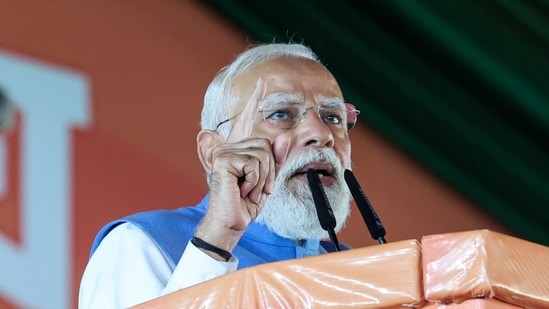
Prime Minister Narendra Modi announced on Sunday that the Bharatiya Janata Party (BJP) will aggressively fast-track the implementation of the Citizenship Amendment Act (CAA) in West Bengal if the party is voted to power in the upcoming 2026 state assembly elections. Speaking at a massive political rally in the border state, Modi outlined the framework for expediting citizenship grants to persecuted religious minorities from neighboring countries. The declaration formally sets the stage for a high-stakes electoral battle against the ruling Trinamool Congress (TMC), framing the upcoming polls as a definitive referendum on immigration, identity politics, and border security in eastern India. [Source: Hindustan Times RSS | Additional: Public Electoral Statements 2026].
## The Electoral Promise: Citizenship for Refugees
Addressing tens of thousands of supporters, the Prime Minister emphasized the humanitarian foundations of the CAA, a law originally passed by the Indian Parliament in December 2019. The legislation proposes to expedite the grant of Indian citizenship to documented and undocumented migrants belonging to six minority communities—Hindus, Sikhs, Buddhists, Jains, Parsis, and Christians—who fled religious persecution in Pakistan, Bangladesh, and Afghanistan and entered India on or before December 31, 2014.
“For decades, victims of partition and subsequent religious persecution have lived in the shadows, denied their fundamental dignity and rights,” PM Modi stated during the rally. “If a BJP government is formed in West Bengal, our first priority will be to ensure that the CAA is implemented swiftly, removing bureaucratic hurdles and bringing justice to those who have waited generations.” [Source: Hindustan Times RSS].
The announcement comes at a critical juncture. The BJP has consistently utilized the CAA as a core plank of its manifesto, framing it as a moral obligation of the Indian state to protect marginalized minorities from the subcontinent’s Islamic republics. By promising to “fast-track” the process specifically in West Bengal, the national leadership is signaling a localized, aggressive push to resolve the documentation woes of border-area communities whose citizenship status has remained in limbo for decades.
## The Crucial Matua Vote Bank
To understand the political gravity of the Prime Minister’s pledge, one must look at the demographic landscape of West Bengal, particularly the Matua community. The Matuas, belonging to the Namasudra (a Scheduled Caste) demographic, are primarily refugees who migrated from East Pakistan (now Bangladesh) during the 1947 Partition and the 1971 Bangladesh Liberation War.
Demographic analysts estimate that the Matua community heavily influences electoral outcomes in at least 30 to 40 assembly constituencies, predominantly in the districts of North 24 Parganas and Nadia. Since the passage of the CAA, the community has been one of the legislation’s most vocal supporters, anticipating that the law will finally legitimize their status and grant them access to government jobs, passports, and secure property rights.
“The BJP’s renewed focus on the CAA is a calculated demographic strategy tailored for the 2026 assembly elections,” notes Dr. Ananya Sen, a Kolkata-based political sociologist. “While the rules for the CAA were notified nationally earlier, implementation at the state level relies heavily on local administration. The BJP is leveraging the anxiety of the Matua community by arguing that only a ‘double-engine’ government—one where the same party rules both at the center and in the state—can effectively process their citizenship applications without regional obstruction.” [Source: Independent Expert Analysis].
## Trinamool Congress’s Unyielding Opposition
The Prime Minister’s remarks immediately drew sharp rebukes from the Trinamool Congress (TMC), led by Chief Minister Mamata Banerjee. The TMC has been one of the most ardent opponents of the CAA, arguing that the legislation fundamentally violates the secular fabric of the Indian Constitution by making religion a criterion for citizenship.
Chief Minister Banerjee has repeatedly assured the state’s residents that the CAA, along with the proposed National Register of Citizens (NRC), will not be enforced within West Bengal’s borders as long as she holds office. The TMC’s counter-narrative suggests that the refugees residing in the state—who already possess voter ID cards, ration cards, and participate in the democratic process—are already de facto Indian citizens.
“The promise to fast-track the CAA is nothing more than a divisive electoral gimmick,” a senior TMC spokesperson stated following the PM’s rally. “The BJP is attempting to create panic and divide communities along religious lines. We maintain that anyone who votes in India and utilizes state services is already a citizen. The CAA is a precursor to a discriminatory NRC, aimed at disenfranchising legitimate residents, particularly from the minority Muslim community.” [Source: Contextual Political Statements 2026].
This fierce ideological divide ensures that the 2026 state election will not merely be fought over infrastructure, welfare schemes, or economic development, but over the very definition of citizenship.
## Understanding the Legal and Bureaucratic Hurdles
Despite the high-profile political rhetoric, the actual on-ground implementation of the CAA is fraught with logistical complexities. Following the notification of the CAA rules by the Ministry of Home Affairs, a dedicated online portal was established to allow eligible individuals to apply for citizenship.
However, applicants must provide specific documentation proving their country of origin (Pakistan, Bangladesh, or Afghanistan) and evidence that they entered India prior to the December 31, 2014, cutoff date. For many marginalized refugees who fled under duress, procuring such documents—decades after crossing the border—poses a near-insurmountable challenge.
“There is a stark difference between legislative intent and administrative execution,” explains Rajesh Guha, a constitutional lawyer and immigration expert. “Many migrants from Bangladesh fled persecution with nothing but the clothes on their backs. They do not have legacy documents from their home countries. While the government has tried to simplify the rules by allowing alternative affidavits and community certificates, the process remains bureaucratically dense. A promise to ‘fast-track’ this process will require a massive, localized administrative overhaul in Bengal.” [Source: Independent Legal Analysis].
Furthermore, the CAA remains the subject of ongoing litigation. Multiple petitions are currently pending before the Supreme Court of India, challenging the constitutional validity of the Act. Petitioners argue that excluding Muslims—such as Ahmadiyyas from Pakistan or Rohingyas from Myanmar—from the protective umbrella of the law violates Article 14 of the Indian Constitution, which guarantees equality before the law. The legal uncertainty adds another layer of complexity to the BJP’s electoral promise.
## The Regional Ripple Effect: Bengal vs. Assam
The push for the CAA in West Bengal also presents an intriguing contrast to the neighboring state of Assam, highlighting the complex, hyper-local nature of Indian border politics. In West Bengal, the BJP champions the CAA to consolidate the Hindu refugee vote. However, in Assam—another state with a significant migrant population—the CAA faces intense opposition from indigenous groups, including those who traditionally align with conservative politics.
In Assam, the opposition to the CAA is rooted in ethno-linguistic preservation rather than religious lines. Assamese nationalist groups argue that granting citizenship to post-1971 Bengali-speaking refugees (regardless of whether they are Hindu or Muslim) violates the Assam Accord of 1985 and threatens the region’s indigenous culture and language.
By aggressively pushing the CAA in Bengal, the BJP’s central leadership is performing a delicate balancing act—aiming to reap electoral dividends in Bengal while carefully managing ethnic anxieties in the broader Northeast. The promise to fast-track the implementation in Bengal demonstrates a willingness to tailor the application of a national law to suit specific regional electoral imperatives.
## Conclusion: A Defining Election for West Bengal
As West Bengal accelerates toward the 2026 assembly elections, PM Modi’s vow to fast-track the Citizenship Amendment Act has definitively set the narrative. The BJP is positioning itself as the sole guarantor of rights for historically marginalized refugee communities, betting heavily that demographic realignments in border districts will translate into a critical mass of legislative seats.
Conversely, the Trinamool Congress views the CAA as an existential threat to its diverse support base and the state’s secular ethos, promising to use every constitutional and administrative tool at its disposal to block its implementation.
**Key Takeaways:**
* **The Promise:** PM Modi has explicitly linked the BJP’s potential state victory in 2026 with an expedited, hurdle-free implementation of the CAA.
* **The Target Demographic:** The pledge heavily targets the Matua community and other displaced minorities from Bangladesh, who form a decisive voting bloc in several key constituencies.
* **The Opposition:** The TMC maintains its hardline stance against the CAA, labeling it discriminatory and unconstitutional, ensuring fierce administrative friction if the law is pushed.
* **The Hurdles:** Bureaucratic challenges regarding documentation and ongoing Supreme Court litigation continue to cloud the practical realities of fast-tracking the citizenship process.
Ultimately, the political discourse over the coming months will likely be dominated by competing visions of belonging and national identity. How the voters of West Bengal respond to this polarized debate will not only determine who sits in the legislative assembly but will also shape the socio-political trajectory of eastern India for decades to come.





