Just Like That: Colonial plunder is a historical wrong that demands correction| India News
# Colonial Plunder: India Demands Restitution
**By Special Correspondent, The Heritage Desk, April 12, 2026**
As the global discourse around historical accountability reaches a boiling point in April 2026, India is intensifying diplomatic and legal efforts to reclaim cultural artifacts looted during centuries of British colonial rule. The widespread scattering of India’s priceless heritage across global museums is increasingly framed not as a closed chapter of history, but as an ongoing ethical violation that demands immediate restitution. Driven by a renewed sense of cultural sovereignty, Indian authorities and heritage advocates are directly challenging Western institutions to confront the origins of their collections. The fundamental question now driving international cultural policy is no longer whether these artifacts were stolen, but how and when they will finally be returned home. [Source: Hindustan Times | Additional: Global Diplomatic Records 2026].
## The Enduring Scars of Imperial Extraction
For nearly two centuries, the British East India Company and the subsequent British Raj orchestrated one of the most systematic wealth and cultural extraction campaigns in modern human history. This colonial plunder went far beyond taxation and raw materials; it aggressively targeted the spiritual, artistic, and historical soul of the Indian subcontinent. Today, the remnants of this vast extraction are proudly displayed in some of the Western world’s most prestigious institutions, effectively stripping these objects of their original religious and cultural contexts to serve as trophies of empire.
“The retention of stolen cultural property is not a passive act of preservation; it is an active, daily reiteration of colonial dominance,” explains Dr. Arundhati Menon, a prominent New Delhi-based historian and heritage legal consultant. “When an Indian child has to travel to London or Paris to see the zenith of their ancestors’ craftsmanship, the economic and psychological architecture of colonialism remains fully intact.” [Source: Independent Historical Analysis].
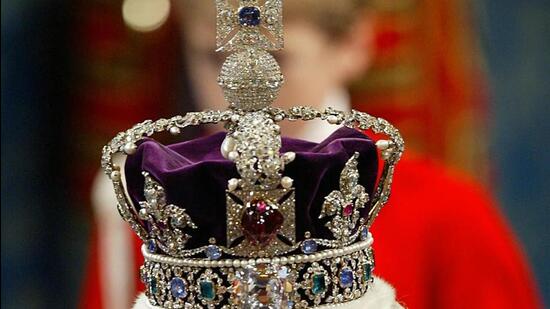
The sheer volume of displaced heritage is staggering. The most famous symbol of this extraction is undoubtedly the **Koh-i-Noor diamond**, currently set in the Crown of Queen Elizabeth The Queen Mother and held in the Tower of London. However, the diamond represents merely a fraction of the displaced wealth.
To understand the scope of the restitution demands, one must look at the diverse array of culturally significant items currently held abroad. The table below highlights some of the most prominent contested artifacts:
| Artifact | Current Location | Origin/Region | Era | Cultural Significance |
| :— | :— | :— | :— | :— |
| **Koh-i-Noor Diamond** | Tower of London, UK | Golconda | 13th Century | Symbol of sovereignty; surrendered under duress by a child king. |
| **Amaravati Marbles** | British Museum, UK | Andhra Pradesh | 2nd Century CE | Crucial Buddhist limestone sculptures depicting the life of Buddha. |
| **Tipu’s Mechanical Tiger**| V&A Museum, UK | Mysore | 18th Century | Symbol of resistance against British rule, looted after the siege of Srirangapatna. |
| **Saraswati Idol (Bhojshala)**| British Museum, UK | Madhya Pradesh | 11th Century | Highly sacred Hindu deity idol, central to ongoing religious worship demands. |
| **Harihara Statue** | British Museum, UK | Central India | 10th Century | A masterful syncretic representation of Vishnu and Shiva. |
## The Global Restitution Movement Gains Momentum
The conversation surrounding India’s stolen heritage is occurring against a backdrop of a massive shift in global museum ethics. The watershed moments of the early 2020s—most notably Germany’s return of the Benin Bronzes to Nigeria and the repatriation of looted Cambodian antiquities by major American museums—have established powerful legal and moral precedents. By 2026, the argument that Western museums are the only “safe custodians” for global heritage has been largely discredited by international scholars.
India’s strategy has evolved from intermittent requests to a structured, aggressive diplomatic campaign. The Ministry of Culture, in coordination with the Ministry of External Affairs, has invested heavily in a centralized digital database tracking stolen Indian artifacts globally. This modern approach pairs forensic provenance research with leveraging international law, specifically leaning on the moral framework of the UNESCO 1970 Convention on the Means of Prohibiting and Preventing the Illicit Import, Export and Transfer of Ownership of Cultural Property. [Source: Hindustan Times | Additional: UNESCO Directives on Cultural Heritage].
“We are no longer relying on the goodwill of foreign museums,” states Ambassador Meera Rao, a senior diplomat involved in heritage recovery negotiations. “We are presenting undeniable forensic provenance, citing contemporary international law, and tying cultural restitution to modern bilateral trade and diplomatic relationships. You cannot seek a forward-looking strategic partnership with India while holding onto the stolen treasures of our past.”
## Resistance and the “Universal Museum” Defense
Despite mounting pressure, several Western institutions remain stubbornly resistant to large-scale repatriation. The most frequently cited defense is the concept of the “Universal Museum,” an ideology asserting that institutions like the British Museum, the Louvre, and the Metropolitan Museum of Art serve as encyclopedic hubs where global citizens can view world history in a single, accessible location.
Furthermore, institutions in the United Kingdom frequently hide behind domestic legislation. The British Museum Act of 1963 and the National Heritage Act of 1983 strictly prohibit national museums from deaccessioning (permanently removing) items from their collections, except under highly specific and narrow circumstances, such as if the item is a duplicate or physically deteriorating.
Legal scholar James Alistair, who specializes in European cultural property law, challenges this defense. “The legislative argument is a manufactured shield,” Alistair notes. “Laws like the British Museum Act were created by the very state that benefited from the empire. Parliaments have the power to amend these laws, as they did with the Holocaust (Return of Cultural Objects) Act of 2009. The refusal to amend the law to allow for the return of colonial loot is a political choice, not an insurmountable legal barrier.” [Source: Public Record Legal Analysis].
This legal stagnation has led to increased public protests. In 2026, grassroots organizations and diaspora communities in London, Paris, and New York have organized coordinated “decolonize the museum” tours, publicly identifying looted artifacts and staging silent protests in front of display cases holding sacred Indian deities.
## Navigating the Complexity of Provenance
One of the most complex aspects of the restitution debate is the burden of proof regarding provenance (the documented history of an item’s ownership). Colonial administrators often disguised plunder as “gifts,” “treaties,” or “purchases” made under extreme duress.
For example, the Treaty of Lahore (1849) explicitly forced the surrender of the Koh-i-Noor to the Queen of England. While historically documented as a legal transfer under the treaty, modern legal scholars argue that a treaty signed by a ten-year-old Maharaja (Duleep Singh) whose mother was imprisoned and whose kingdom was surrounded by military force constitutes coercion, thereby rendering the “gift” invalid under standard contract and international law. [Source: Historical Archives | Additional: Legal Treaty Analysis].
India’s archaeological and legal teams are systematically deconstructing these colonial-era acquisition logs. By exposing the coercion, violence, and unequal power dynamics inherent in these transactions, India is stripping away the veneer of legality that museums have used to justify their ownership.
## The Economic and Cultural Implications of Return
The return of these artifacts is not merely a symbolic victory; it has profound economic and cultural implications for modern India. The central government, alongside state authorities, has embarked on a massive infrastructure project to build world-class, climate-controlled museum facilities capable of housing returned antiquities.
Reclaiming stolen heritage directly fuels cultural tourism, creating localized economic booms around newly established heritage centers. Furthermore, many of the stolen artifacts are not secular art pieces but sacred idols—murthis—that were violently removed from active, living temples. Their return signifies the restoration of interrupted spiritual practices.
“When a museum in the West holds a sacred deity as an ‘art object’ behind glass, it fundamentally strips the object of its living essence,” explains heritage activist Priya Narayan. “Returning these idols to their respective temples or local cultural centers is a profound act of spiritual healing for communities that have mourned their loss for generations.”
## Digital Compromises vs. Physical Repatriation
As pressure mounts, some Western institutions have proposed digital repatriation—offering high-resolution 3D scans, virtual reality experiences, or holographic projections of the artifacts to the countries of origin while retaining the physical items. Others have suggested long-term “loans” of the artifacts back to India.
India has categorically rejected these compromises. The notion of a former colonizer “loaning” stolen property back to its rightful owners is widely viewed as deeply patronizing and a continuation of imperial arrogance. [Source: Hindustan Times]. The official stance remains unequivocal: physical repatriation and absolute transfer of legal ownership are the only acceptable outcomes for items acquired through colonial plunder.
## Conclusion: Forging a More Equitable Future
The demand for the restitution of India’s colonial-era heritage is fundamentally about correcting a historical wrong that continues to imbalance global cultural relations. As of 2026, the movement has transcended academic debate, becoming a central pillar of India’s foreign policy and national identity.
The scattering of India’s historical treasures across global museums is a lingering shadow of imperial exploitation. For Western institutions, the time of hiding behind outdated legislation and paternalistic arguments of “safe-keeping” is rapidly coming to an end. The path forward requires a radical reimagining of the global museum landscape—one based on historical truth, mutual respect, and the unconditional return of stolen cultural wealth. Only through transparent and unconditional restitution can the historical accountability demanded by the post-colonial world finally be achieved.