
Disable Community Notes on X or get publisher tag, Parliament panel moots| India News
# India: Ban X Notes or Get Publisher Tag, MPs Say
**By Tech & Policy Desk** | **April 12, 2026**
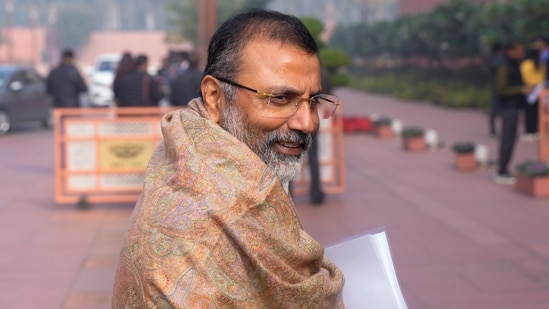
In a significant escalation of the ongoing friction between the Indian government and Big Tech, a Parliamentary panel has recommended that social media platform X (formerly Twitter) either disable its crowdsourced “Community Notes” feature or face reclassification as a digital publisher. Spearheaded by Member of Parliament Nishikant Dubey, the panel has directed the Ministry of Electronics and Information Technology (MeitY) to take decisive action against the platform. If implemented, the directive could force X to choose between abandoning its flagship fact-checking feature or absorbing massive legal and financial liabilities through a “publisher tag” and a potential “publisher tax.” [Source: Hindustan Times].
This ultimatum arrives at a critical juncture for internet governance in India, fundamentally challenging the long-standing legal protections that social media giants have enjoyed. By asserting that the appending of Community Notes constitutes an editorial function, lawmakers are questioning whether X can still be legally classified as a neutral intermediary under Indian digital law.
## The Core Conflict: Intermediary vs. Publisher
At the heart of this legislative storm is the concept of “safe harbor,” enshrined in Section 79 of India’s Information Technology (IT) Act, 2000. For over two decades, this provision has protected tech platforms from being held legally liable for the user-generated content hosted on their servers. The foundational premise of this protection is neutrality: platforms merely provide the digital infrastructure, much like a telecom operator provides phone lines, without interfering in the content being transmitted.
However, the Parliamentary Standing Committee on Communications and IT argues that X’s Community Notes feature crosses the line from neutral hosting to active editorial curation. Community Notes allows eligible users to add context, debunk claims, or provide additional information directly beneath individual posts. While X owner Elon Musk has repeatedly championed the feature as a decentralized, algorithmically driven mechanism for free speech and truth, Indian lawmakers view it differently.
“When a platform allows specialized users to append contextual notes that effectively alter the interpretation, credibility, or visibility of an original post, it ceases to be a mere intermediary,” notes Dr. Sameer Varma, a New Delhi-based digital rights researcher. “The panel’s argument is that X is actively shaping narratives, which is the traditional role of an editorial publisher.” [Source: Policy Analysis / Independent Expert Opinion].
## Decoding the “Publisher Tag” and “Publisher Tax”
MP Nishikant Dubey’s proposal gives MeitY a stark binary choice to present to X: strip the platform of Community Notes or explicitly designate the company with a “publisher tag.” [Source: Hindustan Times].
Receiving a publisher tag would be legally devastating for a platform like X, which processes millions of tweets originating from India daily. Stripping away intermediary status means that X could face civil and criminal liability for every piece of defamatory, illegal, or copyright-infringing material posted by its Indian user base. It would bring the platform under the purview of stringent regulations meant for digital news media, requiring them to adhere to the rigid journalistic codes laid out in the IT Rules of 2021 (and subsequent 2025/2026 amendments).
Furthermore, the snippet references a “publisher tax,” a concept that is gaining traction in global digital governance. [Source: Hindustan Times]. If X is categorized as a publisher, lawmakers argue it should be subject to the same tax structures and regulatory levies as traditional news media organizations. This could also pave the way for mandatory revenue-sharing agreements, where X would be legally obligated to compensate traditional news publishers whose content is aggregated and monetized on the platform, echoing the legislative frameworks recently seen in Australia and Canada.
## The Friction Between Politicians and Crowdsourced Truth
The timing of this parliamentary push is not entirely surprising. Over the past two years, Community Notes has increasingly become a thorn in the side of political figures across the ideological spectrum in India. The feature utilizes a bridging algorithm, meaning that a note is only displayed publicly if it receives positive ratings from users who have historically disagreed on past notes. This design is intended to prevent partisan manipulation.
Despite this, Indian politicians and official government handles have frequently found their posts appended with context that contradicts their claims. In several high-profile instances during the late 2024 and 2025 regional elections, posts regarding infrastructure developments, historical claims, and political rivalries were heavily “noted” by the X community.
For the ruling establishment and opposition alike, an uncontrollable, crowdsourced fact-checking mechanism poses a narrative risk. MP Dubey’s intervention reflects a growing consensus among lawmakers that foreign tech entities should not possess an unregulatable mechanism that can arbitrarily stamp public statements as “misleading” or “lacking context.”
“There is a deep-seated apprehension regarding sovereign narrative control,” explains Malini Ghosh, a senior legal counsel specializing in tech policy. “The government attempted to establish its own Fact Check Unit (FCU) under the Press Information Bureau to flag false news regarding government business, which faced severe constitutional challenges in the courts. Now, having a private, foreign-owned platform effectively running its own unregulated fact-checking ecosystem is viewed as an unacceptable infringement on domestic political discourse.” [Source: Broad Public Policy Knowledge].
## Expert Perspectives: A Threat to Free Expression?
Digital rights advocates and constitutional scholars have expressed deep alarm over the parliamentary panel’s recommendation. Many argue that Community Notes, despite its flaws, is one of the few scalable solutions to the rampant misinformation plaguing social media today.
“Forcing X to disable Community Notes under the threat of a publisher tag is a regressive step for digital literacy,” asserts Rohan Desai, Director of the Centre for Internet and Open Media. “The intermediary safe harbor is meant to protect free speech. By weaponizing this protection to dismantle a feature that actually adds nuance and debunks fake news, lawmakers are essentially prioritizing political narrative control over an informed citizenry.”
Legal experts also point out the inherent contradiction in the panel’s stance. The government has previously mandated platforms to take active measures to curb misinformation, citing public order and national security. Yet, when X deploys a tool specifically designed to combat fake news, it is threatened with the revocation of its safe harbor. This creates a Catch-22 for tech platforms: do too little to moderate, and face government takedown orders; do too much, and be labeled a publisher.
## Global Precedents and the Future of Platform Governance
India is not the first nation to grapple with the intermediary-versus-publisher dilemma, but the proposed punitive approach regarding Community Notes sets a unique global precedent.
In the European Union, the Digital Services Act (DSA) mandates transparency and systemic risk mitigation without strictly removing intermediary status for platforms deploying fact-checking algorithms. In the United States, Section 230 of the Communications Decency Act explicitly protects “Good Samaritan” moderation, meaning platforms cannot be deemed publishers simply for trying to clean up their sites or add context to misleading posts.
If MeitY acts on the parliamentary panel’s mooted proposals, it could trigger a massive domino effect. If X loses its safe harbor because of Community Notes, Meta (Facebook and Instagram) could be next due to its reliance on third-party fact-checkers who label posts as false or misleading. YouTube’s “Information Panels,” which provide context on state-sponsored media and historical events, would also be legally vulnerable.
“The implementation of a ‘publisher tax’ or ‘publisher tag’ would completely rewrite the economics of operating a social media network in India,” states a tech industry lobbyist who spoke on the condition of anonymity. “You cannot operate a platform with hundreds of millions of users if you are legally treated as the editor-in-chief of every single post.”
## Conclusion: A High-Stakes Digital Standoff
The recommendation to disable Community Notes or impose a publisher tag marks one of the most aggressive legislative maneuvers yet against Big Tech in India. MeitY is now positioned squarely in the middle of this high-stakes standoff.
If the Ministry follows through with MP Nishikant Dubey’s recommendations, X will face an existential choice in its largest market by user volume. Complying and turning off Community Notes would deal a massive blow to Elon Musk’s vision of X as a self-correcting digital town square, likely leading to an unchecked explosion of misinformation. Conversely, defying the government and absorbing the publisher tag would expose the company to untenable legal risks and the dreaded “publisher tax.”
As of mid-April 2026, tech companies, digital rights activists, and global regulators are watching MeitY closely. The decision made in New Delhi over the coming weeks will not only determine the survival of crowdsourced fact-checking on the subcontinent but could also rewrite the foundational rules of the internet itself.





