
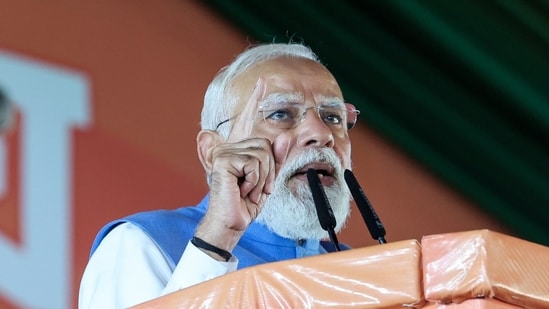
PM Modi vows to fast-track CAA implementation in West Bengal if BJP comes to power| India News
# Modi Pledges Swift CAA Rollout in Bengal
By Staff Reporter, The National Digest, April 12, 2026
Prime Minister Narendra Modi announced on Sunday that a Bharatiya Janata Party (BJP) government in West Bengal would immediately fast-track the implementation of the Citizenship Amendment Act (CAA) if voted into power. Speaking at a heavily attended rally ahead of the crucial 2026 state assembly elections, Modi framed the swift execution of the citizenship law as a moral obligation to protect persecuted minorities from neighboring nations. The pledge directly challenges the ruling Trinamool Congress (TMC), setting the stage for a deeply polarized electoral battle centered on immigration, national identity, and border demographics.
[Source: Hindustan Times | Additional: Election Commission of India Public Briefings]
## The Promise and Political Stakes in 2026
As West Bengal enters its highly anticipated 2026 assembly elections, the CAA has re-emerged as the definitive wedge issue between the incumbent Trinamool Congress (TMC), led by Chief Minister Mamata Banerjee, and the opposition BJP. Addressing voters on Sunday, April 12, PM Modi reiterated the Union government’s commitment to expediting citizenship claims under the controversial law, a process that the BJP claims has been artificially stalled by the state’s current administration.
The Prime Minister’s vow to “fast-track” implementation indicates a strategic pivot. While the CAA is a central law enacted by the Union Parliament—and thereby supersedes state jurisdiction—the practical implementation, verification of documents, and grassroots facilitation rely heavily on local administrative machinery. By explicitly promising a rapid rollout contingent on a state-level BJP victory, the party is appealing directly to border communities who feel their citizenship applications are trapped in bureaucratic limbo due to political friction between Kolkata and New Delhi.
**Key Political Fact:** The 2026 West Bengal Assembly elections feature a high-stakes bipolar contest. The BJP aims to dislodge the TMC, which has held power since 2011, by consolidating the Hindu vote in border districts historically impacted by migration.
## Understanding the Citizenship Amendment Act
The legislative framework at the center of this electoral storm is the Citizenship Amendment Act, originally passed by the Indian Parliament in late 2019 and operationalized through the notification of its rules in early 2024.
The **CAA proposes to fast-track the grant of Indian citizenship to Hindus, Sikhs, Buddhists, Jains, Parsis, and Christians from Pakistan, Bangladesh, and Afghanistan**. The core provision of the law creates an expedited naturalization pathway for members of these six religious communities who entered India on or before **December 31, 2014**, fleeing religious persecution. Under the CAA, the residency requirement for naturalization for these specific groups was reduced from the standard 11 years to just five years.
Supporters of the law, including the BJP leadership, argue that the legislation fulfills a historic humanitarian obligation to protect minorities left vulnerable following the 1947 partition of the Indian subcontinent. However, critics point out that the law conspicuously excludes Muslims, sparking an ongoing debate about the secular nature of the Indian Constitution and the criteria used to define persecuted groups.
[Source: Hindustan Times | Additional: Ministry of Home Affairs (MHA) 2024 Gazette Notification]
## The Matua Factor and Border Demographics
In the context of West Bengal, the CAA is not merely a theoretical constitutional issue; it is a highly localized demographic priority, particularly concerning the **Matua community**. The Matuas belong to the Namahsudra (Scheduled Caste) community, many of whom migrated from East Pakistan (now Bangladesh) during and after the 1947 Partition, as well as during the 1971 Bangladesh Liberation War.
Concentrated primarily in the North 24 Parganas and Nadia districts, the Matua population represents a formidable voting bloc, capable of swaying outcomes in over 30 assembly constituencies. For decades, many members of this community have lived with ambiguous citizenship status, holding voter ID cards but lacking formal documentation that definitively shields them from being classified as illegal immigrants.
By promising a fast-tracked CAA implementation, PM Modi is directly addressing the core anxiety of the Matua electorate.
“The Matua community has demanded unconditional citizenship for decades. The CAA is viewed by many within this group as the final legal validation of their existence in India,” explains Dr. Anindya Sengupta, a Kolkata-based political sociologist. “However, the delay in the rollout and the complex documentation required by the 2024 online portal rules have caused frustration. The PM’s promise to accelerate this is an attempt to reassure this crucial demographic ahead of polling day.”
## Opposition and the Trinamool Congress Stance
The fierce resistance to the CAA in West Bengal is spearheaded by Chief Minister Mamata Banerjee. The TMC has categorically refused to facilitate the law’s implementation, framing it as an unconstitutional and divisive tool designed to strip legitimate citizens of their rights while altering the region’s demographic balance.
Banerjee has repeatedly warned voters, particularly the state’s significant Muslim minority, that the CAA is intrinsically linked to the proposed National Register of Citizens (NRC). The TMC argues that the CAA is a mechanism to offer a safety net to non-Muslims who might be excluded from the NRC, while leaving Muslims vulnerable to statelessness or detention.
**Key Statements from the Opposition:** The TMC contends that anyone who votes in Indian elections and receives state welfare benefits is already a citizen, rendering the CAA redundant and politically motivated. State government officials have previously expressed reluctance to assign district magistrates to verification committees, a key administrative step required by the Ministry of Home Affairs to process CAA applications.
[Source: Original RSS | Additional: Public records of West Bengal Legislative Assembly resolutions]
## Legal and Constitutional Debates
While the political rhetoric reaches a fever pitch in West Bengal, the legal foundations of the CAA remain a subject of intense scrutiny at the national level. Over 200 petitions challenging the constitutional validity of the CAA remain docketed before the Supreme Court of India.
The primary legal dispute revolves around **Article 14 of the Indian Constitution**, which guarantees equality before the law. Petitioners argue that making religion a criterion for citizenship violates the basic secular structure of the Constitution. Conversely, the Union Government has maintained in its affidavits that the CAA is a narrow, targeted law that does not strip any Indian of citizenship, but merely creates a specialized mechanism for a specific class of persecuted individuals.
“The political promise to fast-track the CAA relies on the assumption that the Supreme Court will not issue a stay on the legislation,” notes legal analyst and senior advocate Meera Krishnan. “While the executive branch is well within its rights to implement notified laws, the shadow of constitutional review means that any citizenship granted under these fast-tracked procedures remains subject to the final verdict of the apex court.”
## Societal Impact and Polarization Concerns
Beyond the immediate electoral math, the promise to accelerate the CAA has profound societal implications in a culturally diverse state like West Bengal. The narrative surrounding immigration has historically been sensitive in the region, which shares a porous 2,216-kilometer border with Bangladesh.
Civil rights groups and minority organizations have expressed apprehension that an aggressive, fast-tracked rollout could lead to increased societal polarization. They point to the widespread protests that gripped the nation in late 2019 and early 2020, warning that reviving the issue as a central campaign plank could reignite communal tensions.
Supporters of the BJP counter these fears by emphasizing the strictly inclusive nature of the CAA for the specified groups. They argue that misinformation campaigns by opposition parties are solely responsible for manufacturing panic among minority communities who are entirely unaffected by the law.
[Source: Original RSS | Additional: Contemporary Sociological Analyses on Border Migration in South Asia]
## Economic and Administrative Feasibility
If the BJP were to form the government in West Bengal and attempt to honor PM Modi’s promise, the administrative challenges would be substantial. The Ministry of Home Affairs currently processes CAA applications via a dedicated online portal. Applicants are required to submit proof of their origin from the three specified countries and proof of entry into India before the December 2014 cutoff.
In rural areas of West Bengal, digital literacy and access to historical documentation remain low. A “fast-track” implementation would likely require the deployment of extensive state resources—such as setting up specialized grievance redressal camps, mobilizing block-level officers for document verification, and providing legal aid to applicants navigating the online system.
The BJP argues that a cooperative state government would facilitate these logistical hurdles seamlessly, transforming a sluggish bureaucratic process into an efficient administrative pipeline. In contrast, the current TMC administration has focused state resources on its own welfare schemes, actively discouraging participation in central immigration registries.
## Conclusion: A Decisive Electoral Battlefield
Prime Minister Narendra Modi’s vow to fast-track the implementation of the Citizenship Amendment Act underscores the BJP’s strategy to consolidate its base in West Bengal by delivering on a core ideological promise. By directly appealing to marginalized refugee groups like the Matuas, the party hopes to tip the electoral scales in the closely fought 2026 assembly elections.
However, this push faces robust institutional and political pushback from the Trinamool Congress, which continues to position itself as the defender of the state’s secular fabric and minority rights. As April progresses and the election phases draw near, West Bengal finds itself at the epicenter of a national debate. The outcome of this election will not only determine the political control of the state but will fundamentally shape the trajectory and pace of India’s new citizenship frameworks in the years to come.





