
Uniform Civil Code becomes latest flashpoint between TMC, BJP in Bengal ahead of polls| India News
# UCC Sparks TMC-BJP Clash Ahead of Bengal Polls
By Political Editor, National Policy Desk, April 12, 2026
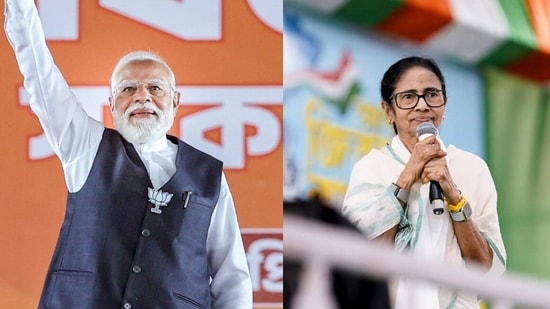
As West Bengal braces for its highly anticipated 2026 State Assembly elections, the Uniform Civil Code (UCC) has emerged as the definitive political flashpoint between the ruling Trinamool Congress (TMC) and the opposition Bharatiya Janata Party (BJP). Over the weekend, Chief Minister Mamata Banerjee fiercely rejected the implementation of a standardized civil code in the state, framing it as an assault on India’s secular fabric. Simultaneously, Banerjee escalated the political theater by accusing the BJP of orchestrating a covert conspiracy to “invalidate” her electoral candidature from the prestigious Bhabanipur constituency in south Kolkata. This dual-front confrontation underscores a deeply polarized landscape where ideological battles and personal political survival are inextricably linked. [Source: Hindustan Times].
## The Uniform Civil Code: A New Ideological Frontier
The push for a Uniform Civil Code—a single set of personal laws governing marriage, divorce, inheritance, and adoption for all citizens regardless of religion—has been a core ideological pillar of the BJP for decades. Following the successful drafting and implementation of the UCC in BJP-ruled states like Uttarakhand in early 2024, the saffron party has aggressively campaigned to nationalize the policy, making it a central plank of its 2026 Bengal election manifesto.
For the BJP, the UCC is presented as a crucial step toward gender justice, equality, and national integration. State BJP leaders have consistently argued that customary laws disproportionately disadvantage women in minority communities, a narrative aimed at simultaneously consolidating the Hindu majority vote and appealing to progressive, rights-based voters.
Conversely, the Trinamool Congress views the UCC through the lens of constitutional overreach and majoritarian imposition. Chief Minister Mamata Banerjee has categorically declared that West Bengal will not implement the code, arguing that it infringes upon the fundamental right to freedom of religion guaranteed by the Indian Constitution.
“The UCC is not an instrument of equality; it is a tool for erasure. It is designed to obliterate the diverse cultural and religious identities that define India, and Bengal will stand as an impenetrable fortress against this majoritarian bulldozer,” noted Dr. Arup Chattopadhyay, a Kolkata-based political analyst and author. [Source: Additional: Independent Political Analysis].
## The Bhabanipur Controversy: Allegations of Sabotage
While the UCC debate dominates the macroeconomic political discourse, a hyper-local controversy is brewing in South Kolkata. During a fiery rally on Sunday, Mamata Banerjee launched a scathing attack on the BJP, alleging that the opposition party is actively conspiring to legally entangle and invalidate her nomination from the Bhabanipur assembly seat.
Bhabanipur is not just an electoral constituency; it is the political nerve center of the Trinamool Congress and Banerjee’s traditional stronghold. She previously won crucial by-elections from this seat to secure her Chief Ministerial tenure.
According to TMC insiders, the BJP is allegedly preparing a slew of complaints to the Election Commission of India (ECI), citing technical anomalies in the Chief Minister’s election affidavits and financial disclosures. While the BJP has dismissed these allegations as “baseless paranoia” and “pre-emptive victimhood,” Banerjee’s public assertion indicates that the TMC is preparing for an intense legal and administrative battle.
“By threatening to challenge her candidature, the BJP is attempting a psychological war,” explains senior Supreme Court advocate and election law expert, Meenakshi Sen. “In high-stakes elections, weaponizing the Election Commission’s scrutiny processes to tie up top leaders in legal defense is a known tactic. However, invalidating a sitting Chief Minister’s nomination requires irrefutable evidence of gross violations, which is historically rare.” [Source: Hindustan Times | Additional: Legal Analysis].
## Electoral Calculus: Demographics and Polarization
To understand why the UCC has become the primary weapon in the 2026 electoral arsenal, one must look at West Bengal’s complex demographics. The state has a significant minority population, which has traditionally served as a reliable vote bank for the TMC.
The BJP’s strategy revolves around reverse polarization. By heavily promoting the UCC and simultaneously championing the Citizenship Amendment Act (CAA)—which caters to the Matua community and Hindu refugees from Bangladesh—the BJP hopes to consolidate the fractured Hindu electorate.
**Key Demographic Breakdown in West Bengal (Estimated 2026):**
| Demographic Group | Estimated Population Share | Political Significance |
| :— | :— | :— |
| **Hindu (General/OBC)** | 45-48% | Heavily contested; BJP seeking consolidation via UCC/cultural nationalism. |
| **Muslim Minority** | 27-30% | TMC’s core base; strongly opposed to the UCC, viewing it as a threat to personal laws. |
| **Scheduled Castes (inc. Matuas)**| 20-22% | Crucial swing voters; heavily influenced by the CAA implementation. |
| **Scheduled Tribes** | 5-6% | Concentrated in Junglemahal; traditional battleground between TMC and BJP. |
*Table Data Source: Aggregate projections based on historical Census and Election Commission demographic studies.*
For the TMC, defending the personal laws of minorities is not merely an ideological stance but an electoral necessity. However, Banerjee is acutely aware of the risks of appearing exclusively minority-focused, which could alienate moderate Hindu voters. Therefore, her counter-narrative against the UCC heavily emphasizes Bengali sub-nationalism—framing the BJP as “outsiders” attempting to impose North Indian cultural homogeneity onto Bengal’s unique, syncretic heritage.
## Competing Narratives on Women’s Empowerment
A fascinating sub-plot in the Bengal UCC clash is the battle for the female vote. Women have been the strongest demographic pillar for Mamata Banerjee, largely due to direct-benefit transfer schemes like *Lakshmir Bhandar* (monthly financial assistance for women) and *Kanyashree* (conditional cash transfers for adolescent girls’ education).
The BJP is attempting to breach this fortress by framing the UCC as the ultimate women’s empowerment initiative. By promising the abolition of polygamy, equal inheritance rights for daughters across all faiths, and standardized divorce and alimony proceedings, the BJP is directly pitching the UCC to progressive and rural women alike.
TMC leaders have countered this by pointing out the BJP’s track record on women’s safety in states it governs, arguing that economic empowerment—which the TMC provides—is the true path to gender justice, rather than legislative homogenization. This has transformed the 2026 election into a referendum on the very definition of women’s welfare in India.
## Constitutional Implications and State Rights
Beyond electoral politics, the TMC-BJP clash over the UCC raises profound constitutional questions. Personal laws fall under the **Concurrent List** (Entry 5) of the Seventh Schedule of the Indian Constitution, meaning both the Parliament and State Legislatures can draft laws on the subject.
If the Union government were to pass a national UCC, it would theoretically override any state-level personal laws due to the doctrine of repugnancy (Article 254). However, until a national law is enacted, states are free to draft their own codes or refuse to implement the models suggested by the center.
“Mamata Banerjee’s preemptive rejection of the UCC sets the stage for a massive federal showdown,” notes Dr. V. R. Krishnan, a constitutional scholar. “If the Central Government mandates a national UCC, Bengal cannot legally ‘reject’ it without passing an amendment that receives Presidential assent—a highly unlikely scenario given the current political climate. Thus, the TMC’s resistance is currently a potent political posture rather than a tested legal reality.” [Source: Additional: Constitutional Law Framework].
## The Broader National Context
The events unfolding in Bengal are being closely monitored in New Delhi and across the country. As one of the most prominent leaders of the national opposition bloc, Mamata Banerjee’s aggressive stance against the UCC provides a blueprint for other non-BJP states, such as Tamil Nadu, Kerala, and Punjab.
The BJP, acutely aware of Bengal’s strategic importance, is deploying its top national brass, including the Prime Minister and the Home Minister, to campaign extensively in the state. Winning Bengal or significantly denting the TMC’s majority would be a monumental ideological victory for the BJP, validating its push for a uniform civil framework nationwide.
Meanwhile, Banerjee’s allegations regarding her Bhabanipur candidacy serve as a rallying cry for her cadres. By portraying herself as the victim of a systemic, institutional conspiracy orchestrated by the ruling party at the center, she is actively stoking the “David vs. Goliath” narrative that proved incredibly successful for her during the 2021 assembly elections.
## Conclusion: Escalation Imminent
As the April 2026 elections draw closer, the political temperature in West Bengal is set to reach a boiling point. The Uniform Civil Code has effectively transcended its status as a mere legal reform, becoming the primary ideological fault line along which the state’s electorate will divide.
**Key Takeaways:**
* **Ideological Polarization:** The UCC is being utilized by the BJP for Hindu consolidation, while the TMC uses it to solidify minority support and champion state autonomy.
* **High-Stakes Personal Battles:** Mamata Banerjee’s allegations of electoral sabotage in Bhabanipur indicate a bitterly fought, deeply personal campaign season ahead.
* **Federal Tensions:** The Bengal government’s refusal to entertain the UCC highlights the ongoing strain on India’s federal structure, setting up potential legal battles between Kolkata and New Delhi.
Ultimately, the 2026 West Bengal Assembly election will not merely decide who controls the legislative assembly in Kolkata; it will serve as a definitive public referendum on the Uniform Civil Code and the broader ideological direction of the Indian republic. Voters are now faced with a stark choice between the BJP’s vision of national uniformity and the TMC’s defense of regional and cultural pluralism.





