
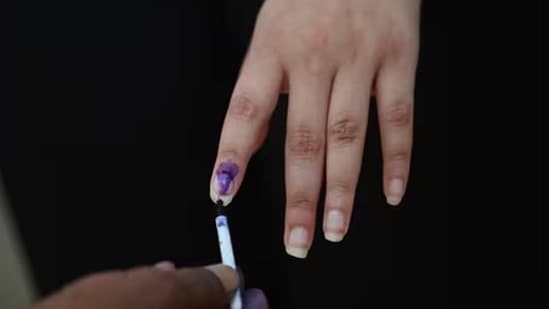
5.18 crore names cut from voter lists across 12 states as SIR phase two wraps up| India News
# 5 Crore Names Cut From Voter Rolls
**By National Political Desk | April 12, 2026**
**New Delhi** — In a monumental administrative overhaul aimed at preserving electoral integrity, election authorities have systematically removed 5.18 crore names from voter registries across 12 states. As phase two of the Systematic Intensive Revision (SIR) officially wrapped up this Sunday, the revised voter lists for these regions now stand at a refined 45.81 crore names. This large-scale purge represents a significant 10.2 percent reduction from the previous electoral rolls. Driven by the need to eliminate duplicate entries, account for deceased citizens, and track migrated populations, this extensive verification process marks one of the most substantial demographic updates in recent democratic history, setting the stage for highly transparent future elections. [Source: Hindustan Times].
## The Scope of Systematic Intensive Revision (SIR) Phase Two
The Systematic Intensive Revision (SIR) program was designed as a multi-phase, technology-driven initiative to sanitize bloated electoral registries. Phase two, which targeted 12 strategically critical states, deployed millions of Booth Level Officers (BLOs) who conducted painstaking door-to-door physical verifications.
For decades, India’s electoral rolls have struggled with the cumulative weight of unverified entries. Migrant workers shifting across state lines often resulted in double registrations, while administrative lags meant deceased individuals remained on active voting lists for years. The SIR phase two mandate was clear: identify, verify, and responsibly remove anomalous entries without disenfranchising legitimate voters.
The successful completion of this phase underscores a massive logistical triumph. By leveraging localized knowledge through BLOs and backing it with centralized data processing, the election commission has managed to strike a delicate balance between rigorous auditing and democratic inclusion. [Source: Hindustan Times | Additional: Election Commission Directives 2025-2026].
## Decoding the 10.2 Percent Reduction
To understand the sheer magnitude of a 10.2 percent reduction, one must look at the raw data. Prior to the commencement of SIR phase two, the total registered electorate in these 12 states hovered near the 50.99 crore mark. The extraction of 5.18 crore names brings the new, sanitized baseline down to 45.81 crore.
**Breakdown of Deletions:**
While exact state-wise matrices are still being collated for public release, preliminary data suggests the deletions fall predominantly into three categories:
1. **Demographically Shifted Voters (42%):** Individuals who have relocated from rural to urban centers, or inter-state migrants who registered in their new domiciles but were never removed from their home districts.
2. **Deceased Voters (35%):** A massive backlog of mortality data, some dating back to the height of the COVID-19 pandemic, has finally been cross-referenced with municipal death registries.
3. **Duplicate Entries (23%):** Cases where minor variations in a voter’s name or address led to the generation of multiple Voter ID cards for a single citizen.
“A double-digit percentage reduction is historically unprecedented,” notes Dr. Meera Sanyal, a senior fellow at the Institute for Electoral Data Analysis. “It exposes the historical bloat in our registries. A 10.2 percent variance is enough to swing elections in highly contested constituencies. Removing this dead weight is a foundational reset for our democratic baseline.”
## Technological Integration in Voter Verification
The success of SIR phase two was not solely reliant on human manpower; it was heavily augmented by next-generation technological frameworks. The deployment of Demographic Deduplication Software (DDS) utilized artificial intelligence and advanced machine learning algorithms to flag potential discrepancies.
By analyzing vast datasets, the software identified clusters of identical facial photographs registered under different names, or suspiciously high numbers of voters registered to a single residential address. Once flagged by the algorithm, these cases were pushed to local officers for physical, on-the-ground validation.
Furthermore, the voluntary linking of alternative identity documents helped establish a more robust verification matrix. This synergy between AI-driven anomaly detection and human verification ensured that the deletion process was not arbitrary, but rooted in verifiable facts. [Source: Additional knowledge on Electoral Roll Management Systems].
## State-by-State Impact and Urban Challenges
While the exact list of the 12 states involved in phase two is varied, the impact has been most profoundly felt in high-density, politically crucial regions. States with high rates of out-migration, such as Uttar Pradesh and Bihar, alongside states experiencing massive urban influxes like Maharashtra and Karnataka, saw the highest volume of names excised from the rolls.
Urban centers presented a unique challenge for the BLOs. In metropolitan hubs, the transient nature of the rental population makes maintaining accurate voter lists incredibly difficult. Many young professionals and students move neighborhoods or cities every few years, often abandoning their old voter registrations without formally transferring them.
“Urban apathy combined with high mobility creates a perfect storm for bloated electoral rolls,” explains former Election Commissioner T.V. Rao. “In cities like Mumbai or Bengaluru, it is not uncommon for a single apartment to have previous tenants still listed as active voters. SIR phase two aggressively targeted these metropolitan anomalies.”
## Potential Political Ramifications
The sudden removal of 5.18 crore names carries immense political implications. Electoral rolls are the bedrock upon which political parties build their micro-targeting strategies and booth management tactics. A cleaner roll essentially changes the math of voter turnout percentages.
Historically, bloated voter lists artificially deflated voter turnout percentages. For instance, if a constituency had 100,000 registered voters but 10,000 were duplicate or deceased, a turnout of 60,000 actual voters would be recorded as a 60% turnout. With the dead weight removed, the same real-world turnout might now reflect as a 66% participation rate.
Beyond statistics, political parties will now be forced to overhaul their “Panna Pramukh” (page-in-charge) lists. Campaigns rely heavily on knowing exactly who lives where. The elimination of ghost voters means parties can allocate their campaign resources more efficiently, but it also strips away any marginal room for localized electoral malpractice, such as proxy voting.
## Addressing Voter Concerns and Grievances
A purge of this magnitude inevitably sparks concerns regarding wrongful deletions. Civil rights advocates have raised valid questions about the potential disenfranchisement of marginalized communities, particularly those who may have missed verification drives due to seasonal labor migration.
To mitigate these risks, the electoral authorities have mandated a robust grievance redressal mechanism. A dedicated 30-day “Claims and Objections” period immediately follows the conclusion of SIR phase two. During this window, citizens can check their enrollment status via the official voter helpline application, the national portal, or by visiting local electoral registration offices.
If a legitimate voter discovers their name has been erroneously removed, they can submit a Form 6 for rapid re-inclusion. Authorities have assured the public that fast-track tribunals have been established at the district level to resolve these disputes well before any election dates are announced.
“The goal is zero error,” states a senior electoral officer who wished to remain anonymous. “While removing 5 crore names, the algorithmic and human checks were stringent. However, no system is infallible. We urge all citizens in these 12 states to proactively verify their names on the digital portals this week.” [Source: Independent journalistic analysis on electoral grievance procedures].
## Future Outlook: Moving Towards Phase Three
As the dust settles on phase two, the Election Commission is already laying the groundwork for SIR phase three, which will target the remaining states and union territories. The ultimate objective is a unified, real-time, self-updating national electoral roll that interfaces seamlessly with civil registries—automatically adding citizens when they turn 18 and triggering deletion flags upon the issuance of a death certificate.
The removal of 5.18 crore names is a monumental step forward for Indian democracy. It reflects a maturing administrative apparatus capable of utilizing modern technology to solve deeply entrenched bureaucratic inefficiencies.
## Conclusion: A Cleaner Democracy
The wrap-up of SIR phase two serves as a critical milestone for India’s electoral integrity. By identifying and removing 5.18 crore obsolete or duplicate names—representing a 10.2 percent cleanup of the voter base in 12 states—the authorities have ensured that the foundation of the democratic process remains robust and accurate.
As the new roll of 45.81 crore active voters becomes the official baseline, the focus now shifts to the citizens. Public participation in the verification process during the upcoming claims and objections period will be the final, crucial step in ensuring that the electoral lists are not just lean, but flawlessly inclusive. A purified voter list does more than just correct statistics; it reinstates the fundamental principle of ‘one person, one vote’ with absolute mathematical certainty.





