
Elections 2026 live updates: 'TVK is BJP’s B-team,’ says DMK candidate ahead of Tamil Nadu polls| India News
# TN Polls 2026: DMK Labels TVK as ‘BJP B-Team’
By Staff Reporter, Election Watch Chronicle, April 12, 2026
On April 12, 2026, the rhetoric surrounding the multi-state Assembly elections escalated sharply as a prominent Dravida Munnetra Kazhagam (DMK) candidate accused the Tamilaga Vettri Kazhagam (TVK) of functioning as the Bharatiya Janata Party’s (BJP) “B-team” ahead of the Tamil Nadu polls. With Assam, Kerala, and Puducherry having successfully concluded voting on April 9, the fierce electoral battleground now shifts to Tamil Nadu on April 23 and West Bengal on April 29. As regional heavyweights clash and national parties maneuver to expand their strategic footprints, the political fate of these five critical regions hangs in the balance until counting day on May 4. [Source: Hindustan Times | Additional: Election Commission of India Public Schedule].
## The Battle for Tamil Nadu Intensifies
As Tamil Nadu prepares for its single-phase polling on April 23, the political landscape is witnessing one of its most fiercely contested elections in recent history. The ruling **Dravida Munnetra Kazhagam (DMK)** is fighting to retain power by heavily campaigning on its welfare schemes, social justice platform, and Dravidian ideological roots. Meanwhile, the principal opposition, the **All India Anna Dravida Munnetra Kazhagam (AIADMK)**, is attempting to consolidate its traditional voter base and stage a robust comeback.
However, the traditional bi-polar dynamic of Tamil Nadu politics has been significantly disrupted by the entry of actor-turned-politician Thalapathy Vijay’s party, the **Tamilaga Vettri Kazhagam (TVK)**. Making its grand electoral debut, the TVK has attracted massive crowds, particularly drawing in the state’s youth demographic. This surging popularity has caused visible anxiety among established political formations, leading to heightened rhetorical attacks on the campaign trail.
The **Bharatiya Janata Party (BJP)**, continuing its aggressive push to break into the southern states, is also running a high-octane campaign. Led by its state leadership, the national party aims to increase its vote share and secure pivotal constituencies by capitalizing on anti-incumbency sentiments and leveraging central government initiatives. [Source: Hindustan Times | Additional: General Political Analysis].
## Unpacking the ‘B-Team’ Allegation
The political discourse reached a boiling point this week when a senior DMK candidate publicly branded the TVK as the BJP’s “B-team.” In Indian electoral parlance, a “B-team” refers to a political outfit that ostensibly contests independently but covertly works to divide the opposition vote to the benefit of a larger, allied party—in this case, allegedly the BJP.
The DMK’s strategic accusation stems from a calculation regarding vote splitting. The ruling party fears that the TVK, by positioning itself as a fresh, anti-corruption alternative, might siphon off crucial youth and swing voters who traditionally favor the DMK or the broader secular alliance. By framing the TVK as a proxy for the BJP, the DMK aims to consolidate its core ideological base and warn minority voters against throwing their weight behind the newly formed party.
“Labeling emerging regional forces as ‘B-teams’ is a time-tested electoral strategy,” notes Dr. R. Meenakshi, a Chennai-based political analyst. “The DMK wants to frame this election as a binary choice between their Dravidian model and the BJP’s nationalistic model. By tying TVK to the BJP, they are attempting to neutralize Vijay’s anti-establishment appeal.”
Both the TVK and the BJP have firmly denied these allegations. TVK leadership insists they are an independent force dedicated to systemic change in Tamil Nadu, free from alliances with either Dravidian majors or national parties. The BJP, similarly, maintains that it is contesting on its own merits and administrative record. [Additional: Regional Political Discourse].
## Polling Phases: Assam, Kerala, and Puducherry
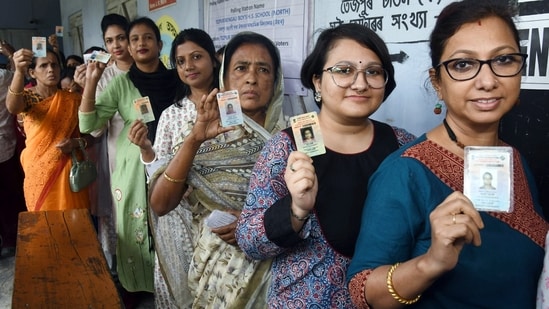
While Tamil Nadu and West Bengal dominate the current news cycle, the electoral process is already underway. On April 9, millions of voters cast their ballots in Assam, Kerala, and the Union Territory of Puducherry, marking the completion of the first major phase of the 2026 Assembly elections. [Source: Hindustan Times].
In **Kerala**, the electorate traditionally oscillates between the Communist Party of India (Marxist)-led **Left Democratic Front (LDF)** and the Congress-led **United Democratic Front (UDF)**. However, the BJP-led National Democratic Alliance (NDA) has aggressively campaigned to transform the state into a tri-polar contest. Voter turnout in Kerala remained robust, reflecting the high stakes involved as the incumbent LDF seeks to break the state’s historical anti-incumbency cycle once again.
In **Assam**, the ruling BJP alliance is banking heavily on its infrastructure developments, targeted welfare distribution, and regional security narratives to secure another term. The opposition alliance, primarily spearheaded by the Indian National Congress, focused its campaign on issues of unemployment, regional identity, and alleged administrative oversights.
**Puducherry** witnessed a localized yet intense battle. The incumbent alliance featuring the All India N.R. Congress (AINRC) and the BJP is striving to retain control against a determined coalition of the Congress and the DMK, who promised sweeping economic reforms and increased autonomy for the Union Territory. [Additional: Election Commission of India Voting Data].
## West Bengal Braces for April 29 Showdown
Following Tamil Nadu, the national spotlight will pivot entirely to **West Bengal**, which is scheduled to vote on April 29. The political climate in Bengal remains highly polarized, setting the stage for a titanic clash between Chief Minister Mamata Banerjee’s **Trinamool Congress (TMC)** and the principal opposition, the BJP.
The TMC is campaigning heavily on its extensive portfolio of social welfare schemes, particularly those empowering women, alongside a fierce defense of Bengali regional identity. Conversely, the BJP has mounted a formidable challenge, targeting the ruling state government over allegations of systemic corruption, political violence, and anti-incumbency fatigue. The Left-Congress alliance is also vying to reclaim lost ground, presenting itself as a secular third alternative to both the TMC and the BJP.
“West Bengal’s single-phase poll on April 29 is a logistical marvel but a political pressure cooker,” says Subrata Das, a political commentator based in Kolkata. “The deployment of central forces and the heightened rhetoric indicate that neither side is willing to cede an inch. The results here will significantly dictate the national political narrative heading into the latter half of the decade.” [Source: Hindustan Times | Additional: Public News Commentary].
## Electoral Implications of Multi-Cornered Fights
A defining characteristic of the 2026 Assembly elections is the rise of multi-cornered contests across traditionally bi-polar states. Whether it is the TVK’s emergence in Tamil Nadu, the BJP’s aggressive expansion in Kerala, or the Left-Congress combine trying to regain relevance in West Bengal, third and fourth fronts are fundamentally altering electoral arithmetic.
In a first-past-the-post voting system, a marginal swing in vote share caused by an emerging regional player can result in a disproportionate shift in seat tallies. Political strategists are closely monitoring these third fronts. If a party like the TVK manages to secure even an 8-10% vote share in Tamil Nadu, it could be the deciding factor in dozens of closely contested constituencies, potentially acting as a kingmaker or spoiling the chances of established giants. This underlying mathematical reality is precisely what fuels speculative accusations like the “B-team” moniker utilized by the DMK. [Additional: Psephology and Electoral Math].
## May 4: The Countdown to Results
As the campaign dust settles in late April, all eyes will turn to **May 4**, the designated counting day for Assam, Kerala, Puducherry, Tamil Nadu, and West Bengal. The Election Commission of India (ECI) has already commenced preparations for the massive logistical undertaking required to count millions of votes across thousands of constituencies simultaneously.
Strict security protocols, including three-tier security cordons around Electronic Voting Machine (EVM) strong rooms and comprehensive CCTV surveillance, have been mandated by the ECI to ensure the integrity of the democratic process.
The outcomes on May 4 will yield profound implications. For the BJP, the results will serve as a referendum on its southern and eastern expansion strategies. For the Congress, it is a crucial test of its alliance-building capabilities and regional relevance. For dominant regional parties like the TMC and the DMK, the results will determine their continuing hegemony in their respective strongholds.
## Conclusion: A Defining Moment for Regional Politics
The 2026 Assembly elections are shaping up to be a watershed moment in India’s political trajectory. From the strategic maneuvering in Assam and Kerala to the heated “B-team” allegations dominating the Tamil Nadu airwaves, these regional battles underscore the vibrant, complex, and highly competitive nature of Indian democracy.
As voters in Tamil Nadu and West Bengal prepare to make their voices heard on April 23 and 29 respectively, the political temperature remains at an all-time high. Ultimately, it will be the quiet resolve of the electorate, revealed when the EVMs are opened on May 4, that will definitively answer the accusations, validate the campaign strategies, and redraw the political map of these five crucial regions for the years to come.





