
Book Box: How to grow your own poem| India News
# How to Grow Your Own Poem This April
By Staff Reporter, Literary Chronicle, April 12, 2026
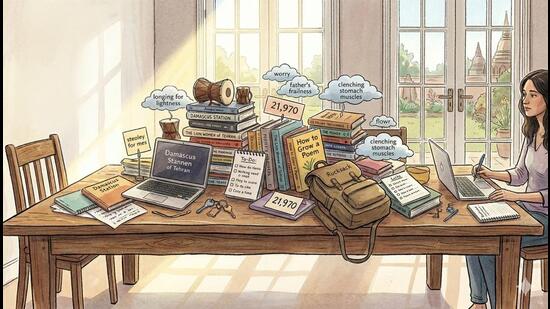
In April 2026, as millions worldwide participate in Global Poetry Writing Month (GloPoWriMo), the act of writing has evolved beyond literary ambition into a profound tool for self-discovery. A recent reflection published by the Hindustan Times captures this perfectly: a woman sitting amidst her lifelong belongings, using the tangible fragments of her past to “grow” a poem. This intimate portrayal highlights how poetry serves as a powerful medium to process complex thoughts and emotions. As the world navigates an increasingly fast-paced digital era, turning inward through structured verse offers a vital sanctuary for mental health, cognitive organization, and profound personal reflection [Source: Hindustan Times RSS | Additional: Global Poetry Writing Month Archives].
## The Intersection of Memory and Physical Belongings
The concept of a “Book Box”—a literal or metaphorical container of one’s literary and personal artifacts—serves as the fertile soil from which poetry springs. For the woman featured in the recent Hindustan Times essay, her belongings are not mere clutter; they are an expansive archive of her lived experience. From dog-eared paperbacks and faded train tickets to old photographs and handwritten notes, these items act as physical anchors to fleeting memories.
Psychologists refer to this phenomenon as the “extended self,” a theory suggesting that our possessions are inextricably linked to our identities. When we surround ourselves with these items, we are essentially sitting within a museum of our own history. Taking the time to observe these objects allows the mind to wander through past emotions, unresolved griefs, and forgotten joys. It is in this reflective state that the seeds of poetry are planted.
The act of writing a poem from these prompts is not about creating a masterpiece for public consumption, but rather about translating the abstract weight of nostalgia into concrete language. By assigning metaphors to mundane objects—a chipped teacup becoming a symbol of enduring resilience, for instance—writers can safely explore vulnerabilities that might otherwise remain suppressed.
## Global Poetry Writing Month (GloPoWriMo) in 2026
April has long been recognized as National Poetry Month in various parts of the world, but the digital age has transformed it into Global Poetry Writing Month, affectionately known as GloPoWriMo. The challenge is simple yet daunting: write one poem every day for 30 days.
By 2026, GloPoWriMo has shifted from a niche challenge for aspiring authors to a global mental wellness movement. Schools, corporate wellness programs, and community centers now actively promote the 30-day challenge. Participants are encouraged to view poetry as a daily cognitive exercise, much like meditation or physical stretching.
“The beauty of GloPoWriMo today is its democratization,” says Dr. Elena Rostova, a literary sociologist at King’s College. “Ten years ago, people were intimidated by the rigid rules of sonnets and haikus. Today, the focus is entirely on expressive cadence. A poem can be three lines about a childhood blanket, and it holds immense emotional validity. The ‘Book Box’ methodology—drawing inspiration from one’s immediate, tangible surroundings—has become the preferred gateway for everyday people to access the poetic form.” [Source: Independent Sociological Analysis on Modern Literary Trends].
## The Psychological Benefits of Poetic Reflection
The therapeutic benefits of expressive writing have been well-documented since the late 20th century, primarily through the pioneering work of psychologists like Dr. James Pennebaker. However, poetry offers a unique structural advantage over traditional journaling.
While prose demands a linear narrative, poetry embraces fragmentation. It allows the writer to jump between images, emotions, and timelines without the need for logical transitions. This mirrors the natural way human memory operates. When the woman in the Hindustan Times feature reflects on her life amidst her belongings, she does not need to write an autobiography. She merely needs to capture the essence of a moment.
**Table: Expressive Prose vs. Poetic Reflection**
| Cognitive Function | Traditional Journaling (Prose) | Poetic Reflection |
| :— | :— | :— |
| **Structure** | Linear, chronological, logical. | Abstract, associative, rhythmic. |
| **Emotional Focus** | Processing events and factual occurrences. | Distilling complex feelings into metaphors. |
| **Time Investment** | Often requires prolonged, daily sessions. | Can be captured in brief, focused bursts. |
| **Psychological Impact** | Excellent for trauma narrative processing. | Highly effective for emotional regulation and mindfulness. |
Dr. Aris Thorne, a clinical psychologist specializing in narrative therapy, explains: “Growing a poem from a memory is an act of cognitive reframing. When you take a painful memory and mold it into a stanza, you are reclaiming agency over that memory. You become the author of the experience, rather than its victim. The artifact—the old letter, the empty perfume bottle—becomes a tool for healing rather than a trigger for distress.”
## Step-by-Step: How to ‘Grow’ Your Own Poem
The metaphor of “growing” a poem suggests an organic, unforced process. Unlike constructing an essay, growing verse requires patience, nurturing, and an acceptance of natural, sometimes wild, development. Inspired by the “Book Box” philosophy, here is a structured approach to cultivating your own poetry this April:
1. **The Gathering (Preparing the Soil):** Create your own physical or metaphorical ‘Book Box.’ Gather three to five items from your home that hold sentimental value. These should not be overly traumatic items, but objects that evoke a strong sense of nostalgia or curiosity. Place them in front of you.
2. **Observation (Planting the Seed):** Spend ten minutes simply looking at the items. Engage all your senses. What does the aged paper smell like? How does the tarnished metal feel against your skin? Write down single words or short phrases that come to mind. Do not attempt to form sentences yet.
3. **Incubation (Watering):** Step away from the notes. Allow the sensory input to mingle with your subconscious. The Hindustan Times piece beautifully illustrates the necessity of simply sitting in the presence of one’s belongings, letting thoughts marinate before forcing them onto the page [Source: Hindustan Times RSS].
4. **Drafting (Sprouting):** Return to your words. Begin stringing them together. Focus on rhythm and imagery rather than perfect grammar. If a line feels natural, let it grow. If a thought feels stagnant, prune it away.
5. **Refining (Pruning and Blooming):** Read the drafted lines aloud. Poetry is inherently aural. The way the syllables strike the air will tell you where a word needs to be changed. Cut away the excess language until only the core emotion remains.
## The Rise of Everyday Poets in the Digital Age
While the catalyst for the “Book Box” poem is deeply rooted in physical reality, the sharing of these creations has become a distinctly digital phenomenon. By 2026, platforms originally known for fleeting content, such as TikTok and Instagram, have matured to host robust, supportive literary communities.
The aesthetic of the “everyday poet” has largely replaced the highly curated, minimalist “Insta-poetry” of the late 2010s. Today’s digital audiences crave authenticity. A raw, slightly unpolished poem written on the back of a grocery receipt often garners more emotional engagement than a perfectly typeset verse.
This digital democratization encourages individuals who would never call themselves “writers” to participate in GloPoWriMo. By sharing their reflections grown from personal belongings, individuals connect across geographical and cultural divides. A poem about an inherited shawl in Mumbai resonates with a reader examining an antique quilt in Montreal. The specificities of the objects differ, but the underlying human condition remains universal.
## Cultivating a Personal Sanctuary
To fully harness the power of this practice, establishing a dedicated physical space is crucial. In a world characterized by remote work and blurred boundaries between professional and personal life, the home can easily become a space of stress.
Designating a small corner, a specific chair, or even just a literal box that is opened only for reflection, signals to the brain that it is time to slow down. This sanctuary does not require aesthetic perfection; it requires intention. When the woman in the original narrative sits surrounded by her artifacts, she is actively stepping out of the flow of chronological time and into a space of emotional permanence.
## Conclusion: The Future of Expressive Verse
The narrative of growing a poem from a box of memories is more than just a charming anecdote for April’s Global Poetry Writing Month; it is a vital blueprint for emotional survival in 2026. As society continues to grapple with the isolating effects of rapid technological advancement, the need for tangible, analog reflection has never been greater.
Poetry remains one of the most accessible and profound tools humanity possesses for processing the world. By looking at the objects that map our lives, we can decode our pasts and write our way into a clearer, more grounded future. Whether you consider yourself a poet or simply someone with a box of old belongings, April offers an open invitation: plant a seed of memory, nurture it with attention, and see what words decide to bloom.





