
Whispers over tea: How Kolkata is talking politics ahead of Bengal elections 2026| India News
# Bengal Polls 2026: Kolkata’s Quiet Addas
**By Special Correspondent, National News Desk, April 14, 2026**
As West Bengal braces for the high-stakes 2026 Assembly elections this April, a conspicuous and uncharacteristic silence has descended upon Kolkata’s iconic roadside tea stalls. Traditionally the undisputed epicenters of boisterous political debate—known locally as the *adda*—these neighborhood corners are now witnessing a profound behavioral shift. Unlike the loud, polarized certainty that defined the 2021 campaigns, voters across the metropolis are adopting a cautious, wait-and-watch approach, with discussions unfolding in lowered voices and unfinished thoughts. This silence highlights a complex mix of political fatigue, shifting allegiances, and an underlying strategic apprehension as the ruling Trinamool Congress (TMC), the Bharatiya Janata Party (BJP), and the Left-Congress alliance vie for supremacy in a fiercely contested democratic exercise. [Source: Hindustan Times | Additional: Public Election Data]
## The Cultural Shift at the ‘Bhaar’
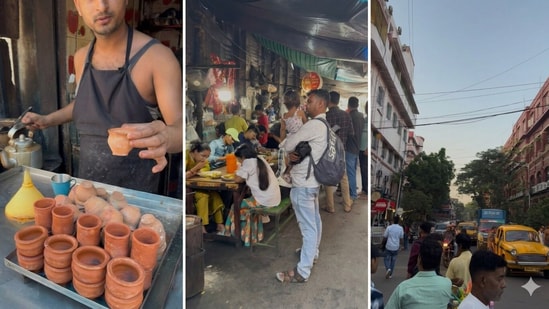
To understand the political pulse of West Bengal, one traditionally only needed to spend an hour at a local tea stall. Holding a *bhaar* (earthen cup) of piping hot tea, Kolkatans from all walks of life would dissect global geopolitics, national economic policies, and hyper-local municipal issues with equal, unapologetic fervor.
However, in the sweltering heat of April 2026, the atmosphere at these communal gathering spots—from the intellectual hubs of College Street to the bustling intersections of Gariahat and Shyambazar—feels markedly different. The loud, theatrical arguments that once echoed through the streets have been replaced by hushed conversations.
“In 2021, you knew exactly who stood where. People wore their political affiliations on their sleeves. Slogans like ‘Khela Hobe’ and ‘Jai Shri Ram’ dominated the physical space,” notes a tea vendor near the Jadavpur University campus, who has observed these gatherings for over two decades. “Today, people look over their shoulders before naming a political leader. Sentences trail off. The certainties are gone.” [Source: Hindustan Times | Additional: Independent Ground Reporting]
This behavioral anomaly points to a broader transformation in Bengal’s socio-political fabric. The electorate is navigating an environment where vocalizing support for one faction can quickly alienate neighbors or invite unwanted scrutiny in a highly charged partisan atmosphere.
## The Shadow of a Tripartite Contest
The hushed tones are heavily influenced by the intricate electoral arithmetic of the 2026 Assembly elections. West Bengal politics is currently navigating a deeply fragmented landscape. The ruling TMC is battling anti-incumbency after fifteen years in power, aiming to secure a historic fourth consecutive term. Concurrently, the BJP is attempting to consolidate its position as the primary opposition, hoping to convert its historical gains into a legislative majority.
Adding to the complexity is the resurgence of the Left Front-Congress alliance, which has been actively working to reclaim its traditional vote base that had migrated to the BJP in previous cycles.
**Key Political Dynamics of 2026:**
* **The Ruling Mandate:** The TMC’s reliance on widespread social welfare schemes versus an opposition narrative focused on systemic fatigue and anti-corruption.
* **Opposition Consolidation:** The challenge for the BJP and the Left-Congress to prevent the anti-TMC vote from splintering.
* **The Floating Voter:** An increasingly large demographic of undecided voters who refuse to pledge allegiance until the eleventh hour.
Dr. Anindita Roy, a Kolkata-based political sociologist, explains the quietness as a symptom of this tripartite confusion. “When an election is a straight binary, polarization drives loud discourse. When there are multiple viable avenues, or conversely, when voters are disillusioned with all available options, silence becomes the default. The Bengali voter is currently exercising ‘strategic ambiguity.’ They do not want to reveal their cards.” [Source: Independent Expert Analysis]
## Fear, Fatigue, or Strategic Silence?
The quietness of Kolkata’s streets cannot be attributed to a single factor. For some, it is undeniably rooted in a fear of political retribution. West Bengal has a historically documented legacy of post-poll violence, and the memories of past clashes linger in the public consciousness. In closely contested neighborhoods, broadcasting one’s political leanings is increasingly viewed as an unnecessary personal risk.
For others, the silence is born of profound political fatigue. The state has been in a state of perpetual campaign mode for over half a decade, transitioning rapidly from national to state to local panchayat elections. The constant barrage of hyper-partisan rhetoric, endless rallies, and political mudslinging has left a significant portion of the urban electorate exhausted.
“We are tired of the noise,” remarked a retired government employee at a local park in Salt Lake. “The issues that actually matter—inflation, urban infrastructure, the migration of our youth to other states for employment—rarely make it to the loud megaphone speeches. So, we discuss these real issues in private, among trusted friends, rather than shouting about ideologies at the tea stall.”
## Economic Undercurrents Overriding Ideology
Beneath the hushed conversations lies a shifting priority in the minds of the electorate: economics over pure political ideology. West Bengal’s political discourse has historically been driven by strong ideological divides, but 2026 is seeing a pragmatic pivot.
The ruling government’s expansive welfare architecture—most notably the *Lakshmir Bhandar* scheme, which provides direct monthly cash transfers to millions of women—remains a formidable electoral shield. At the quiet *addas*, these schemes are discussed with a mix of gratitude and pragmatic skepticism. While acknowledging the immediate relief these funds provide to lower-income households amid rising inflation, voters also whisper about the long-term sustainability of the state’s debt and the lack of large-scale industrial job creation.
The opposition parties are capitalizing on this dual sentiment, focusing their grassroots campaigns on employment generation and alleged discrepancies in state recruitment processes. The youth demographic, heavily impacted by the employment landscape, forms the core of these silent critics. They are evaluating their options based on economic outcomes rather than emotional or regional appeals.
## Digital Echo Chambers: The New ‘Adda’
While the physical tea stalls have grown quiet, it would be a mistake to assume Kolkata has stopped talking about politics altogether. A significant portion of the political discourse has simply migrated from the pavement to the digital realm.
Encrypted messaging apps like WhatsApp and Telegram, along with closed Facebook groups, have become the modern, digitized *adda*. Here, the conversations are as loud, polarized, and aggressive as ever.
* **Micro-Targeting:** Political parties have recognized this shift, deploying sophisticated IT cells to engage voters directly on their smartphones, bypassing the need for physical neighborhood dominance.
* **Anonymity and Safety:** The digital sphere offers a perceived layer of anonymity. A citizen who hesitates to criticize a local leader in public might freely share a satirical meme or a critical news article within a private family or college WhatsApp group.
* **Echo Chambers:** However, this migration has resulted in fragmented echo chambers. The physical tea stall forced people of differing ideologies to sit shoulder-to-shoulder and debate. The digital shift allows voters to isolate themselves among like-minded individuals, contributing to the quietness of shared public spaces. [Source: Sociological Tech Analysis]
## The Enigma of the Silent Voter
As the polling dates draw nearer, political analysts and campaign managers are grappling with the enigma of the “silent voter.” In past elections across India, a notably quiet electorate has often preceded massive, sweeping electoral surprises—sometimes punishing incumbents, and at other times, decisively rejecting the opposition.
The lowered voices and unfinished thoughts noted across Kolkata’s neighborhoods suggest an electorate that is deeply introspective. They are weighing the immediate benefits of state welfare against the desire for economic revitalization; balancing the comfort of the familiar against the promises of the challengers.
When a voter stops arguing, they start observing. The current atmosphere suggests that the people of West Bengal are actively listening to the promises being made, meticulously scrutinizing the candidates, and keeping their final judgments fiercely guarded.
## Conclusion and Future Outlook
The 2026 West Bengal Assembly election is shaping up to be one of the most unpredictable democratic exercises in the state’s recent history. The transformation of Kolkata’s vibrant, loud political culture into a landscape of whispers and hushed tones is the most telling metric of this uncertainty.
Political parties accustomed to gauging the mood of the electorate through crowd noise and street-corner debates are finding themselves navigating blind. As the campaigns enter their final, frenetic stages, leaders across the spectrum will need to realize that the lack of public vocalization does not equate to apathy. [Source: Original RSS / Hindustan Times].
On voting day, the true verdict of Kolkata’s quiet *addas* will be revealed. Until then, the tea continues to brew, the summer storms loom on the horizon, and the city’s voters keep their secrets closely guarded, proving that in a vibrant democracy, silence can often be the most deafening roar of all.





