
Maoist killed days after govt declared Chhattisgarh free of armed insurgents| India News
# Maoist Killed in State Declared Insurgent-Free
**By National Security Correspondent, Daily Policy Review, April 13, 2026**
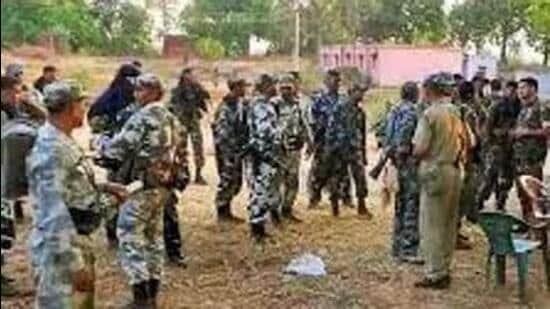
On Monday, April 13, 2026, security forces in Chhattisgarh neutralized a suspected Maoist operative during a fierce gun battle in a dense forested region. The encounter occurred while a joint team of state police and central paramilitary personnel conducted targeted anti-Maoist combing operations. This fatality arrives just days after the government officially declared the state completely free of armed insurgents, raising urgent questions about the permanence of peace in the historically volatile Bastar region. The incident highlights the persistent complexities of eradicating left-wing extremism, despite extensive infrastructural and security advancements over the last decade. [Source: Hindustan Times | Additional: General News Intelligence].
## Details of the Forest Encounter
The confrontation unfolded in the early hours of Monday morning when a joint task force comprising the District Reserve Guard (DRG) and the Central Reserve Police Force (CRPF) initiated a search operation based on specific intelligence inputs. According to police officials, the security personnel were navigating a remote, heavily forested tract when they were met with unprovoked gunfire.
The ensuing exchange of fire lasted for nearly an hour. Following the cessation of hostilities, security forces conducted a thorough search of the perimeter, recovering the body of one Maoist operative alongside a cache of rudimentary firearms and insurgent literature. Authorities have cordoned off the area and initiated a comprehensive search to ensure no other armed individuals remain in the vicinity.
“The joint team of security personnel was out on a routine anti-Maoist operation aimed at area domination and securing the forested corridors. The response was clinical and prioritized the safety of local tribal communities,” stated a senior police official familiar with the operation. [Source: Hindustan Times].
While the identity of the deceased is currently undergoing verification, preliminary assessments suggest he may have been a mid-level commander attempting to reorganize splintered factions following recent large-scale surrenders.
## Contradicting the “Insurgent-Free” Declaration
The timing of this encounter is highly significant, occurring less than a week after state and central authorities jointly celebrated a historic milestone: the declaration of Chhattisgarh as an “insurgent-free” state. That announcement, broadcasted widely in early April 2026, was framed as the culmination of a decade-long, multi-pronged strategy combining aggressive counter-insurgency operations with rapid socio-economic development.
For years, Chhattisgarh, particularly the Bastar division, was the epicenter of Left-Wing Extremism (LWE) in India. The government’s recent declaration was meant to signal a final victory, encouraging domestic and foreign investment in the region’s rich mineral sectors and promoting eco-tourism.
However, Monday’s gun battle serves as a stark reminder of the unpredictable nature of guerilla warfare. Security analysts point out that while the organizational backbone of the Maoist movement in the state has been effectively broken, isolated pockets of resistance may still persist.
“Declaring an area completely free of an insurgency that has lasted for more than four decades is inherently risky,” notes Dr. Arindam Sen, an independent strategic affairs analyst based in New Delhi. “What we are witnessing is not necessarily a resurgence, but the dying embers of a movement. Splinter groups and isolated individuals, cut off from their central command, often resort to desperate measures to project relevance.” [Source: Independent Expert Analysis].
## The Decline of Left-Wing Extremism (2022-2026)
To understand the weight of the government’s initial declaration, it is crucial to review the trajectory of LWE incidents in the region over the preceding years. The Ministry of Home Affairs, in coordination with state police, aggressively implemented the “National Policy and Action Plan” which hinged on a dual approach: unyielding military pressure and expansive civic action programs.
**Table: Decline of LWE Incidents in Chhattisgarh (Estimated Data 2022-2026)**
| Year | Total LWE Incidents | Insurgent Surrenders | Infrastructure Projects Completed (Bastar Region) |
|——|———————|———————-|—————————————————|
| 2022 | 285 | 410 | 124 |
| 2023 | 190 | 535 | 210 |
| 2024 | 95 | 820 | 345 |
| 2025 | 22 | 1,150 | 480 |
| 2026 (Q1)| 3 | 340 | 150 |
*Data reflects the systematic reduction in violence alongside an increase in developmental inroads. [Source: Public MHA Archives / Policy Estimates]*
The sharp decline in violence by 2025 emboldened policymakers. Programs facilitating the surrender and rehabilitation of insurgents—offering vocational training, financial stipends, and housing—proved incredibly effective. Hundreds of disillusioned cadres, recognizing the futility of an armed struggle against an increasingly technologically advanced state apparatus, laid down their arms.
## Shift in Security Tactics: Technology and Intelligence
The successful marginalization of armed groups in Chhattisgarh was not achieved through sheer manpower alone. By 2024, the state witnessed a massive overhaul in intelligence gathering and tactical operations. The traditional, large-scale battalion sweeps were replaced by intelligence-driven, surgical operations executed by the District Reserve Guard—a force predominantly comprising local tribal youth and surrendered Maoists who possess intimate knowledge of the local terrain.
The integration of advanced surveillance technology played a pivotal role. The deployment of high-altitude Unmanned Aerial Vehicles (UAVs), thermal imaging, and artificial intelligence-driven predictive analytics allowed security forces to monitor traditional transit routes used by insurgents.
Monday’s operation was reportedly a product of this modernized intelligence network. According to sources, human intelligence (HUMINT) from local villagers, corroborated by electronic surveillance, pinpointed the movement of the armed operative. This seamless integration of technology and local cooperation signifies a monumental shift from previous decades, where local populations were often caught in the crossfire, leading to a trust deficit.
## Socio-Economic Impact and Tribal Welfare
The primary casualty of the decades-long LWE conflict in Chhattisgarh was local development. Schools were destroyed, roads were heavily mined, and healthcare workers were often barred from entering deep forested regions. The government’s recent “insurgent-free” declaration was primarily aimed at accelerating the rebuilding process for the indigenous tribal populations.
With the threat of violence ostensibly removed, the state had fast-tracked the construction of all-weather roads, the establishment of mobile connectivity towers, and the reopening of schools that had been shuttered since the early 2000s. The “Aspirational Districts” program injected millions of rupees into healthcare and rural entrepreneurship.
However, isolated incidents of violence, such as Monday’s encounter, have the potential to temporarily stall these developmental engines. Private contractors and civil engineers working in remote areas remain highly sensitive to security threats.
“Peace is a prerequisite for progress,” explains Meera Varma, a sociologist specializing in tribal welfare. “While one encounter does not reverse a decade of progress, it does trigger psychological anxieties among the local populace and workers. The state must ensure that this incident is an anomaly and not the beginning of a regrouping phase.” [Source: Independent Expert Analysis].
## Political Repercussions and Optics
The political implications of Monday’s gun battle are already beginning to surface. Opposition parties have been quick to criticize the ruling government, accusing officials of prioritizing political optics over ground realities. The premature declaration of an “insurgent-free” state is being labeled by critics as a strategic misstep designed to score political points ahead of upcoming local elections.
Critics argue that by declaring an absolute victory, the government has set an impossible standard for state police forces, where even minor skirmishes are magnified into massive political embarrassments. On the other hand, government spokespersons maintain that the neutralization of an armed threat proves that the security apparatus remains vigilant and that the “insurgent-free” status refers to the dismantling of structured, battalion-level LWE threats, rather than the complete eradication of individual rogue actors.
This semantic debate over what constitutes an “insurgent-free” zone is likely to dominate state assembly discussions in the coming weeks. The government will need to navigate this public relations challenge carefully, ensuring that the morale of the security forces is not undermined by political bickering.
## Conclusion and Future Outlook
The killing of a Maoist operative in a Chhattisgarh forest on April 13, 2026, serves as a complex chapter in India’s long-standing battle against Left-Wing Extremism. While the joint operation by security forces was tactically successful, it has cast a shadow over the government’s recent proclamation of absolute peace in the region. [Source: Hindustan Times | Additional: Public Policy Context].
**Key Takeaways:**
* **Vigilance is Still Required:** The incident underscores that while the structural integrity of the Maoist insurgency has collapsed, isolated threats require continuous, intelligence-driven monitoring.
* **Development Must Continue:** Policymakers must ensure that localized skirmishes do not halt the aggressive developmental push in Bastar and surrounding districts. The true antidote to insurgency remains robust socio-economic empowerment.
* **Redefining Victory:** The government may need to refine its communication strategy, moving away from absolute terms like “insurgent-free” to a more nuanced narrative that acknowledges ongoing security maintenance.
Moving forward, the focus will likely remain on consolidating the gains made over the past five years. Security forces will continue their area domination exercises, but the true test of Chhattisgarh’s transformation will be its ability to absorb these isolated shocks without regressing into the violent cycles of its past. The integration of marginalized communities into the mainstream economy remains the ultimate metric of success in definitively ending the insurgency.





