
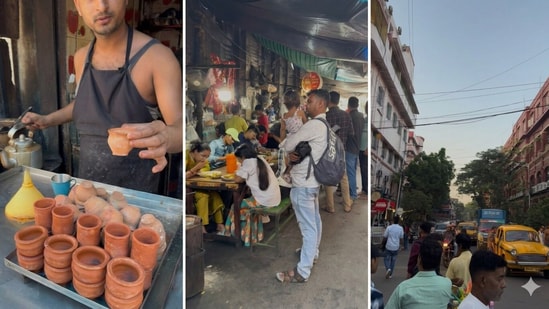
Whispers over tea: How Kolkata is talking politics ahead of Bengal elections 2026| India News
# Kolkata’s Hushed Politics Ahead of 2026 Polls
By Arindam Basu, The National Dispatch, April 14, 2026
In the bustling streets of Kolkata, where fiery political debates over steaming earthen cups of tea have historically been a passionate local pastime, a profound and uncharacteristic silence has settled among voters ahead of the April 2026 West Bengal Assembly elections. Unlike past campaigns defined by loud, colorful certainty and vocal tribalism, today’s political discussions across the metropolis unfold in lowered voices, cautious glances, and unfinished thoughts. Driven by severe political fatigue, deep-seated polarization, and an electorate increasingly wary of local surveillance, citizens are keeping their electoral cards close to their chests. This dramatic shift from the vocal *adda* to the whispered conversation marks a watershed moment in Bengal’s democratic discourse, leaving political parties and pollsters completely blind to the true undercurrents of the impending ballot.
## The Transformation of the Bengali ‘Adda’
To understand the magnitude of this silence, one must first understand the cultural institution of the Bengali *adda*. For decades, the *chaayer dokan* (neighborhood tea stall) served as the primary theater for Kolkata’s political arena. Whether at the intellectual hubs of College Street, the busy crossings of Gariahat, or the traditional neighborhoods of Shyambazar, political allegiance was historically worn as a badge of honor. In the lead-up to the historic 2011 elections, the streets roared with the demand for *”Poriborton”* (Change). During the bitterly fought 2021 campaigns, the rallying cry of *”Khela Hobe”* (The Game is On) echoed from every street corner.
However, as the state barrels toward the 2026 mandate, the sensory experience of Kolkata’s political landscape has fundamentally altered. **According to recent observations, unlike past Bengal poll campaigns marked by loud political certainty, many discussions across Kolkata now unfold in lowered voices, and unfinished thoughts** [Source: Hindustan Times]. The sprawling debates about Marxist ideology, grassroots populism, or right-wing nationalism have been replaced by mundane chatter. When politics is broached, it is done so in hushed tones, often heavily coded, and strictly among deeply trusted acquaintances.
## High Stakes and Electoral Uncertainty
The context of this silence is rooted in the unprecedented stakes of the 2026 assembly elections. The ruling Trinamool Congress (TMC), spearheaded by Chief Minister Mamata Banerjee, is seeking a rare fourth consecutive term in office. They are navigating heavy anti-incumbency currents, administrative fatigue, and a series of high-profile legal and civic controversies that have plagued the administration over the past few years.
Conversely, the Bharatiya Janata Party (BJP), currently the principal opposition, is mounting an aggressive, do-or-die campaign to capture the state, capitalizing on urban discontent and rural distress. Meanwhile, the Left Front-Congress alliance is desperately attempting to carve out a resurrected third space, hoping to reclaim the ideological voters who had abandoned them over the last decade.
In this multi-cornered pressure cooker, the electorate feels the weight of the moment. Dr. Amitava Sanyal, a political sociologist based in Kolkata, notes the psychological toll on the voter. “The vocal certainty of the past has been replaced by a pervasive, almost suffocating caution. What we are witnessing is not political apathy, but a hyper-awareness of the stakes. Voters recognize that in a highly polarized environment, declaring one’s allegiance publicly invites unnecessary socio-economic risks.” [Source: Independent Political Analysis / Public Observation].
## Fear, Fatigue, and the Syndicate Shadow
A significant factor contributing to the hushed tones across Kolkata is a palpable sense of apprehension. Over the last decade, the political architecture of West Bengal has increasingly relied on hyper-local neighborhood clubs and “syndicates” to mobilize voters and monitor dissent. In many wards across Kolkata and its adjoining suburban belts like Jadavpur, Behala, and Dum Dum, local political operatives maintain a tight grip on neighborhood dynamics.
Citizens are acutely aware that the neighborhood tea stall is no longer a safe haven for free speech. **A critical mass of urban voters fears retribution—ranging from the denial of civic amenities to outright intimidation—if they are heard criticizing local power structures.** This fear is compounded by deep political fatigue. The constant state of electoral mobilization, marred by sporadic incidents of political violence during municipal and panchayat elections, has left the average citizen exhausted.
“We have seen enough rallies, heard enough microphones, and watched enough clashes on the news,” whispers a local vendor outside a major transit hub in Sealdah, pausing to ensure nobody is lingering too close. “People don’t want to argue about who is right or wrong anymore. They just want to vote in peace and return to their families. Why paint a target on your back?”
## Economic Anxieties Muffling the Megaphones
Beyond fear and fatigue, shifting socio-economic priorities are driving Kolkata’s conversational retreat. The ideological romanticism that once fueled hours of debate over a single cup of tea is increasingly being overshadowed by stark economic realities.
Issues such as **youth unemployment, persistent inflation, industrial stagnation, and the massive out-migration of Bengali youth to the southern and western corridors of India** are the real burdens the electorate carries today. The traditional political discourse, which frequently devolves into identity politics, religious polarization, or historical grievance, feels increasingly disconnected from the immediate needs of the working and middle classes.
When conversations do occur, they are pragmatic rather than ideological. Voters are quietly evaluating which political entity can realistically deliver infrastructure development, transparent job recruitment, and a stable economic environment, rather than who can deliver the most rousing speech at the Brigade Parade Ground.
## The Digital Shift: From Street Corners to Encrypted Chats
It would be a mistake, however, to assume that Kolkata has stopped talking politics entirely. The *adda* has not died; it has simply migrated to the digital underground. The physical silence in the city’s public squares is inversely proportional to the deafening noise within encrypted WhatsApp groups, closed Facebook communities, and anonymous social media forums.
Political parties, recognizing this shift, have heavily recalibrated their campaign strategies for 2026. The reliance on massive, disruptive street rallies is gradually making way for sophisticated digital micro-targeting. IT cells belonging to the TMC, BJP, and the Left are heavily investing in localized digital content, targeting specific demographics through smartphones rather than loudspeakers. [Source: Additional Knowledge on Modern Election Campaigns].
“People are sharing their political opinions, memes, and critiques, but they are doing it from the safety of their living rooms via encrypted apps,” explains digital campaign strategist Ruma Das. “The public silence is a protective shell. Inside their smartphones, the Bengali voter is as fiercely political as they were in the 1970s.”
## The Psephological Nightmare: Decoding the Silent Voter
For political analysts, journalists, and pollsters, this environment presents an unprecedented challenge. Historically, election outcomes in West Bengal could often be predicted by reading the mood of the streets. The vibrancy of party flags, the attendance at neighborhood meetings, and the dominant voices at the tea stalls served as reliable barometers for the eventual mandate.
Today, the “silent voter” phenomenon has plunged the 2026 elections into deep unpredictability. **Without the vocal endorsement or overt rejection of the electorate, ruling party leaders struggle to gauge the true extent of anti-incumbency, while opposition leaders cannot accurately measure if their messaging is translating into genuine electoral trust.**
This quietude is reminiscent of various “silent waves” in Indian electoral history, where electorates completely bypassed the noisy campaign rhetoric to deliver shocking, one-sided mandates at the EVM (Electronic Voting Machine). Both the incumbent TMC and the challenger BJP are currently operating in the dark, forced to rely on internal surveys and digital analytics rather than the organic feedback of the Kolkata streets.
## Conclusion: The Calm Before the Electoral Storm
As the West Bengal elections of 2026 draw closer, the whispers over tea in Kolkata serve as a profound commentary on the evolution of India’s democratic engagement. The transition from loud political certainty to lowered voices and unfinished thoughts [Source: Hindustan Times] is not indicative of a city losing its political soul. Rather, it reveals an electorate that has grown deeply cautious, highly observant, and intensely pragmatic.
The silence blanketing the *chaayer dokans* of Kolkata is the calm before the storm. Voters have retreated from the public square, choosing to shield their intentions from neighborhood enforcers and political cadres. But beneath this quiet surface lies a brewing electoral verdict. When the millions of silent voters finally step into the privacy of the polling booths in a few weeks, their collective decision will undoubtedly speak much louder than any of the megaphones that once dominated the streets of Bengal.





