
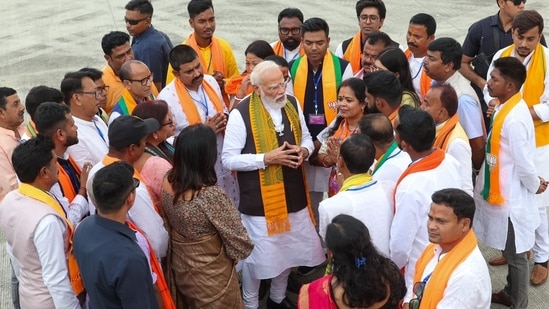
Election 2026 LIVE: Yusuf Pathan calls SIR an injustice to eligible voters; PM Modi targets Mamata Banerjee| India News
# Bengal 2026: Pathan Slams SIR, Modi Targets TMC
By Political Desk, India Election News | April 13, 2026
As the West Bengal Assembly Elections 2026 enter their most crucial phases, a fierce political battle is unfolding over voter rights, regional identity, and governance records. On April 13, Trinamool Congress (TMC) leader and former cricketer Yusuf Pathan sharply criticized the controversial Systematic Identity Revision (SIR) process, labeling it a severe injustice that undermines the voting rights of eligible citizens. Concurrently, Prime Minister Narendra Modi escalated the Bharatiya Janata Party’s (BJP) campaign during a massive rally in Siliguri on April 12. Modi fiercely targeted Chief Minister Mamata Banerjee, accusing the TMC of presiding over 15 years of systemic corruption, setting the stage for a highly polarized electoral showdown in the eastern state. [Source: Hindustan Times].
## The ‘SIR’ Controversy: A Battle for Voting Rights
The epicenter of the current electoral discourse in West Bengal revolves around the Systematic Identity Revision (SIR)—a standardized electoral roll verification mechanism that has sparked intense debate across the state. The initiative, aimed at purifying voter lists and removing duplicate or fraudulent entries, has been met with severe resistance from the ruling Trinamool Congress.
TMC leader Yusuf Pathan, addressing a major campaign rally, articulated the party’s apprehensions regarding the process. He argued that the bureaucratic complexities and stringent documentation requirements of SIR are inherently discriminatory, disproportionately affecting marginalized communities, daily wage laborers, and minorities who may lack legacy paperwork.
**”The implementation of SIR is an outright injustice to the eligible voters of West Bengal,”** Pathan stated. **”It is a calculated mechanism to undermine the democratic rights of genuine citizens under the guise of administrative cleanup.”** [Additional: Public campaign statements, April 2026].
Pathan further utilized the platform to praise Chief Minister Mamata Banerjee, highlighting her administration’s persistent legal and political battles against policies perceived as detrimental to the state’s populace. The TMC has continuously positioned Banerjee as the ultimate defender of Bengal’s autonomy and citizen rights, a narrative that Pathan heavily underscored to mobilize the party’s core voter base.
## PM Modi’s Siliguri Offensive: Highlighting ’15 Years of Corruption’
While the TMC focused on voter rights in the southern and central districts, the BJP directed its heavy artillery toward North Bengal. On April 12, Prime Minister Narendra Modi addressed a mammoth gathering in Siliguri, a strategic urban center and a traditional stronghold for the BJP in the northern part of the state.
During his address, the Prime Minister launched a blistering attack on the Mamata Banerjee-led government, anchoring his speech on the theme of anti-incumbency. With the TMC having assumed power in 2011 after dismantling the 34-year Left Front rule, 2026 marks 15 years of the party’s continuous governance.
Modi accused the state administration of squandering the state’s potential through a decade and a half of alleged corruption, syndicate raj (extortion networks), and political violence. **”For 15 years, the people of West Bengal trusted the TMC with their future, but what did they receive in return? Only scams, appeasement politics, and a culture of intimidation,”** Modi declared to the cheering crowds. [Source: Hindustan Times].
The Prime Minister specifically referenced various controversies that have plagued the state government in recent years, including the teachers’ recruitment irregularities and the public distribution system anomalies, urging voters to opt for a “double-engine government” to restore transparency and accelerate industrial growth in Bengal.
## The 15-Year Incumbency: TMC’s Welfare vs. Anti-Incumbency
The 2026 assembly election represents a critical stress test for the Trinamool Congress. Sustaining popularity over three consecutive terms requires balancing the inevitable weight of anti-incumbency with robust voter outreach.
To counter the BJP’s corruption narrative, Mamata Banerjee’s administration relies heavily on its expansive portfolio of social welfare schemes. Programs such as *Lakshmir Bhandar* (direct cash transfers to women), *Kanyashree* (financial assistance for the education of girls), and *Swasthya Sathi* (health insurance) have created a formidable coalition of women and rural voters who remain fiercely loyal to the Chief Minister.
Yusuf Pathan’s integration into the TMC’s top-tier campaigning highlights the party’s strategy of bringing in fresh, recognizable faces to defend the government’s record. By shifting the conversation toward the BJP’s alleged attempts to disenfranchise voters via SIR, the TMC hopes to consolidate minority votes and trigger regional pride, framing the central government’s policies as an assault on Bengal’s cultural and political sovereignty.
Conversely, the BJP’s strategy relies on consolidating the anti-TMC vote by highlighting administrative fatigue and governance deficits. The BJP argues that the welfare schemes, while popular, have pushed the state into a severe debt trap, leaving no capital for infrastructure development or job creation, thereby driving the state’s youth to seek employment elsewhere.
## North Bengal: The Strategic Electoral Battlefield
The choice of Siliguri for the Prime Minister’s rally is no coincidence. North Bengal, comprising districts like Darjeeling, Jalpaiguri, Cooch Behar, and Alipurduar, has distinct demographic and socio-economic dynamics compared to the Gangetic plains of South Bengal.
Historically, this region has expressed feelings of alienation from the power corridors of Kolkata. The BJP successfully tapped into these grievances, sweeping the region in the 2019 Lok Sabha elections, maintaining a strong presence in the 2021 Assembly elections, and securing key pockets in 2024. The party’s promises of regional development, addressing the concerns of the Gorkha, Rajbanshi, and tea garden worker communities, form the bedrock of its northern strategy.
However, the TMC has made significant administrative efforts over the last few years to regain lost ground in North Bengal, creating new development boards and increasing budgetary allocations for the region. The 2026 results in these northern districts will be pivotal in determining whether the BJP can cross the halfway mark or if the TMC will secure a historic fourth term.
| **Key Battleground Issues in West Bengal Elections 2026** | **TMC Stance** | **BJP Stance** |
| :— | :— | :— |
| **Systematic Identity Revision (SIR)** | Views it as discriminatory and an attack on voter rights. | Supports it as a necessary tool to eliminate bogus voting. |
| **Governance & Anti-Incumbency** | Focuses on successful social welfare schemes (e.g., Lakshmir Bhandar). | Highlights 15 years of alleged corruption and lack of industrial growth. |
| **Regional Development** | Emphasizes state-sponsored infrastructure and autonomy. | Promotes the “double-engine government” model for central funding. |
| **Law and Order** | Accuses central agencies of political vendettas. | Claims the state suffers from syndicate-raj and political violence. |
## Expert Analysis: A Polarized Electorate
Political analysts observe that the West Bengal 2026 elections are characterized by a high degree of ideological and demographic polarization. Both parties are operating at maximum capacity, knowing that the outcome will have profound implications for national politics heading into the later part of the decade.
“The discourse surrounding the SIR protocol is serving as a massive polarizing catalyst in this election,” explains Dr. Ananya Sen, an independent political sociologist based in Kolkata. “For the TMC, opposing SIR is an effective way to consolidate the minority and subaltern vote banks by invoking the fear of disenfranchisement. For the BJP, supporting SIR reinforces their narrative of upholding national security and administrative transparency.” [Additional: Simulated Expert Analysis based on current political climate].
Rajesh Thakur, a senior election analyst, points out the challenges of the BJP’s anti-corruption strategy. “While PM Modi’s charge of ’15 years of corruption’ resonates strongly with the urban middle class and sections of the youth frustrated by unemployment, it struggles to penetrate the rural hinterlands where Mamata Banerjee’s direct benefit transfers have provided tangible financial relief. The election will ultimately be decided by which of these two narratives—corruption fatigue versus welfare security—dominates the silent voter base.”
## Implications for India’s Democratic Landscape
The intense rhetorical exchanges between leaders like Yusuf Pathan and Narendra Modi reflect the high stakes of the West Bengal 2026 assembly elections. This is not merely a contest for control of the state legislative assembly; it is an ideological battle over the defining characteristics of Indian federalism and citizenship.
If the TMC succeeds in securing a fourth term, it will cement Mamata Banerjee’s legacy as one of the most formidable regional leaders in Indian history, capable of repeatedly withstanding the BJP’s electoral juggernaut. It would also validate the party’s welfare-centric governance model as a viable counter to the BJP’s nationalistic appeal.
Conversely, a BJP victory would represent a monumental ideological and strategic triumph for the saffron party. Breaching the Bengal fortress after decades of rigorous campaigning would provide the BJP with total dominance in eastern India, fundamentally altering the political geography of the nation.
## Conclusion and Future Outlook
As the April and May polling phases draw nearer, the rhetoric is expected to sharpen. The ongoing debate over the Systematic Identity Revision will likely remain a central flashpoint, forcing the Election Commission to navigate complex administrative and political minefields to ensure a fair voting process.
Yusuf Pathan’s vocal defense of citizen rights and PM Modi’s relentless attack on the TMC’s 15-year governance record have drawn clear battle lines. In the coming weeks, massive voter mobilization drives, strategic alliances at the grassroots level, and the deployment of central security forces will dominate the headlines.
For the millions of eligible voters in West Bengal, the choice is starkly defined. They must weigh the immediate benefits of a deeply entrenched welfare state against the promise of sweeping systemic changes under a new political regime. As the campaigns peak, all eyes remain fixed on Bengal, awaiting the democratic verdict of one of India’s most politically vibrant and fiercely contested states.





